

Key insights
Most walk-in tubs hold 40 to 80 gallons when filled, with standard models averaging 50 gallons. This compares to 25 to 45 gallons for traditional bathtubs.
Jump to insightA water heater should be at least two-thirds the size of your tub capacity, meaning a 60-gallon walk-in tub requires a minimum 40-gallon water heater.
Jump to insightFill times typically range from 10 to 15 minutes, depending on water pressure and faucet flow rate, with rapid-fill systems reducing wait time by up to 20%.
Jump to insightWalk-in tub water use in gallons
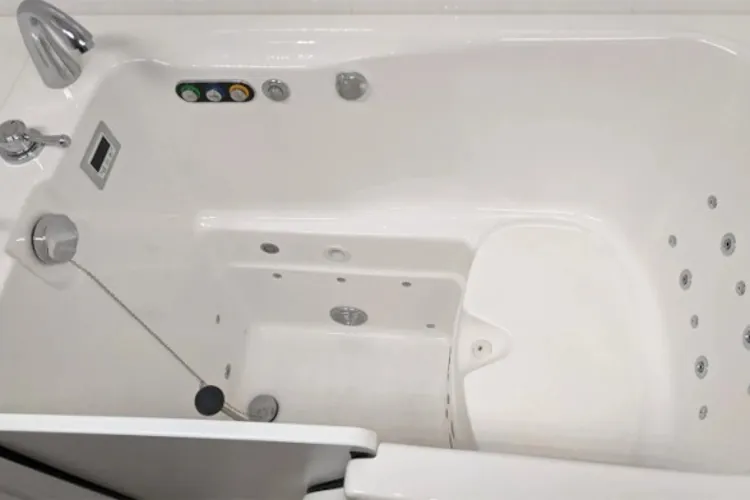
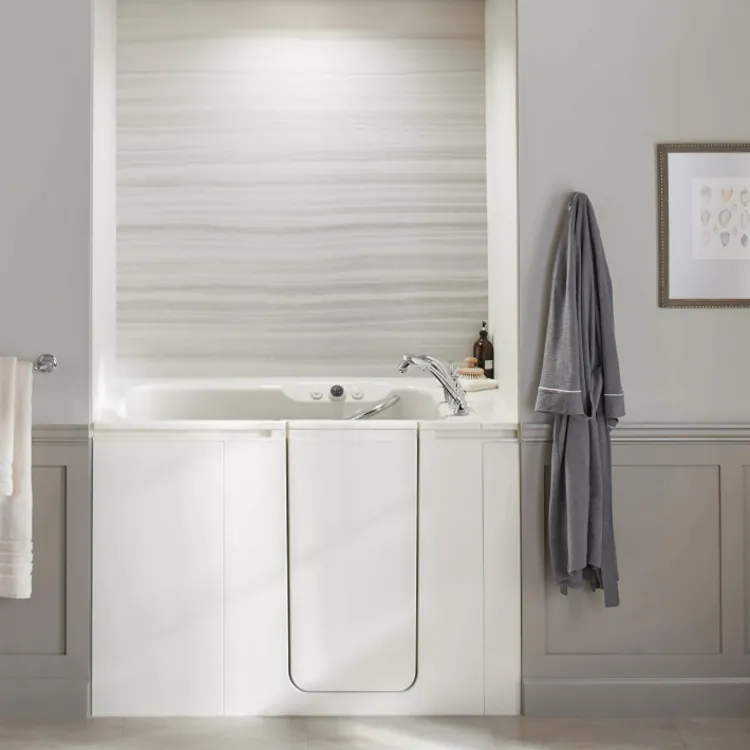
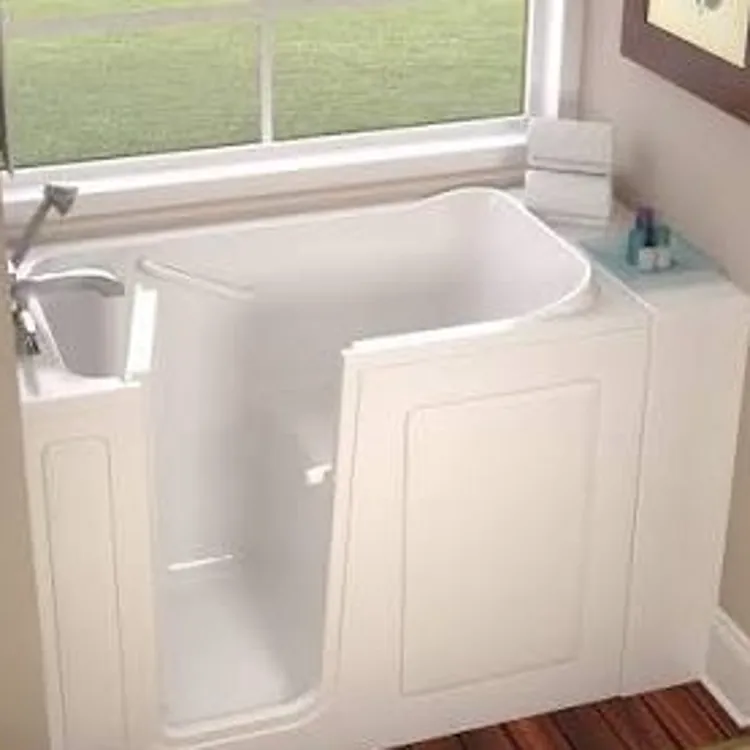
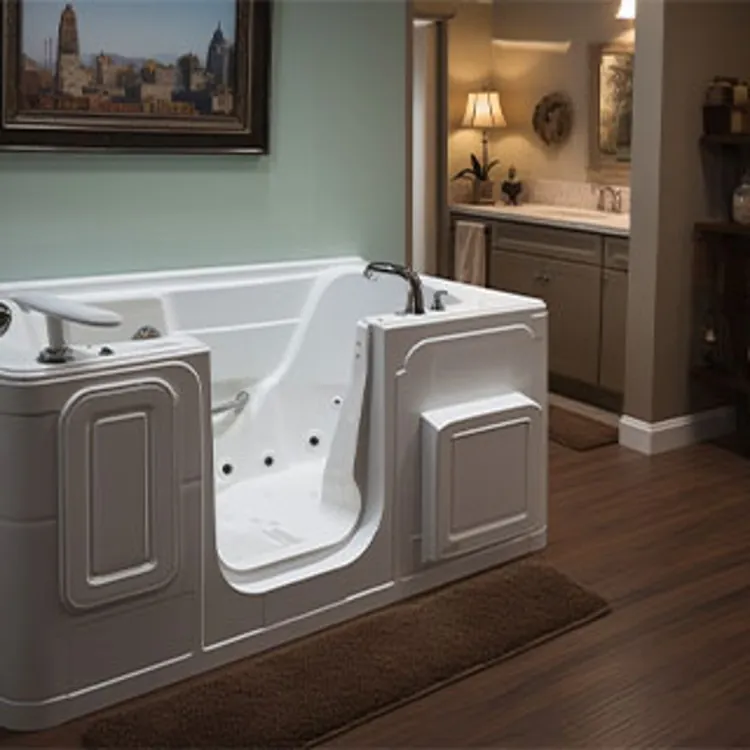
A major difference between a regular bathtub and a walk-in tub is how many gallons of water it can hold. Walk-in tubs need more water and are typically deeper and larger than a standard tub.
Typical filled capacity ranges
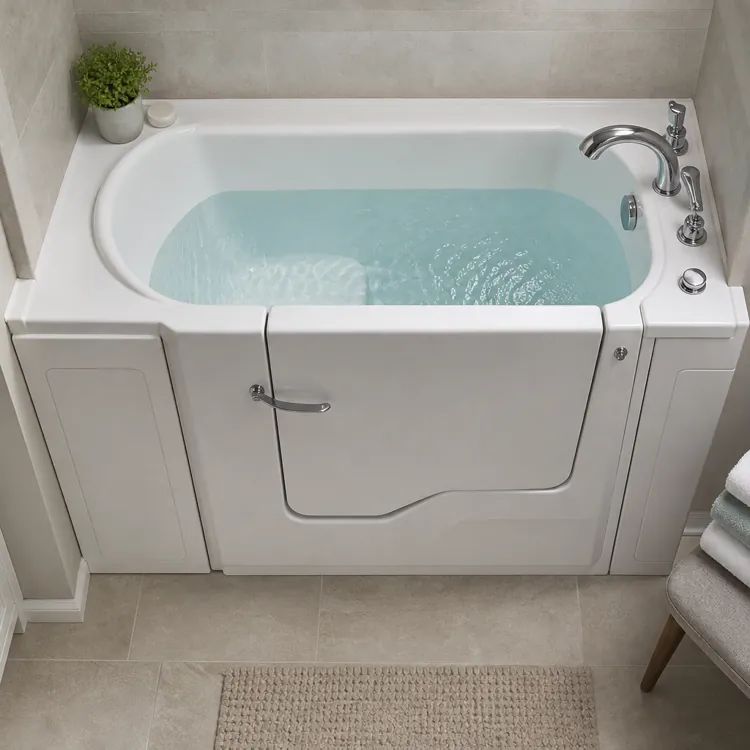
Most walk-in tubs hold between 40 and 80 gallons when filled to a comfortable level. A basic soaker walk-in tub can hold about 50 gallons, while larger and deeper tubs can hold 70 to 80 gallons.
Here’s a breakdown of walk-in tub sizes, along with the typical number of gallons used:
| Tub type | Typical gallons used | Notes |
|---|---|---|
| Standard walk-in tub | 40 to 50 gallons | Most common type, fits one bather |
| Deep soaker walk-in tub | 60 to 80 gallons | Larger depth for full immersion |
| Two-seat walk-in tub | 80 to 100 gallons | Designed for couples or caregiver-assisted bathing |
| Standard bathtub | 25 to 45 gallons | Shallower, takes less water to fill |
How fill level changes usage
The numbers in the table above reflect how much water each tub type can hold, not necessarily how much water you’ll use. When you sit in the tub, your body will displace some of the water, so the actual amount of water you use will be less than the tub’s maximum capacity.
For example, if your walk-in tub holds 50 gallons and your body displaces five gallons, you’d fill the tub to about 45 gallons to reach your preferred water level. Keeping this in mind can be helpful when determining your hot water needs.
You don’t need to fill the tub all the way. Filling the tub to your waist or chest instead of your shoulders can cut down on your water usage — and help you save money on your water bill.
Walk-in tub hot water requirements
Having a tub with more water capacity means more demand on your home’s hot water supply. It can be easy to overlook this consideration when planning a walk-in tub installation. Not accommodating the correct amount of water can lead to cold baths, which is annoying to some people, but potentially dangerous for others who can’t regulate their body temperature well.
Water heater tank size guidelines
Your water heater should be at least two-thirds the size of your tub’s capacity. So if you're installing a 60-gallon walk-in tub, you'll want a water heater with at least a 40-gallon tank. For an 80-gallon tub, you'll want at least a 53-gallon heater.
Many homes have 40 or 50-gallon water heaters, which are fine for regular bathtubs and showers. But if you're upgrading to a deep soaker walk-in tub, you may need to upgrade your water heater at the same time. Be sure to factor this into your overall budget.
Tankless and booster options
Tankless water heaters warm the water as it flows through the unit, rather than storing a fixed supply. Tankless heaters are energy efficient, but they also have a maximum flow rate. Filling a large tub quickly can exceed what some units can handle. A licensed plumber can help you match the heater to your tub.
Another option is a hot water booster, which is a tank that connects to your existing heater and adds extra capacity. This can be more cost-effective than replacing your water heater entirely and works well for households where the tub is the primary hot water concern.
Managing other household hot water
You’ll have to think through scheduling if other people in your home need hot water around the time you plan to bathe each day. Running the dishwasher or doing laundry before your bath can leave you short on hot water as well.
Plan your bath time for when hot water demand in your home is low. Using a timer on your water heater may also help, allowing the tank to fully recover before your usual bath time. If that doesn’t work for your situation, consider upgrading to a larger tank or adding a hot water booster.
Walk-in tub fill time and water flow
One unique aspect of a walk-in tub is that you enter the tub before filling it and exit after it drains — which means you’re sitting there the whole time. The time it takes for your tub to fill matters more than you might think.
Water pressure and plumbing limits
With normal household water pressure, most walk-in tubs take 10 to 15 minutes to fill to a comfortable level. Homes with lower water pressure or older, narrower pipes might need 20 minutes or more to fill a tub.
If your home runs on well water or has galvanized steel pipes that may have accumulated mineral buildup over the years, you may want to have a plumber assess your flow rate before installing a walk-in tub. Improving the water pressure can reduce fill time and make your bath more comfortable.
Rapid-fill faucet systems help fill the tub faster, which can shave off minutes from the fill time. This can be a lot more comfortable when you're sitting in an empty tub waiting. Many walk-in tub manufacturers offer rapid fill as an upgrade, and it may be worth adding as long as your water heater can keep up with it.
Staying warm while filling
You can get chilly while waiting in an empty or partially-filled tub, so some walk-in tubs have features that can help keep you warm. These include:
- Heated seats: Some tub models include electric seat warmers that keep you comfortable when you sit down.
- Heated backrests: Similar to heated seats, these warm the surface behind your back while the tub fills.
- In-line water heaters: In-line water heaters are small units that maintain water temperature during the fill, so the water doesn’t cool down before it reaches you.
If you're purchasing a walk-in tub for an older adult or someone who gets cold easily, these features may be worth it, not only for comfort but for safety.
Walk-in tub drain time and waiting
After your bath, you need to wait inside the walk-in tub until the water has fully drained before opening the door. Not waiting can flood your bathroom floor and potentially cause water damage. Most walk-in tubs drain in six to 15 minutes, depending on the drain design, the tub’s water capacity and your home’s plumbing system.
If you have a 60-gallon tub and it drains at about five gallons per minute, you can expect about 12 minutes of waiting — a significant amount of time to sit in a cooling, empty tub. Because of this, quick-drain technology is a popular feature for walk-in tubs. With this feature, you can reduce drain time from about 12 minutes to as low as two minutes.
Clogs and maintenance checks
Hair, soap scum and mineral deposits from hard water are the most common reasons for bathtub clogs. No one likes dealing with drain clogs for any tub, but they can be a bigger problem in a walk-in tub because you're stuck inside until the water drains fully.
To prevent slowdowns, clean your drain strainer every week and use a mild enzyme-based drain cleaner monthly to break down buildup before it becomes a clog. If you notice your drain slowing gradually over time, it's better to address it sooner rather than later.
FAQ
What size water heater do I need to accommodate a walk-in tub?
The size of the water heater required depends on the number of people in your household and the water capacity of your walk-in tub. Typically, most walk-in tub manufacturers suggest a water heater with at least a 50-gallon capacity.
Is a tankless water heater good for a walk-in tub?
A tankless water heater could be a good option with a walk-in tub because it's energy efficient and can supply hot water for longer periods of time. However, you’ll need to ensure that the water heater is sized to handle the walk-in tub’s water capacity.
Will a 50-gallon water heater fill a walk-in tub?
Yes, a 50-gallon water heater should fill most standard walk-in tubs. However, be sure to check the tank size on your water heater.
Are walk-in tubs water-efficient?
Some walk-in tubs can be more water efficient with features like built-in seats and low-flow faucets. Generally, walk-in tubs use more water than standard bathtubs.
Does a walk-in tub use a lot of water?
Walk-in tubs use more water than standard bathtubs — typically 40 to 80 gallons versus 25 to 45 gallons for a standard tub. The exact amount of water a walk-in tub uses depends on the tub size and how high you fill it, though.
What are the disadvantages of a walk-in tub?
Disadvantages of a walk-in tub include a higher upfront cost, longer fill and drain times that require you to wait inside the tub, and the possible need for a larger water heater.
Is it cheaper to have a tub or a walk-in shower?
Walk-in showers are generally cheaper to install, use less water per session and have a faster entry and exit. However, walk-in tubs can offer therapeutic benefits such as hydrotherapy jets and deeper soaking capacity.
How much does a walk-in tub cost?
Walk-in tubs typically cost between $5,000 and $30,000, including professional installation. Basic soaker models start at the lower end, while premium tubs with hydrotherapy jets, quick-drain systems and heated seats can drive up the total cost.
Article sources
ConsumerAffairs writers primarily rely on government data, industry experts and original research from other reputable publications to inform their work. Specific sources for this article include:
- UCLA Health, “How to prevent falls in the bathroom.” Accessed March 27, 2026.
- MedlinePlus, “Aging changes in vital signs.” Accessed March 27, 2026.