
Key insights
Standard walk-in tub sizes typically range from 52 to 60 inches in length, accommodating most bathroom spaces.
Jump to insightCustomization options like jets, heated seats and drain placement can change a tub’s fit and installation needs.
Jump to insightYou should measure bathroom space, plumbing and access routes before installation.
Jump to insightSoaker, whirlpool, bariatric and two-person tubs vary in size and may require extra space or planning for installation.
Jump to insightStandard walk-in tub dimensions
Standard walk-in tubs are generally between 52 and 60 inches long, 28 to 32 inches wide and 38 to 39 inches high. For comparison, the typical dimensions of a traditional bathtub are 60 inches long, 30 inches wide and 14 to 16 inches high.
| Standard tub | Walk-in tub | |
|---|---|---|
| Length | 60 inches | 52 to 60 inches |
| Width | 30 inches | 28 to 32 inches |
| Height | 14 to 16 inches | 38 to 39 inches |
| Interior length x interior width | About 43 inches by 20 inches | About 42 inches by 23 inches |
| Entry threshold height | 14 to 16 inches | 3 to 7 inches |
Sizing considerations for walk-in tubs
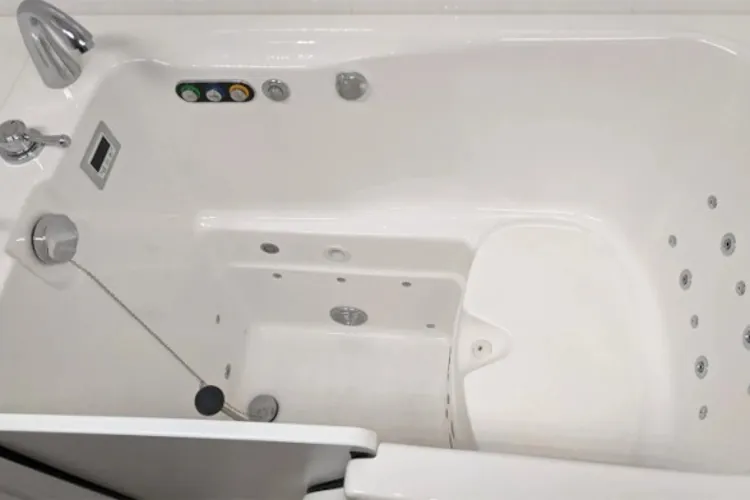
The extra height of a walk-in tub is due to the built-in seat, which enables users to sit upright while bathing.
It's best to triple-check that your new walk-in tub will not ding your drywall or be obstructed by your toilet.”
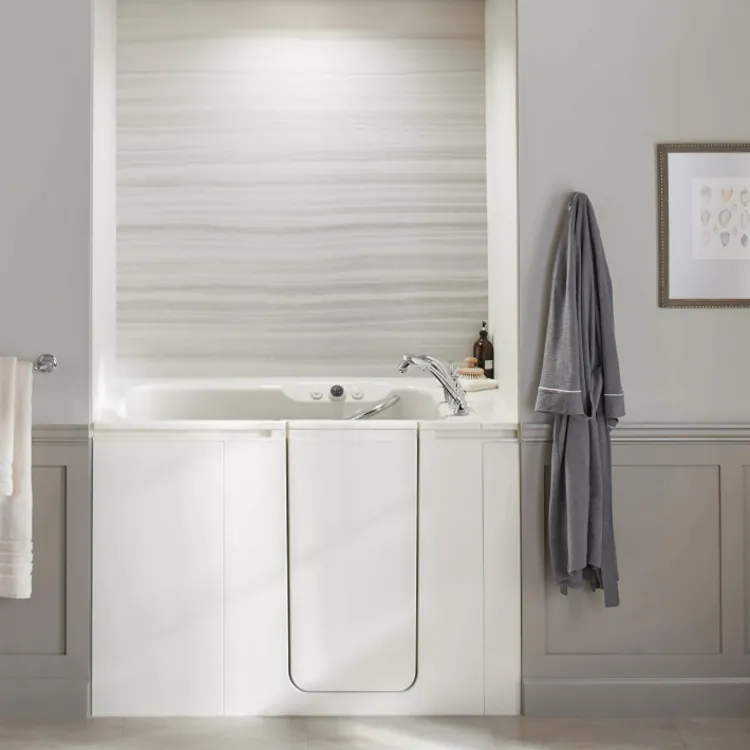
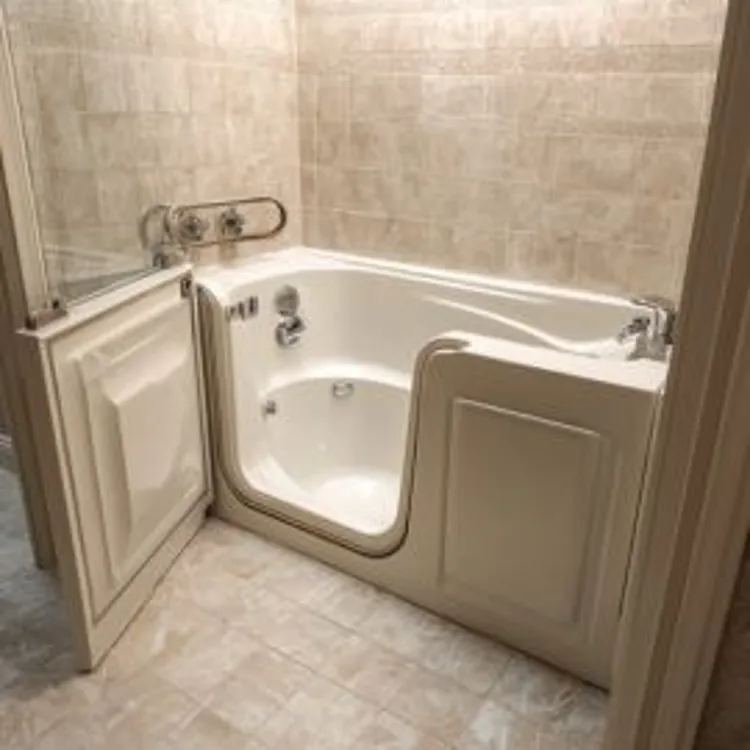
You’ll also need to consider which type of door your tub has. There are two main types of doors for walk-in tubs: inward-swinging and outward-swinging. The best choice depends on the size of the bathroom and the user's specific needs.
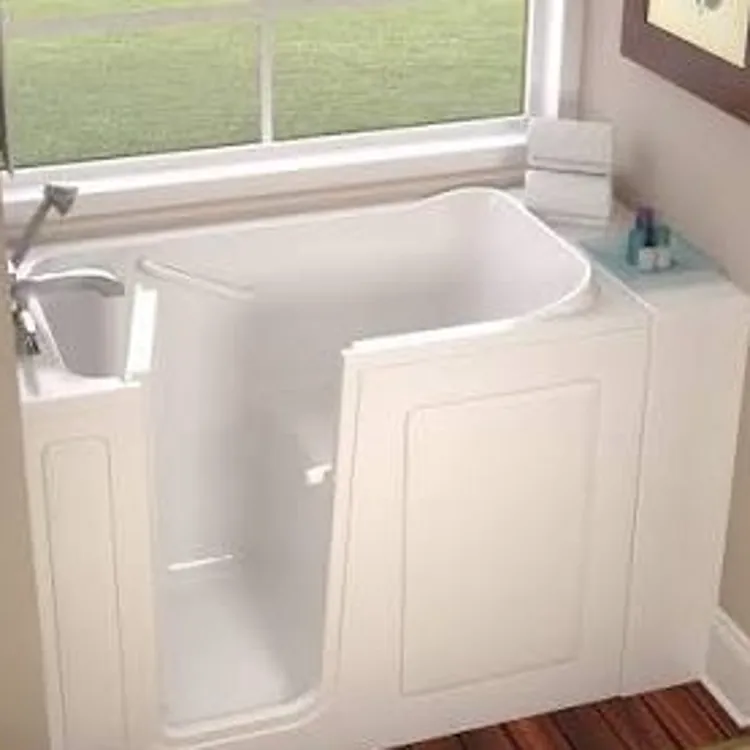
Inward-swinging doors are ideal for smaller bathrooms because they don't require extra space for the door to open. However, a person with mobility issues may find one difficult to use since they must shift their legs inside the tub to open the door.
Outward-swinging doors are much easier to access, especially for those who use a wheelchair or other mobility aids. This option, however, does require a larger bathroom with sufficient clear space for the door to swing open without hitting a toilet, cabinets or walls. For example, if the door is 17 inches wide, you'll need to ensure there are no obstructions in its swing path.
As Thomas Borcherding, owner and lead designer at Homestar Design Remodel in Des Peres, Missouri, said, “It's best to triple-check that your new walk-in tub will not ding your drywall or be obstructed by your toilet.” Regardless of which type of door you choose, you'll need plenty of clear space to move around the tub safely.
Walk-in tub dimensions by brand
| Brand | Length | Width | Height |
|---|---|---|---|
| Safe Step | 51 inches | 28 inches | 38.5 inches |
| Kohler | 60 inches | 28 to 32 inches | 32 inches |
| American Standard | 52 inches | 30 to 32 inches | 37 to 40 inches |
| Boca | 51 inches | 30 inches | 36 inches |
*Sizing varies based on walk-in tub model and design
Customization options for walk-in tubs
When it comes to customizing your walk-in tub, there are plenty of beneficial features to choose from. Walk-in tubs come in a variety of sizes to suit your space and offer a number of luxury and safety features.
Some of the most popular features include:
- Built-in grab bars
- Hand-held showerhead
- Heated seats and neck rests
- Quick-drain system
- Hydrotherapy jets
- Low-entry threshold (two to three inches high)
The drain position, whether on the left or right side, is a critical factor to consider when selecting a walk-in tub. According to Borcherding, your home's existing plumbing layout will help you determine the drain position you need.
“Selecting a specific drain position will consequently alter the tub's door positioning, as well as the seating arrangement,” Borcherding said. “You may fall in love with a particular walk-in tub only to find that its drain positioning does not work with your home's current plumbing layout.”
Before purchasing a tub, it's best to consult with your plumber to ensure it's compatible with your plumbing system. Borcherding also said, in some cases, a plumber may be able to modify the plumbing to accommodate a different drain location.
How to measure your bathroom for a walk-in tub
Installing a walk-in tub takes more than checking the tub’s size. You’ll also need to plan for the space around it, plumbing connections and room to get in and out of the tub, especially if your bathroom needs to be wheelchair accessible.
Follow these steps to ensure you get all the key measurements you’ll need:
The total floor area of your bathroom should be a minumum of 36 to 50 square feet to comfortably fit a walk-in tub.
Gather bathroom dimensions: Measure the entire bathroom floor area, particularly the space where the tub will be installed. Compare these measurements with the specifications of the walk-in tub model you are considering.
Measure your current tub or shower space: Measure the length, width, and height of your current tub or shower. This will help you find a walk-in tub that fits neatly into the existing alcove.
Measure access routes: Measure all doorways, hallways and stairwells that the tub will have to pass through to get to the bathroom. This is a critical step to ensure the tub can be physically moved and installed in the space. Compare these measurements with the width, length and height of the new tub.
Check clearance for mobility: Measure the clear floor space needed around the tub for a person to maneuver a mobility aid, such as a wheelchair or walker. Ensure there is enough space for transfers and safe, comfortable access. A standard recommendation is at least 30 inches of clear space in front of and around the tub.
Types of walk-in tubs and their dimensions
There are four primary types of walk-in tubs: soaker, whirlpool, bariatric and two-person. Each is designed to meet specific bathing needs.
The smallest type of walk-in tub is a compact walk-in tub. Dimensions range from 26 to 32 inches in width and 40 to 48 inches in length.
Soaker: These tubs are deeper than a standard bathtub and allow for full-body immersion. They typically measure 47 to 60 inches long and 28 to 32 inches wide, making them one of the easier options to fit into an existing bathtub space. Their compact footprint can make them suitable for smaller bathrooms, though plumbing and door clearance still need to be considered during installation.
Whirlpool: These tubs are similar in size to soakers but include water jets for a therapeutic massage. They generally measure 48 to 60 inches long and 28 to 32 inches wide, so their footprint is similar to that of a soaker tub. However, installation may require additional electrical connections and access to components that power the tub's jets.
Bariatric: These tubs are designed for users over 300 pounds and are wider than standard soakers, providing more space but requiring a larger bathroom for installation. They typically measure 53 to 60 inches long and 32 to 36 inches wide, making them several inches wider than many soaker and whirlpool models. Because of their larger footprint and greater filled weight, they require more bathroom space and may require an assessment of the existing floor structure before installation.
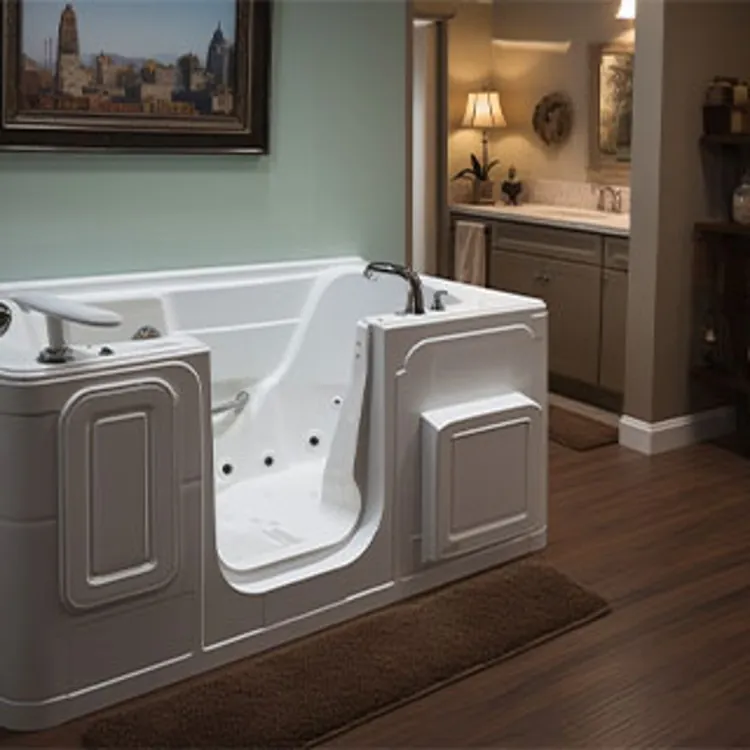
Two-person: These tubs are the largest option, with two seats across from each other to accommodate two bathers. These tubs typically measure 60 to 80 inches long and can be considerably wider than single-person models. Their larger footprint requires substantial bathroom space and may make installation more complex than replacing a standard bathtub.
While each type of tub is designed to meet different preferences, they also vary in size, which directly impacts the space needed for installation. Larger models, such as a two-person tub, may not be suitable for a small bathroom.
Size ranges for common walk-in tubs
The typical dimensions of each type of tub are as follows:
| Soaker | Whirlpool | Bariatric | Two-person | |
|---|---|---|---|---|
| Length | 47 to 60 inches | 48 to 60 inches | 53 to 60 inches | 60 to 80 inches |
| Width | 28 to 32 inches | 28 to 32 inches | 32 to 36 inches | 32 to 36 inches |
| Height | 36 to 40 inches | 36 to 42 inches | 37 to 41 inches | 38 to 42 inches |
| Water capacity | 40 to 50 gallons | 45 to 90 gallons | 90 to 150 gallons | 80 to 100 gallons |
Accessibility and ADA compliance for walk-in tubs
If you want your walk-in tub to comply with Americans with Disabilities Act (ADA) standards, it must include:
- A minimum of 30 inches of clear floor space must be available beside the tub
- A seat height of 17 to 19 inches from the floor.
- Grab bars or rails 33 to 36 inches from the floor that must be mounted in specific locations to assist with safe entry and exit.
FAQ
What is the standard walk-in tub size?
The standard walk-in tub size is 52 to 60 inches long, 28 to 32 inches wide, and 38 to 39 inches high — slightly narrower and significantly taller than a conventional bathtub.
How much space do you need for a walk-in bathtub?
For a standard walk-in tub, plan for 52 to 60 inches in length, 28 to 32 inches in width and 38 to 39 inches in height. Also, it’s recommended to have at least 30 inches of clear floor space beside the tub.
Can a walk-in tub fit through a doorway?
Yes, a walk-in tub can fit through a doorway. Most walk-in tubs, particularly soaker models with a width of 28 to 32 inches, are designed to fit through standard doorways. However, you’ll need to measure both the tub and your doors before making a purchase.
Compare the width of the walk-in tub to the width of your specific interior and exterior doors. A typical exterior door is 36 inches wide, while most interior doors are between 30 and 32 inches wide.
What is the smallest size of a walk-in tub?
The smallest size walk-in tub is a compact model. Compact walk-in tubs are designed to fit into small spaces, with dimensions ranging from 26 to 32 inches in width and 40 to 48 inches in length.
How wide does a doorway need to be for a walk-in tub?
A doorway needs to be at least 28 to 32 inches wide to accommodate most standard walk-in tubs during installation, though a 36-inch doorway provides more clearance.
What size walk-in tub fits in a standard bathtub space?
A walk-in tub measuring 52 to 60 inches long and 28 to 32 inches wide fits in most standard bathtub alcoves, which are typically 60 inches long and 30 to 32 inches wide.
Article Sources
ConsumerAffairs writers primarily rely on government data, industry experts and original research from other reputable publications to inform their work. Specific sources for this article include:
- Kohler Walk-In Bath, “Walk-In Bathtub Dimensions.” Accessed Aug. 18, 2026.
- The Home Depot, “Bathtub Buying Guide: Sizes & Types.” Accessed Aug. 18, 2026.
- Safety Bath Walk-in Tubs, “A Guide to Walk-in Tub Doors.” Accessed Aug. 18, 2026.
- Safe Step Walk-in Tubs, “Choosing the Right-Size Walk-In Tub for Your Bathroom.” Accessed Aug. 18, 2026.
- Americans with Disabilities Act (ADA), “2010 ADA Standards for Accessible Design.” Accessed Aug. 18, 2026.
- Artisan Contracting, “3 Things To Consider Before Reinforcing Your Floor for a Bathtub.” Accessed Aug. 18, 2026.
- Pella Corporation, “Standard Front Door Sizes: Your Complete Guide.” Accessed Aug. 18, 2026.
- Milgard Manufacturing, “The Ultimate Guide to Standard Door Width and Height.” Accessed Aug. 18, 2026.
- Medicare.org, “Will Medicare Cover a Walk-In Tub?” Accessed Aug. 18, 2026.