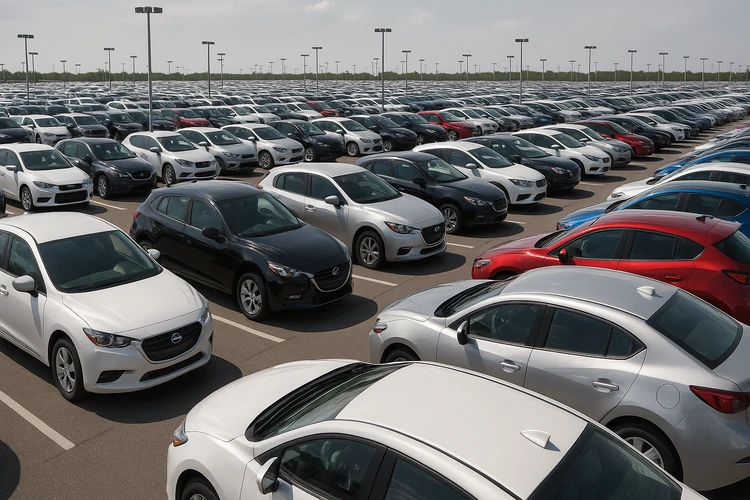
Dealers are struggling to clear out leftover 2024 models — especially from Stellantis brands
Some models still have more than 80% of their 2024 inventory unsold, creating major price-cutting opportunities
EVs and luxury SUVs are also lingering on lots, giving shoppers unusual leverage heading into year-end
Car dealers usually roll out special deals on cars and trucks for the end-of-the-year holidays. This year, the deals may be the best in years, thanks to slow car and truck sales during 2025
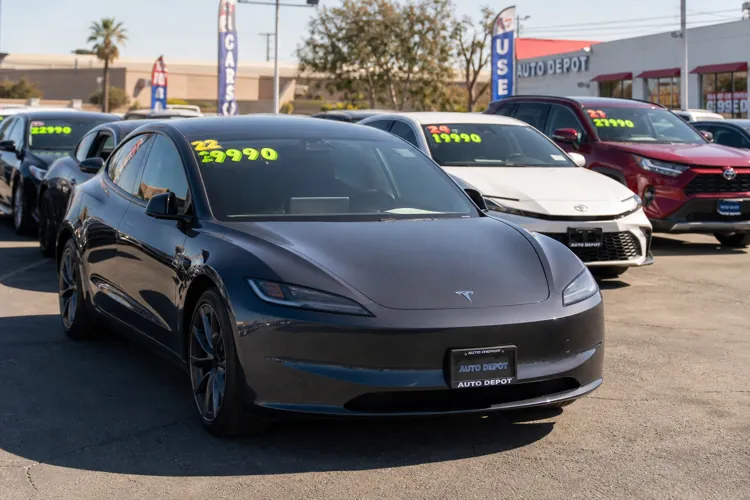
A surprising number of 2024 vehicles are still sitting on dealer lots as 2025 draws to a close. According to a new iSeeCars analysis, several Stellantis models, along with a mix of SUVs, EVs, and luxury vehicles, have unusually high leftover inventory, signaling that dealers may be open to aggressive price negotiations.
Stellantis leads the pack in leftovers
They may be last years models but they’re still new cars, with some selling at close to used car prices. The most striking finding: 82.1% of all new 2024 Dodge Hornet Plug-in Hybrid models remain unsold, compared to an industry average of just 0.4%. That means supply has far outpaced demand for the compact SUV.
Other Stellantis brands are also struggling:
Jeep Grand Cherokee: 70.8% still on lots
Alfa Romeo Tonale Hybrid: 46.8% remaining
Dodge Hornet (gas version): 26.3% unsold
These high leftovers likely give buyers more bargaining power. “Dealers are now sitting on significant 2024 inventory for vehicles like the Dodge Hornet, creating a window where aggressive pricing or other incentives are the only way to move those cars,” said iSeeCars Executive Analyst Karl Brauer.
Top 10 models with the most leftover 2024 inventory
Dodge Hornet Plug-in Hybrid — 82.1% (Avg. $41,166)
Jeep Grand Cherokee — 70.8% (Avg. $64,014)
Alfa Romeo Tonale Hybrid — 46.8% (Avg. $51,917)
Chevrolet Malibu — 31.0% (Avg. $26,760)
Dodge Hornet — 26.3% (Avg. $31,799)
Jeep Grand Wagoneer L — 24.1% (Avg. $92,497)
Genesis GV60 — 21.8% (Avg. $57,764)
Dodge Charger — 20.9% (Avg. $59,388)
Nissan Z — 18.8% (Avg. $53,289)
Jeep Wrangler Plug-in Hybrid — 18.2% (Avg. $60,740)
In total, 23 models show significantly above-average leftover inventory.
Luxury SUVs go begging
Seventeen SUVs have at least 5% of their 2024 supply still unsold, and 12 of them cost more than $50,000 on average — an indicator that price may be driving slower sales.
Notable examples:
Jeep Grand Wagoneer L: $92,497 average price
Maserati Grecale: $89,870 average price
Even though SUVs remain popular, many shoppers are clearly resistant to paying luxury prices for an outgoing model year.
“For consumers seeking a deal on a new SUV, especially premium models over $50,000, there are plenty of options to consider,” Brauer said.
EV buyers have rare negotiating power
Electric vehicles also show higher levels of leftover stock, averaging 1.3% — more than triple the overall 2024 average. Four EVs in particular still have 5% to 22% of their 2024 inventory available:
Even with the $7,500 federal EV tax incentive, many of these models failed to sell quickly. “This is an opportunity for EV buyers to negotiate,” Brauer said.
2025 models may also become ‘leftovers’
The study also examined which 2025 models may soon slip into leftover status. Twenty-two vehicles currently have 60% to 90% of their 2025 inventory still on the lot — a sign dealers may want to clear space ahead of 2026.
The biggest standouts include:
“As December 31st approaches, dealers are motivated to hit month-, quarter-, and year-end sales targets,” Brauer said. “Buyers may be able to negotiate lower prices on these vehicles.”
For consumers, this unusual backlog of inventory may be a rare opportunity.