Fast food

This living topic covers the latest updates, trends, and controversies surrounding McDonald's. It highlights the company's new menu items, such as the Chicken Big Mac and Honey Pepper Pimento Chicken Sandwich at Chick-fil-A, and emphasizes their efforts to stay competitive in the fast-food industry. Additionally, it discusses significant issues such as foodborne illness outbreaks linked to E. coli and Cyclospora, rising menu prices, and supply chain challenges. The topic also explores McDonald's strategies for maintaining market share, including the introduction of value meals and specialty beverages, and the company's response to customer feedback and legal challenges related to food safety and marketing practices.

Latest

McDonald’s employee secrets that can save (or cost) you money

Small details that actually matter when you order

Featured Health News photo

Some items are fresher than others. Ordering the right version can mean better quality for the same price.

Sugar hides in “safe” choices. Drinks like sweet tea and Coke pack more sugar than most people expect.

Small tweaks save money. Customizing orders or downsizing often delivers the same flavor for less.

McDonald's has mastered speed and consistency better than almost any restaurant on earth. But that efficiency also hides a lot of small details that most customers never...

Read Article
Featured Health News photo
2025
Article Image

McDonald’s tries to flip the script on high egg prices

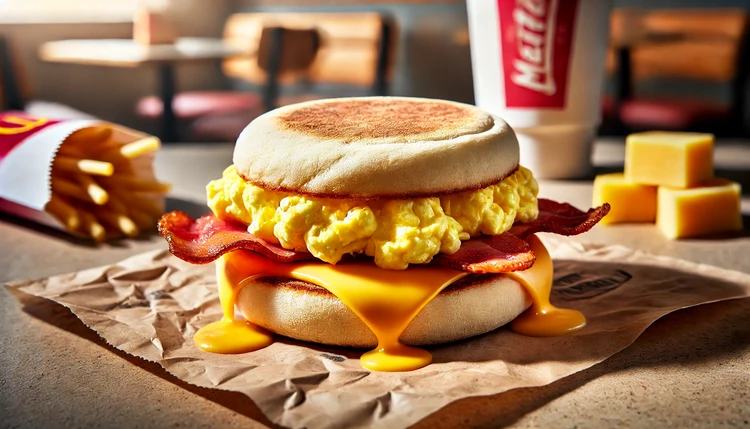
Social media sites are filled with rants about the high cost of eggs, driven higher by bird flu outbreaks across the country. McDonald’s is attempting to capitalize on consumer angst about eggs by offering its Egg McMuffin for $1.

It’s a one-day promotion to coincide with the 50th anniversary of the iconic sandwich’s introduction. On Sunday, March 2, the chain is lowering the price to $1 – if the Egg McMuffin is ordered through the McDonald’s app. If the company loses money on the sale, it hopes to offset that by enticing more consumers to download the app.

"At McDonald's, breakfast isn't just a meal; it's a cherished tradition and cornerstone of our brand," McDonald's USA President Joe Erlinger said in a press release. 

"Every morning when we open our doors, we are a breakfast restaurant. Whether it’s my personal favorite, the Egg McMuffin, or our crispy Hash Browns, fluffy hotcakes, or sweet and savory McGriddles, we’re all about giving our customers the best start to their day. Our fans know they can always count on us for a one-of-a-kind breakfast experience, anchored in great value and high-quality ingredients."

Other offers

Here’s the complete rundown of the promotion:

  • Egg McMuffin or Sausage McMuffin with Egg breakfast sandwich for just $1, available exclusively through the McDonald’s App on Sunday, March 2.

  • Two McMuffin sandwiches! From March 3 through March 30, consumers can get a BOGO Sausage McMuffin with Egg when making a McDelivery order in the McDonald's App.

  • Bagel Sandwiches are Now Nationwide: For the first time ever, McDonald’s bagel sandwiches are now available across the U.S. 

McDonald’s is also using the promotion to roll out Krispy Kreme donut in New York City. Starting immediately, New York joins Chicago, Cleveland, Indianapolis, Pittsburgh and Louisville where restaurants serve the popular donuts.

According to McDonald’s, the Egg McMuffin was invented by Herb Peterson, a franchisee in Santa Barbara, who pitched the idea to CEO Ray Croc in 1971 as eggs Benedict you could hold in your hand.

2024
Article Image

McDonald’s says it is confident it can rebound from E. coli outbreak

A day after reporting an E. Coli outbreak linked to the Quarter Pounder, McDonald’s USA President Joe Erlinger said the company is moving quickly to restore confidence after one person died and at least 49 were sickened.

“We are very confident that you can go to McDonald’s and enjoy our classics,” Erlinger said on the TODAY Show. “We took swift action yesterday to remove the Quarter Pounder from our menu. This was swift and decisive action by us.” 

Erlinger said the company is cooperating with the Centers for Disease Control and Prevention in trying to trace the origin of the outbreak that took the popular burger off the menu in 10 states. Not surprisingly, the case is also attracting the attention of the legal profession.

"This McDonald's E. coli Outbreak is likely to grow," said attorney Jory Lange, of the Jory Law Firm, with offices in four of the affected states.  "Symptoms usually began one to 10 days after eating E. coli-contaminated food.  Once people get sick and go to the hospital, it takes time for stool tests to come back positive for E. coli and for those test results to be reported to hospitals.  That's why the outbreak numbers will likely continue to rise."

Lange said E. coli is scary because consumers have no way to tell if the food has been contaminated, noting that contaminated food may look, smell, and taste just like any other food. 

“This is why it's critical that restaurants who make and sell our food, ensure the food is safe before they sell it," Lange said.

Onions are the prime suspect

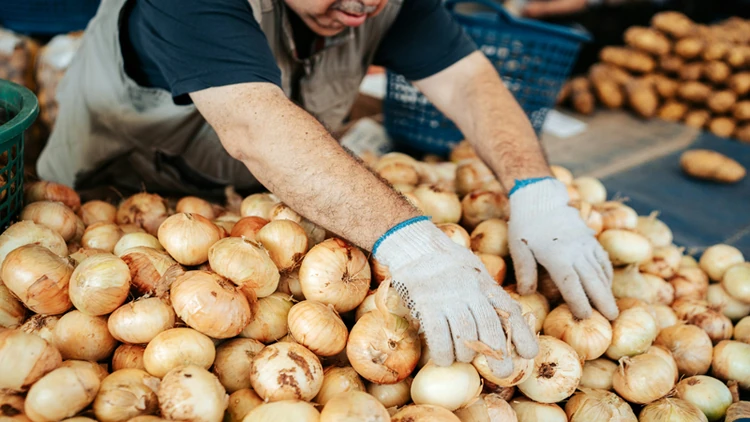
Attorney William Marlar of the Marlar Clark law firm says preliminary traceback and distribution information reviewed by the U.S. Food and Drug Administration shows that slivered onions served on Quarter Pounders are a likely source of contamination. The U.S. Food Safety and Inspection Service is conducting traceback on hamburger patties served at McDonald's to determine if ground beef is a source of illness.

"Given that illnesses are reported in 10 different states with differing McDonalds restaurants, it is unlikely that hamburgers were undercooked in multiple locations," said Marler.  "The more likely culprit would be the slivered onions. Onions have been linked to several foodborne illness outbreaks in recent years.” 

Among the 49 people who reported illnesses after eating a Quarter Pounder, 10 people have been hospitalized, including a child who developed a kidney disease called hemolytic uremic syndrome.
Article Image

McDonald's Quarter Pounders withdrawn in some areas after E.coli outbreak

Food illness outbreak hits McDonald's. Quarter Pounder hamburgers are being pulled in some areas as investigators try to find out what ingredient is responsible for the problem. 

The CDC says one person is dead and 10 hospitalized out of a total of 49 cases.

"The initial findings from the investigation indicate that a subset of illnesses may be linked to slivered onions used in the Quarter Pounder and sourced by a single supplier that serves three distribution centers," said McDonald's North America Chief Supply Chain Officer Cesar Piña in a statement. "All local restaurants have been instructed to remove this product from their supply and we have paused the distribution of all slivered onions in the impacted area.

"Out of an abundance of caution, we are also temporarily removing the Quarter Pounder from restaurants in the impacted area, including Colorado, Kansas, Utah and Wyoming, as well as portions of Idaho, Iowa, Missouri, Montana, Nebraska, Nevada, New Mexico, and Oklahoma," he said.

CDC, public health and regulatory officials in several states, the U.S. Food and Drug Administration (FDA), and the U.S. Department of Agriculture’s Food Safety and Inspection Service (USDA-FSIS) are collecting different types of data to investigate a multistate outbreak of E. coli O157:H7 infections.

Epidemiologic data show that Quarter Pounder hamburgers served at McDonald’s are contaminated with E. coli and are making people sick. Early information from FDA indicates onions may be a source of this outbreak. Investigators from all agencies are working quickly to determine the contaminated ingredient.

The true number of sick people in this outbreak is likely much higher than the number reported, and the outbreak may not be limited to the states with known illnesses. This is because many people recover without medical care and are not tested for E. coli.

In addition, recent illnesses may not yet be reported as it usually takes 3 to 4 weeks to determine if a sick person is part of an outbreak.

State and local public health officials are interviewing people about the foods they ate in the week before they got sick. Of the 18 people interviewed, all 18 (100%) report eating at McDonald’s, and 16 people report eating a beef hamburger.

Of 14 people who remember the specific beef hamburger they ate at McDonald’s, 12 (86%) report eating a Quarter Pounder hamburger. Some people in this outbreak reported traveling to other states before their illness started. At least one person ate at McDonald’s during their travel.

Call your healthcare provider if you ate a McDonald’s Quarter Pounder hamburger and have severe E. colisymptoms.

About E. coli

E. coli stands for Escherichia coli, which is a type of bacteria commonly found in the intestines of humans and animals.

Here's a breakdown of E. coli:

Types

  • Harmless E. coli: These strains live in our intestines and help with digestion.

  • Pathogenic E. coli: These strains can cause various illnesses, including:

  • Diarrhea: This can range from mild and watery to severe and bloody.

  • Urinary tract infections (UTIs): E. coli is a common cause of UTIs.

  • Respiratory illness: E. coli can sometimes cause pneumonia or other respiratory infections.

  • Other illnesses: In rare cases, E. coli can cause more serious conditions like kidney failure or meningitis.

Transmission

  • Foodborne: Contaminated food, particularly undercooked meat and raw vegetables, is a common source of E. coli infection.

  • Waterborne: Drinking contaminated water can also lead to infection.

  • Person-to-person: E. coli can spread through poor hygiene, such as not washing hands properly after using the bathroom.

  • Animal contact: Contact with animals or their feces can also transmit E. coli.

Symptoms

Symptoms of E. coli infection vary depending on the strain and the type of illness. Common symptoms include:

  • Diarrhea

  • Stomach cramps

  • Nausea and vomiting

  • Fever

  • Fatigue

Prevention

  • Practice good hygiene: Wash hands thoroughly after using the bathroom, changing diapers, and before preparing or eating food.

  • Cook food thoroughly: Ensure meat is cooked to a safe internal temperature.

  • Wash fruits and vegetables: Wash produce thoroughly before eating.

  • Avoid raw milk and unpasteurized juices: These products can harbor harmful bacteria.

  • Be cautious when swimming: Avoid swallowing water in pools, lakes, or other bodies of water.

Treatment

Most E. coli infections resolve on their own without treatment. However, staying hydrated is crucial, especially in cases of diarrhea. In severe cases, antibiotics may be necessary.

If you suspect you have an E. coli infection, it's essential to consult a doctor for proper diagnosis and treatment.

2023
2022
2021