2024 Airlines and Airports

Article Image

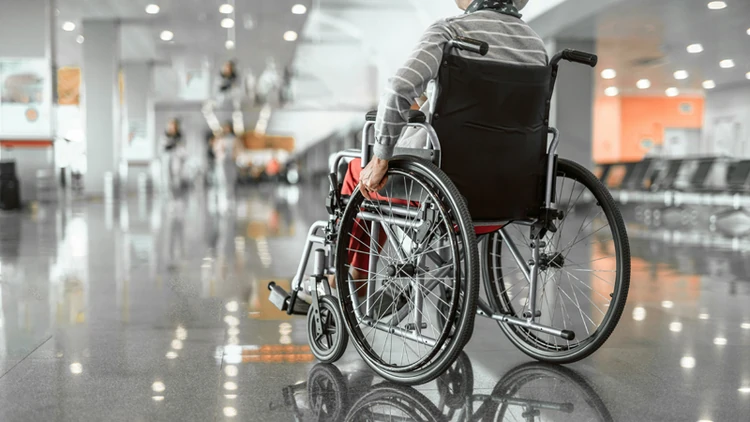
Rule supporting disabled airline passengers gets final approval

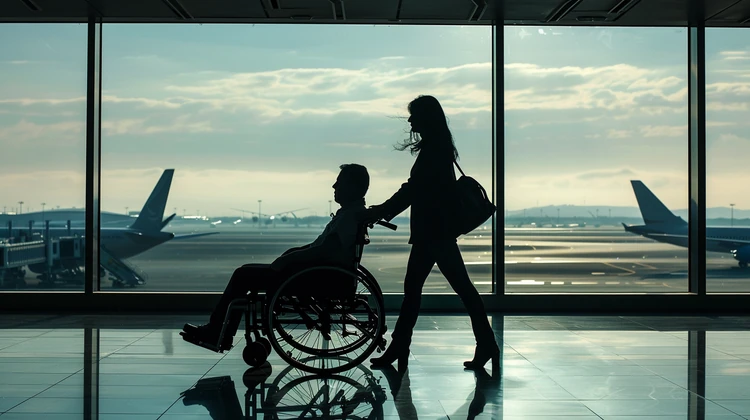
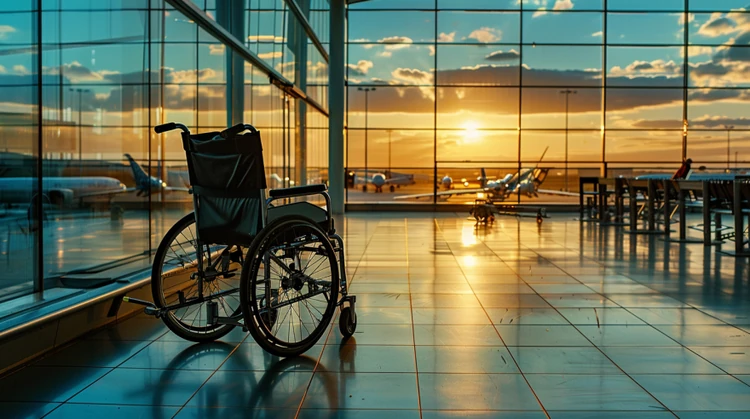
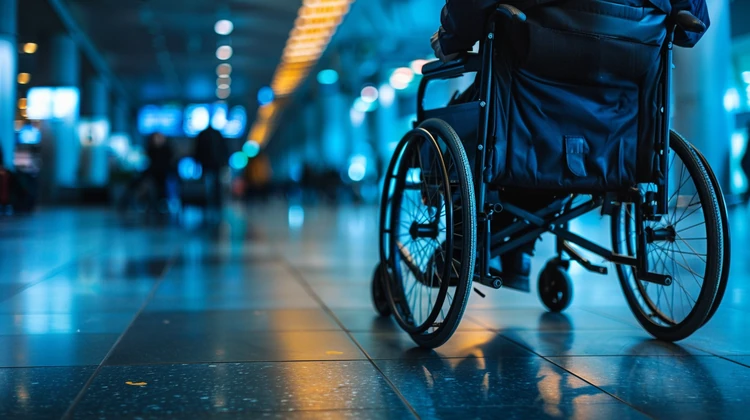
The U.S. Department of Transportation has adopted new regulations aimed at improving the air travel experience for passengers with disabilities, especially those who use wheelchairs. The comprehensive final rule sets rigorous standards for airlines, focusing on the accommodation and treatment of passengers with mobility challenges.

The newly established rule requires airlines to adhere to strict guidelines for assisting passengers with disabilities, emphasizing the need for safe and dignified handling. This includes hands-on training for airline employees and contractors who assist these passengers and manage their wheelchairs. 

The rule also outlines specific actions airlines must take when a wheelchair is damaged or delayed during transport, addressing a critical concern for the estimated 5.5 million Americans who rely on wheelchairs.

"Every passenger deserves safe, dignified travel when they fly," said Transportation Secretary Pete Buttigieg. "With the new protections we’re announcing today, we’re establishing a new standard for air travel—with clear and thorough guidelines for airlines to ensure that passengers using wheelchairs can travel safely and with dignity."

The rule comes in response to statistics and personal accounts highlighting the challenges faced by disabled travelers. DOT data indicates that for every 100 wheelchairs or scooters transported on domestic flights, at least one is damaged, delayed, or lost. Such incidents can severely impact the mobility, health, and independence of affected travelers.

Enhanced training

Under the final rule, airlines will be required to train personnel to assist passengers who need assistance getting off the aircraft. A violation will be presumed to have occurred if a wheelchair is mishandled.

Additionally, the rule mandates reimbursement for accessible ground transportation and fare differences if a passenger's wheelchair cannot be accommodated on their scheduled flight.

The agency has also taken steps to improve airport accessibility through the Bipartisan Infrastructure Law’s Airport Terminals Program, funding over 150 projects aimed at making terminals more accessible for people with disabilities.

Implementation of the rule will begin on January 16, 2025, with full compliance required by June 17, 2026. 
Article Image

JetBlue plans to cancel routes in several cities next year

With many airlines working to make their offerings more attractive to consumers, JetBlue has other ideas. 
The airline announced it will be cutting a number of flight routes in 2025, including in and out of several major cities.  

“As part of our JetForward strategic plan, JetBlue is focused on building a network that best serves our customers and supports our long-term success,” the company said in a statement. 

“Recently, we made some network adjustments in certain markets, removing some underperforming flying from our schedule, allowing us to redeploy resources, including our popular Mint service, toward high-demand markets and new opportunities. In the coming weeks, we will announce how we will redeploy this capacity, including into our European network, providing even more travel options for our customers.” 

What can consumers expect in the new year? 

Here’s a look at the routes that are being cut in 2025: 

  • Westchester, New York (HPN) – Charleston, South Carolina (CHS)

  • Jacksonville, Florida (JAX) – Fort Lauderdale, Florida (FLL)

  • New York (JFK) – Austin, Texas (AUS)

  • New York (JFK) – Houston, Texas (IAH)

  • New York (JFK) – Miami, Florida (MIA)

  • New York (JFK) – Milwaukee, Wisconsin (MKE)

  • San Jose, California (SJC) – All flights, to and from 

Some other changes include: 

  • Mint Business Class seats will no longer be available on Seattle flights.

  • The summer-only flight from JFK to London’s Gatwick airport will be canceled. 

  • The second daily flight from JFK to Paris will be canceled. 

  • The following flights will be soon only be available in the winter months:  

    • Boston, Massachusetts (BOS) – Phoenix, Arizona (PHX)

    • Boston, Massachusetts (BOS) – Grenada (GND)

    • New York (JFK) – Tulum, Mexico (TQO)

This decision comes as JetBlue is looking to eliminate flight routes that aren’t profitable for the company. The end of these routes will help continue to boost profitability and cut costs. 

These changes are expected to go into effect at the end of April 2025, and consumers are encouraged to explore the JetBlue website for new options for these soon-to-be canceled routes. 

Article Image

As expected, Spirit files for bankruptcy

Besieged by creditors and weighed down by debt, Spirit Airlines has filed a Chapter 11 bankruptcy petition, hoping to restructure its debt while remaining airborne.

The troubled budget carrier had been hoping to save itself through a merger with JetBlue but a federal judge blocked the deal in January, saying the merger would have cost consumers. Spirit then tried to resurrect an earlier deal with Frontier but that apparently went nowhere.

Spirit has already reached a reorganization agreement with several of its major bondholders and will continue to operate while the process moves forward, the compamy said. 

"I am pleased we have reached an agreement with a supermajority of both our loyalty and convertible bondholders on a comprehensive recapitalization of the company, which is a strong vote of confidence in Spirit and our long-term plan," said Ted Christie, Spirit's President and Chief Executive Officer, in a news release.

Spirit said customers can continue to book and fly without interruption and can use all tickets, credits and loyalty points as normal and said the chapter 11 process itself will not impact workers' wages or benefits, which are continuing to be paid and honored for those employed by Spirit. 

Article Image

Feds issue new rules that clear the way for air taxis

The Federal Aviation Administration has issued a final rule, clearing the way for a new type of aircraft – the first such introduction since helicopters were approved in the 1940s. The new type of aircraft is called “powered lift” and will be used for air taxi services and to deliver cargo.

The new aircraft type has characteristics of both airplanes and helicopters. It flies like an airplane but takes off and lands vertically, like a helicopter.

The rule also addresses operational requirements, including minimum safe altitudes and required visibility. The FAA said the rule is the final piece in the puzzle for safely introducing these aircraft in the near term. 

The agency said it expects there will be many uses for the new aircraft type, from transporting passengers in urban areas and short-haul operations such as air ambulance services and cargo operations to potentially serving smaller communities over time. 

“The FAA will continue to prioritize the safety of our system as we work to seamlessly integrate innovative technology and operations,” said FAA Administrator Mike Whitaker. “This final rule provides the necessary framework to allow powered lift aircraft to safely operate in our airspace.” 

Will cruise at 200 MPH

Publicly announcing the new aircraft at an event in Las Vegas, Whitaker unveiled a full-size model of the powered lift, designed by Joby Aviation, a California firm. The company said the six-rotor craft will cruise at a speed of around 200 MPH. Company officials said they hope to begin using their vehicles next year but said it is not yet certified for carrying passengers.

The FAA said it previously determined it could certify powered lift using existing regulations and updated other regulations so air taxis could be used commercially. In 22023, the agency released a blueprint for how Urban Air Mobility vehicles will operate, which the FAA said is a key element in maturing the overall AAM concept.   

The FAA said a new pilot-training and qualifications rule was needed because existing regulations did not address this new category of aircraft. The rule provides a comprehensive framework for certifying the initial cadre of powered-lift instructors and pilots.  

The rule also:

  • Makes changes to numerous existing regulations and establishes a Special Federal Aviation Regulation (SFAR) with new requirements to facilitate instructor and pilot certification and training.  

  • Applies helicopter operating requirements to some phases of flight and adopts a performance-based approach to certain operating rules.  

  • Allows pilots to train in powered-lift with a single set of flight controls; legacy rules require two flight controls – one for the student and one for the instructor.  

Article Image

United makes efforts to make travel easier for wheelchair users

Able-bodied travelers probably never give it a second thought, but airline passengers who are dependent on wheelchairs count into the millions.

And while mishandled wheelchairs don't quite match up with the number of mishandled baggage, it is a big enough problem that United Airlines has decided that it – maybe alone – can make the situation better.

The airline has just released a new digital sizing tool designed to help its passengers determine the right aircraft for their wheelchair. To show it’s serious about this, United will refund the fare difference if someone has to pay more for an alternative flight with a larger cargo door.

Last year, United and United Express, together carried more than 200,000 checked wheelchairs, but the number of wheelchairs and scooters mishandled per 100 enplaned was 1.09. Comparatively, that metric might not create the headlines that United’s other recent problems (hydraulics, losing a wheel, etc.), but it is about 30% higher than Delta which has the best record in that category.

"The more we know about a customer's device, the more likely their experience will be a good one – from booking and check-in to the flight itself," said Linda Jojo, executive vice president and chief customer Officer for United. "These new tools and policies also set our employees up for success, especially those working on the ramp or at the gate."

How It Works

Anyone flying United who needs to bring a personal wheelchair on their flight can visit the United app or united.com and use the filters on the flight search results page before selecting their flight. 

Step two comes after clicking on the wheelchair filter tab near the upper portion of the screen, when customers enter the specific dimensions of their mobility device. At that point, the search results enter the picture to identify which flight options will accommodate those dimensions and let the customer know whether their wheelchair fits or not. 

But in situations where the size of aircraft cargo hold doors can’t handle a larger motorized wheelchair and the customer has to take a United flight with a higher fare that can accommodate their wheelchair on the same day and between the same origin and destination, the customer may seek a refund of the fare difference.

United to offer loaners when it damages a wheelchair, too

United is adding another plus for wheelchair/scooter users. For anyone who’s flying through George Bush Houston Intercontinental Airport and finds that their wheelchair was damaged or delayed while traveling, the airline will provide an appropriate loaner wheelchair. 

The airline understands that wheelchairs tend to be tailor-fit for a person’s size, weight, frame, etc. and is currently testing specialized, adjustable Permobil cushions for loaner wheelchairs at its Houston hub that should improve comfort and stability.

The company said that is also reimbursing customers for transportation expenses should they choose to wait at a location other than the airport.

Article Image

Airbnb takes another step in improving its cancellation policy

Hurricanes are in but COVID-19 outbreaks are out in Airbnb's new cancellation policy. As part of the company’s ongoing efforts to improve things with travelers, it is introducing updates to its Extenuating Circumstances Policy – including renaming it to the Major Disruptive Events Policy – to better reflect its purpose.

That section will be overhauled to provide cancellation and refund support when major events like natural disasters, government travel restrictions, or weather events impact guests' ability to stay at a location.

Going forward, that shift accomplishes two things. First, it supersedes a host’s booking cancellation policy, thus enabling guests to cancel eligible upcoming and active reservations at the impacted location for a refund; and second, it also allows hosts to cancel reservations without fees and other related consequences.

Breaking that down to real-world situations, the policy will formally apply to foreseeable weather events – like a hurricane during hurricane season – that result in another covered event happening.

For example, if you were going to Florida during hurricane season, and the local government closed the roads or the power was out, you can cancel and receive a refund. Likewise, hosts can cancel without fees and related consequences -- both as long as the bookings are "eligible” reservations.

“The changes to this policy, including its new name, were made to create clarity for our guests and Hosts and ensure it’s meeting the diverse needs of our global community,” Juniper Downs, Airbnb’s head of Community Policy, said.

“Our aim was to clearly explain when the policy applies to a reservation, and to deliver fair and consistent outcomes for our users. These updates also bring the policy in line with industry standards.”

These policy updates come into effect for all reservations taking place on or after June 6, 2024.

Caveats, eligibility, and travel insurance

Airbnb suggested that there’s likely to be a little shakeout while it, guests, and hosts all get to the point where everyone knows what’s supposed to happen in these situations. 

As examples, it gave these three examples:

  • Limiting coverage to large-scale events at the destination location only to help balance the needs of our entire community. This means that the policy will only apply to reservations where a major disruptive event has impacted the location of the listing. 

  • Making clear that mid-trip cancellations can be made due to a covered event, with guests receiving a refund for any nights they didn’t stay and without fees and related consequences for hosts.

  • Reminding hosts that they’re obligated to cancel reservations if their listing is uninhabitable or no longer consistent with what was originally booked by their guest and that they are able to do this without cancellation fees and related consequences.

But, the bottom line appears to be that it’s still the guest’s responsibility to make sure how it impacts them. One of those caveats is the word "eligible" as it applies to a booking. 

ConsumerAffairs asked Airbnb for an explanation of what "eligible" meant and here is their response:

"Reservations outside of the defined area and timeframe may not be eligible, though Hosts may still be able to cancel without adverse consequences if they are unable to host. We continuously monitor these situations and adjust coverage as needed to reflect changing conditions. If you believe this Policy applies to your reservation, please contact us to inquire about eligibility."

The bottom line here is that if you’re going to a destination where there may be some sort of disruption, you should first contact Airbnb to ask what’s covered.

Airbnb goes has far as saying that the second thing is that you might want to consider is travel insurance. “As this cancellation and refund policy is not designed to apply to all types of unexpected issues and emergencies that can impact a trip, guests should consider purchasing travel insurance,” the company said.

Article Image

Airbnb bans indoor security cameras at its properties

Gone are the days of Airbnb hosters having indoor security cameras in their rental properties. 

The company has announced that moving forward, all indoor security cameras will be banned from rental properties around the globe. 

Before this announcement, hosts were allowed to have security cameras in common spaces, like hallways or living rooms. The main caveat was that cameras weren’t allowed in private areas, like bedrooms or bathrooms, and rental descriptions had to explicitly state the presence of cameras. 

However, that is no longer the case. Starting April 30, indoor cameras will no longer be allowed in Airbnb’s rental properties for any purpose and regardless of any prior warnings. 

“Our goal was to create new, clear rules that provide our community with greater clarity about what to expect on Airbnb,” said Juniper Downs, head of community policy and partnerships at Airbnb. “These changes were made in consultation with our guests, hosts, and privacy experts, and we’ll continue to seek feedback to help ensure our policies work for our global community.” 

New rules on outdoor cameras, too

In addition to the indoor camera ban, Airbnb is also making adjustments to its rules on outdoor security cameras. 

While these are still allowed, hosts will be required to disclose the use and location of any outdoor cameras before guests book their stay. The cameras must also be strictly focused on the outdoor area of the property, without catching any indoor footage. 

Additionally, Airbnb is putting limitations on where hosts can have outdoor cameras. Any outdoor areas like saunas or showers must be free of security cameras. 

As part of these new regulations, hosts will also be required to inform renters if they’re utilizing any noise decibel monitors. These units must only be placed in common areas, and they must only be used as a means of measuring sound – not recording or transmitting conversations. 

Airbnb plans to enact these changes starting on April 30, giving hosts time to get into compliance with the new rules. The company stated that the majority of Airbnb listings don’t have security cameras, and these new regulations aren’t likely to greatly impact renters or hosts. 

Article Image

Tips to navigating airline travel in 2024

Airline travel can be stressful, and knowing how to navigate last-minute changes, delays, and disruptions to your itinerary can be even more stressful. 

As part of this year’s Consumer Protection Week, the U.S. PIRG Education Fund shared its best insights for consumers to utilize when they're flying. This includes everything from knowing your rights when flights are canceled or delayed, when bags go missing or when you’re suddenly bumped from a flight. 

“Airline travel has often been unreliable for years as the airlines struggled with post-pandemic staffing and logistics,” wrote Teresa Murray, consumer watchdog from the U.S. PIRG Education Fund. “Almost every airline has had at least one disastrous weekend with mass cancellations during the last couple of years. We could be past the worst, but it’s still best to plan for possible problems.” 

What are your rights as a traveler?

The U.S. PIRG Education Fund has created a Flyer’s Bill of Rights that details everything consumers need to know when flying, including information about canceled or delayed flights, rebooking, tarmac delays, getting bumped from flights, flight delays, delayed bags, lost or damaged bags, and filing complaints. 

Airlines are required to give travelers a full refund, including ticket prices, taxes, baggage fees, extra charges, and ancillary fees if the carrier cancels the flight. Many airlines will cover the cost of a transfer ticket to another airline if your original ticket has been canceled; however, this isn’t required by law. 

If your flight is significantly delayed or canceled because of staffing or equipment issues, or any other reason within the airline’s control, you have options. The U.S. PIRG Education Fund found that: 

  • Six of the 10 major airlines will rebook you on another airline for no extra charge. 

  • All 10 major airlines will provide a meal voucher. 

  • Nine of the 10 major airlines will pay for hotels and ground transportation if you’re stuck somewhere overnight. However, you may have to ask them to do so. 

What about bags? 

Sometimes, you end up at your destination but your checked bag doesn’t. What is the protocol for travelers? 

  • Most airlines will reimburse flyers for necessities, like a change of clothes or toiletries, if bags are delayed. 

  • When bags are completely lost, travelers should receive reimbursement for any baggage fees as well as up to $3,800 for the items inside. 

As a consumer, you’re also entitled to file a complaint with either the airline or the Federal Aviation Administration (FAA). Any complaints filed with airlines must be acknowledged within 30 days, and responses must be sent in writing within 60 days. 

Tips before you book a flight

Before you book your next trip, there are many things you can do to help reduce your stress levels when you get to the airport. Some tips from the U.S. PIRG Education Fund include: 

  • Be careful about booking through third-party ticket websites. While they may offer a discount, when it comes time for a refund or rebooking, it’s often more difficult through these sites, as opposed to navigating the specific airline’s website. 

  • Flying early in the morning reduces your chances of delays or other mishaps. 

  • Limit how often you book connecting flights, as this can also reduce the likelihood of delays, cancellations, or other frustrations. 

  • There are resources online to look at a flight’s statistics in terms of on-time arrivals and departures. This can help you know if you’re more likely to get stuck in a long delay. 

  • Avoid a checked bag when possible. However, if you do need to check a bag, put a tracker in it so you know where your bag is at all times. It’s also recommended to take pictures of everything that’s inside your checked bag in the event the bag gets lost and you need to file a claim. 

Article Image

Has Airbnb put its worst days behind it?

Over the last 10 years, we’ve seen Airbnb become America’s destination darling, only to go off the rails when hosts – who should’ve never been hosts to begin with – got greedy with fees and forgot what good customer service is all about.

But, a new study claims that while the company still encounters some unhappy campers, it may have turned the corner in eliminating gripes and frustrations and getting back on its balance beam again.

Getting the right stuff in the right place

The new study, commissioned by Photoaid, found that there are still some things that irk Airbnb guests. The top three are issues with refunds or cancellations (74%), noisy surroundings (73%), and misleading photos/descriptions (72%).

The refunds/cancellations issues are a sore point with many ConsumerAffairs reviewers like Denny from Seattle who claims he spent days trying to get an answer from at least half a dozen people about their cancellation policy. Angela from Sunnyvale Calif., suggests that the company may be playing games with its cancellation policy, too.

“They only grant a full service fee refund if you cancel within the free cancellation period. Otherwise, you're left with zilch. When the host chooses a percentage refund, one would assume that the service fee would align with that percentage refund,” she wrote in a ConsumerAffairs review.

However, most Americans had a positive experience with Airbnb. All told, 80% rated their experience as satisfactory (45%) or very satisfactory (34%). Nearly 83% reported choosing Airbnb over hotels at least some of the time in the past 24 months. And a significant 92% of respondents are likely (54%) or very likely (38%) to use Airbnb in the future.

Failing forward fast

Airbnb didn’t share its priority list with ConsumerAffairs, but it did note that out of the 430+ upgrades it made in the last several years, many of those were designed to specifically improve quality and reliability. 

For example, it updated price tools to make pricing more transparent and has tried to verify every listing in the U.S., Canada, Australia, UK, and France to weed out hosts who aren’t holding up their part of the customer service bargain.

Airbnb CEO and Co-Founder Brian Chesky even reached out to users on X to get a handle on what people think about the product and what they would change.

Getting the right person on the phone looks to be the company’s next challenge. Airbnb’s current goals in this regard are to answer calls in 10 different languages within two minutes and clean up its customer service act so that when guests call, they’ll get matched with the best agents to resolve their specific issues, faster.

The cancellation issue? Don’t hold your breath. When ConsumerAffairs asked Airbnb about the complaints our readers are writing, a fix for that wasn’t addressed.

So, until that happens, following Airbnb’s cancellation instructions to a “T” and keeping a record of everything you did – calmly and politely – is in your best interest. 

Article Image

Is $40 the new standard for airline baggage fees?

American Airlines (AA) is upping the price for checked baggage. Joining Alaska and JetBlue – and leaving Southwest Airlines as the only major airline offering free checked bags – AA’s fee is based on when and where you pay for your bags.

If you do it when you purchase the ticket at AA.com, it’ll be $35. If you wait until you get to the airport, it’s $40. And if you want to check a second bag, you’ll be shelling out another $45. 

Those all apply to domestic flights. The new bag fees for Canada and short-haul international flights are $35 for first checked bags and $45 for second checked bags purchased online or at the airport.

Does this qualify as greed or need?

Before you go claiming that this is nothing but greed that falls in line with $5 for a bag of chips, $29.95 for two inches more legroom, and $15 to board before someone else, one airline revenue expert says it’s anything but.

“I think American's increase is more nuanced than a simple grab for more revenue. Their chief commercial officer mentioned the company's desire to move low-fare consumers along this path: buy basic economy, then spend more on a la carte extras to add comfort, then enroll in AAdvantage, and finally to apply for a co-branded credit card,” Jay Sorenson, the president of IdeaWorksCompany, an analyzer of ancillary revenue that airlines use to pump up their bank accounts.

Sorenson says that a higher bag fee encourages consumers to buy Main Cabin or above and to truly consider the checked bag benefit of the credit card.

“The airline must also believe it has the "carry-on problem," an industry-wide issue, under control because these increases discourage checked bags,” he told ConsumerAffairs.

It’s not AA’s only change, though

Starting in May, AA wants its customers to come to it first – not Expedia or Kayak or any other online travel agency. And it says that if you do, they’ll make it worth your while as in earning miles and Loyalty Points on flights when you:

  1. Book directly with American and eligible partner airlines

  2. Book travel anywhere as an AAdvantage Business member or contracted corporate traveler

  3. Book through preferred travel agencies. American will share a list of eligible preferred agencies on aa.com in late April

  4. Basic Economy fare tickets will only earn when booked directly with American and eligible partner airlines

Where do all the airlines stack up on baggage fees now?

Here’s a quick breakdown of how the landscape is changing on baggage fees: 

Airline

First checked bag

Second checked bag

Notes

Alaska Airlines

$35

$45

Fees apply as of Jan 2nd, 2024.

Delta

$30

$40

Standard fees for domestic flights.

Frontier Airlines

$59 (booking)

$74 (before check-in)

$99 (airport)

JetBlue

$35

$50

Cheaper to add bags before check-in or with Mosaic frequent flyer membership.

Spirit Airlines

$44 (booking)

$49 (carry-on)

When you book your bag at the same time as you book your flight, you can save up to $20 per bag compared to waiting until later (like at the airport).
On Tuesdays and Wednesdays. Spirit Airlines sometimes offers discounts on bags on these days, so it's worth checking their website or app to see if there are any current deals.

Southwest

Free (2 bags)

$125

Free checked bags are a major perk, additional bags and overweight fees apply.

United Airlines

$35

$45

Those fees are standard for most domestic flights.

Article Image

How everyone aboard an airliner survived that fiery crash in Tokyo

By now, most people have seen the horrifying footage of a Japan Airlines jet completely engulfed in flames after colliding with another plane at Haneda Airport in Tokyo.

But amazingly, all 367 passengers and 12 crew members were evacuated safely in a series of events being compared to the “miracle on the Hudson.” In 2009, US Airways Flight 1549, piloted by Chesley "Sully" Sullenberger and Jeffrey Skiles, ditched in the Hudson River with no fatalities after striking a flock of geese on take-off from New York’s LaGuardia airport.

Five of the six people aboard the Japan Coast Guard plane that struck the Japan Airways airliner died as their plane exploded.

In the case of the Japan Airways fire, the airline said the flight crew used megaphones and their voices to instruct passengers because the aircraft’s public address system was disabled.

How were they able to get everyone to safety with no loss of life? It turns out the crash looked a lot worse outside – with flames completely engulfing the aircraft – than it did in the cabin. Cell phone footage shot by a passenger and aired by Australia’s Sky News reveals what happened.

This is what it looked like from outside the plane:

The training and skill of the flight crew no doubt played a role in this “miracle.” An airline spokesperson said the passengers – including eight infants – were evacuated through three emergency chutes. 

The airline said there were no serious injuries but 14 passengers requested medical attention.