Best overall

- Services
- Replacement
- Commercial projects
- No
- Financing available
- Yes, with lending partners
- Service area
- East Coast, mid-Atlantic, South, Midwest
How ConsumerAffairs uses cookies
This website utilizes technologies such as cookies to enable essential site functionality, as well as for analytics, personalization, and targeted advertising. To learn more, view the following link:





A new roof is a big investment, and the contractor you choose matters just as much as the materials. A good roofing company should give you a clear estimate, install your roof correctly and stand behind the work if something goes wrong. We compared services and verified customer experiences to find companies you can trust with the job.
Roofing companies can look similar on paper, so we paid close attention to what happens once the work starts. Our picks factor in verified customer experiences with installation quality, communication and service, along with each company’s roofing options and warranties.
| Company | Customer rating | Our pick for | Services | Financing | Manufacturer’s warranty | Workmanship warranty | Year founded | |
|---|---|---|---|---|---|---|---|---|
 Power Home Remodeling | Get a Quote | 4.8
7,026 reviews
7,026 reviews
| Best overall | Replacement | Yes, with lending partners | Varies by product | Limited lifetime | 1992 |
 HomeAdvisor (Powered by Angi) | Get a Quote | 2.7
22,721 reviews
22,721 reviews
| Roofing marketplace | Repair, installation | Yes, through Affirm | Varies by contractor/product | Varies by contractor | 1999 |
 DaBella | Get a Quote | 3.8
757 reviews
757 reviews
| Comprehensive roofing services | Replacement | Yes, with third-party lenders | Up to 50 years | Up to 25 to 30 years | 2011 |


Jump into our guides and start learning
Hiring an experienced professional and choosing a roofing material that suits your area can save you money, time and frustration. It can also help boost your home’s value. Choose a material that suits your budget and can stand up to the local climate.
“People should get two or three estimates, and pay attention to how clearly each contractor explains the work,” said William McGavin, owner of Sundance Roofing & Painting in Chandler, Arizona. “The one who walks you through exactly what they will do, and why, is usually the one who will do it right the first time and give you less headaches in the long run.”
Hire a roofing pro with at least five years of experience who is licensed, insured and able to provide a clear, detailed estimate.
Jump to insightAsphalt shingles are the most common roofing material in the U.S., but consider other options for improved durability, longevity and energy efficiency.
Jump to insightThe average cost to install a roof is $14,805, but prices can range widely based on roof slope, home size and your preferred roofing material.
Jump to insightThere are a few key things you should look for when choosing a roofing company to ensure you get a skilled and qualified professional. Pay attention to years of experience, past work with your preferred roofing material, proper licensing and insurance and pricing. Also look for a warranty or satisfaction guarantee.
The first thing you can do to narrow down roofers in your area is to rule out any that don’t have proper licensing and insurance.
Some states require roofers to have a specific roofer’s license, but most just require a general contractor’s license. You can usually find license requirements on your state’s building department website. Once you confirm what’s necessary, ask each roofer you’re considering for a license number and verify that it’s active.
You should also never hire a roofer who doesn’t have proper insurance coverage. Ask each pro for a copy of their general liability insurance binder as well as their workers’ compensation insurance binder.
Prices can range widely among different roofers due to varying labor fees, roofer experience and upcharges for materials. Pay attention to the following to ensure you get a fair price and good value for the money.
While upfront cost is important, it’s not everything. “One of the biggest mistakes homeowners make is comparing roofing proposals based solely on the bottom-line price,” said Chris Kavcsak, CEO of Elevated Roofing & Siding, which provides services in the Dayton, Ohio, area. “Two quotes may appear similar while including vastly different materials, warranties and installation methods.”
It's a good idea to base your roofer choice on personal recommendations from friends, family members or neighbors, but you should also check online reviews to gauge general customer experience.
Read through reviews on multiple sites, like ConsumerAffairs and the Better Business Bureau, to get a sense of how reliable and trustworthy a roofer is. As you read negative reviews, be aware that all companies will have unhappy customers. What’s more important than a single bad review? A history of specific issues that persist across projects. Here are some specific things to look for:
You should always hire a roofer with at least five years of experience and expertise in installing your preferred roofing material. Most roofers can safely install asphalt shingle roofs, but look for more dedicated expertise if you want a metal roof, a slate roof, a clay roof or a solar roof. These demand different installation procedures and are easy to get wrong.
Finally, ask each roofer you’re considering if they provide a labor warranty. Some of the best roofing companies provide “a workmanship warranty, not just a material warranty,” McGavin said.
This isn’t a make-or-break factor, but when a roofing pro does offer a warranty, it’s a good sign that you’re going to get high-quality installation that maximizes curb appeal and leaves your home adequately protected for years to come.
Asphalt shingles are, by far, the most popular roofing material, but there are many other options that could suit your needs better. You should consider all of the following types of roofing materials before deciding what’s best for your climate and personal preference.
Asphalt shingle roofs are the most common throughout the U.S. They consist of a fiberglass mat coated with asphalt and topped with ceramic or mineral granules. Asphalt shingle roofs last for 20 to 30 years. They come in a variety of colors and types for customization:
“Architectural shingles have largely replaced the old flat three-tab style because they hold up better against wind and last longer for a small step up in price,” McGavin said.
Pros
Cons
Metal roofs cost about twice as much as asphalt shingle roofs, but they also last more than twice as long, with a lifespan of up to 80 years. Metal roofs shed snow well and reflect heat better than asphalt shingles, so they’re popular in extreme climates on both ends of the spectrum.
Metal roofs are usually aluminum, but tin, copper, steel and zinc are all options. A standing-seam metal roof is the most popular design, but you can also get an upgraded appearance by going with metal shingles or a lower cost by choosing a corrugated metal roof.
Pros
Cons
Wood roofs can create a more rustic appearance since they make use of natural resources. They’re usually made of cedar and come in shingles or “shakes.” They last for an average of 25 years, making them on par with asphalt shingles, but they can cost close to twice as much per square foot.
Wood roofs require quite a bit of maintenance, including waterproofing, fireproofing and staining, as needed. They’re not suitable for humid environments or areas that see heavy rainfall, as they can quickly grow mold.
Pros
Cons
Clay and concrete roofs are extremely durable and can last for 100 years or more. While they’re two to three times as expensive as asphalt shingles, you end up getting more value from them over time. Neither clay nor concrete will transfer heat readily, making them good options in hotter climates, where they can help keep your living space cool.
Clay and concrete tiles are very heavy, so some homes might need structural changes to be able to support additional roof loads. They’re also prone to cracking, especially with foot traffic, so your professionals will need to be extra careful when navigating your roof to avoid damage.
Pros
Cons
Slate is the longest-lasting roofing material, with a lifespan of 150 years or more. While it’s the most durable and resistant to leaks, it can also cost more than three times as much as a standard asphalt shingle roof.
Slate is an eco-friendly roofing material that’s naturally resistant to water, fire, pests and impact from hail and blown debris. It can also elevate your curb appeal to add more to your property value. However, it’s very heavy and may require structural changes for support. And since it’s relatively uncommon in the U.S., you may struggle to find a pro who specializes in the material.
Pros
Cons
Solar shingles are a relatively new roofing material that can generate electricity for your home to help offset electricity costs. They can be nearly five times as expensive as traditional asphalt shingles, but solar shingles can be worth it because they can pay for themselves over time by providing savings on utility costs.
Solar shingles require a high level of specific expertise for a proper installation, so you may run into some difficulty finding an installer who specializes in this roof option. Solar shingles may be eligible for energy efficiency credits and rebates, so check the Database of State Incentives for Renewables and Efficiency (DSIRE) for more information on potential savings.
Pros
Cons
Synthetic roofing materials are made to look like other options, but they’re made of synthetic materials that help keep costs low. The primary appeal of these materials is the low cost for a roof that looks like a luxury option. You’ll still pay more than you would for asphalt shingles, but you get a roof that provides the same high-end curb appeal as slate, clay or wood.
The primary downside is that you don’t get the lifespan you would from genuine long-lasting roof materials, like slate, clay or concrete. Synthetic roofs last for up to 35 years, on average, so you’re paying mostly for the curb appeal. However, synthetic roofs can also be more energy-efficient than asphalt shingles, so you could offset upfront cost with utility bill savings.
Pros
Cons
On average, you can expect to pay around $7 per square foot of roof you need to replace. This assumes you pay about the average cost for asphalt shingles, the most common roofing material. The average home in the U.S. is 1,830 square feet, and the standard roof pitch puts the average roof size at 2,115 square feet. The all-in average cost to replace a roof is $14,805.
Roof replacement costs can vary widely based on many factors, including the type of roof you want to install, the size of your home, the pitch of your roof, the presence of hidden roof damage and more. If you know the square footage of roofing you need to replace, you can use the per-square-foot costs from our experts in the table below to get a good idea of your total.
| Roofing material | Cost per square foot | Cost for average roof size |
|---|---|---|
| Asphalt shingles | $4 to $10 | $8,460 to $21,150 |
| Clay/concrete | $10 to $30 | $21,150 to $63,450 |
| Metal | $7 to $20 | $14,805 to $42,300 |
| Slate | $10 to $50 | $21,150 to $105,750 |
| Solar | $20 to $75+ | $42,300 to $158,625 |
| Synthetic | $9 to $20 | $19,035 to $42,300 |
| Wood | $7 to $20 | $14,805 to $42,300 |
One of the biggest mistakes homeowners make is comparing roofing proposals based solely on the bottom-line price”
The average cost to replace a roof is $14,805, assuming you’re removing old asphalt shingles and replacing them with the same type of roof. Opting for a more durable material, like concrete, clay, slate or metal, can push your total much higher. Your home size, roof pitch and roof design complexity can also influence your costs. Homeowners insurance may cover roof replacement, so check your policy before hiring a roofing pro.
Some of the best home warranties include coverage for roof leaks, but most provide limited coverage that’s capped based on the square footage of roofing material you need to replace or the total cost. Home warranties also usually exclude damage caused by issues related to neglect or anything covered by homeowners insurance. Check your policy for more information before filing a claim.
The best homeowners insurance policies cover specific issues related to roofing, usually when damages are caused by natural disasters or fallen trees. You should check your policy for exclusions to see if your specific issue is covered. Pay careful attention to exclusions based on the local risk of hurricanes, tropical storms, intense winds, earthquakes or wildfires.
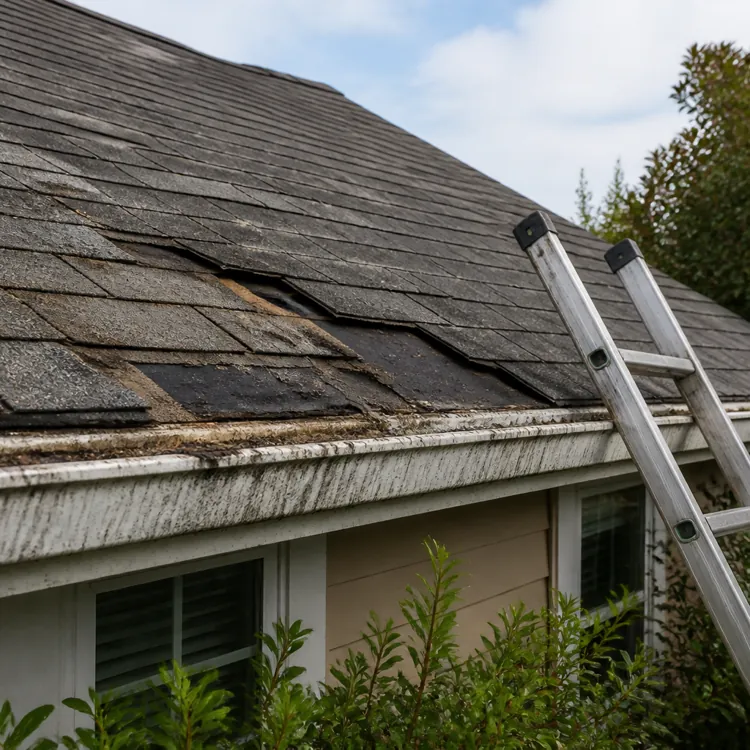
The most obvious sign that it’s time to replace your roof is evidence of leaks inside. You may notice water spots on the ceilings or wet or moldy sections of roof sheathing in your attic. Waviness in the roof surface or bowed roofing can also suggest that it’s time to replace your roof. You should also pay attention to the average lifespan of your roofing material and replace before it reaches that point.
The average asphalt shingle roof will last for between 20 and 30 years, but your roof’s lifespan can vary widely, especially if you don’t have asphalt shingles. Metal roofs last for 40 to 80 years, on average, while clay and concrete roofs last for 100 or more years, slate can last for up to 150 years, and wood roofs last for 25 years. Synthetic roofs can last for up to 35 years.
The ConsumerAffairs Research Team compared roofing companies using verified customer reviews and company features.
We analyzed reviews from Aug. 1, 2021, to July 31, 2026, focusing on satisfaction with:
We also compared:
Recent review volume and company response rates were included too.
Thanks for subscribing.
You have successfully subscribed to our newsletter! Enjoy reading our tips and recommendations.
| Company | Customer rating | About | Learn More |
|---|---|---|---|
|
Power Home Remodeling
| 4.8
7,026 reviews
| Focus on energy-efficient products. Works exclusively with asphalt shingle roof installations. Provides limited lifetime workmanship and manufacturer warranties on all products installed. Free on-site estimates for all projects. | Get a Quote |
|
HomeAdvisor (Powered by Angi)
| 2.7
22,721 reviews
| Connects homeowners and renters with home improvement specialists for free. Average home improvement job costs between $120 and $6,000. Includes damage protection guarantee up to $500,000. Online booking available. | Get a Quote |
|
DaBella
| 3.8
757 reviews
| Specializes in shower conversions and full bathroom remodels. Services for windows, siding and roofing also available. Custom design and installation provided. Free consultations. | Get a Quote |
 Ameco Solar & Roofing
| 4.8
83 reviews
| Specializes in solar panels and roofing solutions. Online estimate. Installs solar panels, batteries and EV charging stations. Shingle, flat and tile roofing services. 3D home visualizer. 40-year workmanship warranty. | Learn More |
 Cenvar Roofing & Solar
| 5.0
34 reviews
| Owens Corning Platinum Preferred contractor. Specializes in shingle, metal, specialty and solar roofing. 100% satisfaction guarantee. Member of GuildQuality for top industry ratings. Provides online quotes and estimates. | Read Reviews |
 Rooforders.com
| 5.0
View profile
| Provides accurate 3D roof and solar reports. Residential reports: $25-$50. Commercial: $50-$100. Fast overnight delivery. Includes PDFs, Excel data, 3D DXF and XML files for seamless integration. | Read Reviews |
 Victory Home Remodeling
| 4.7
253 reviews
| Offers tailored solutions for exterior remodeling. Lifetime guarantee. Free quotes and inspections. Financing available. Waste removal included. Limited service area. Cost specifics require a direct quote. | Learn More |
 Noland's Roofing
| 4.7
26 reviews
| Specializes in storm and hail damage repairs. Works with shingles, tile and metal roofing. Offers third-party financing through two companies. Has three locations in central Florida. | Read Reviews |
 Baker Roofing
| 4.0
9 reviews
| Works with a variety of roofing materials. Offers a home design studio so customers can visualize their project results. Financing is available for six or 12 months. Provides a free estimate and a 10-year workmanship warranty. | Read Reviews |
 Erie Home
| 1.7
43 reviews
| Installs metal and asphalt roofing. Has metal options that resemble wood shake, Spanish tile and asphalt shingles. Provides a limited lifetime warranty on all products. Works with homeowners across 34 states. | Read Reviews |
 Owens Corning Shingles
| 1.5
119 reviews
| Owens Corning is a manufacturer of insulation and roofing products designed to make homes and businesses more energy efficient. It has 16,000 employees across 25 countries and ships its products worldwide. | Read Reviews |
 Home Depot Roofing
| 1.3
167 reviews
| Home Depot is a home improvement retail chain that carries tools, appliances and other products like roofing supplies. It sells asphalt and architectural shingles, as well as metal, asphalt and plastic roofing material. | Read Reviews |
 All Guard Roofing
| 5.0
View profile
| Installs, maintains and repairs GAF roofs in Southern California. Offers free estimates and detailed project management. Financing and insurance available upon request. Roofs include GAF Silver Pledge Warranty. | Read Reviews |
 One Day Roofing
| 1.0
View profile
| Focuses on roofing installation services. Installs GAF asphalt shingles. Available in 21 states. Can also install new windows, patio doors, gutters and siding. | Read Reviews |
 CMR Construction and Roofing
| No reviews | Commercial and residential roofing company offering repairs, installation and maintenance services. Has nearly 50 offices nationwide. Also provides siding, windows and gutter installation. Offers free roof inspections. | |
 Crown Residential Services
| No reviews | Residential roofing company serving clients throughout central and South Florida. Works with a variety of roofing materials. Can install solar panels, shingles and tiles. Provides free inspections and a roof maintenance program. | |
 Long Home
| No reviews | Family-run business for over 80 years. Residential roof, siding and bath services. Asphalt shingles, metal and flat roofing. Free estimates. Financing available. Long-term transferable warranties. Serves East Coast homeowners. | |
 Qntum
Qntum
| No reviews | Uses satellite imagery to generate roofing quotes without a home inspection. Provides an online dashboard for project tracking. Offers roofing, gutters, gutter guards and solar panel installations, as well as maintenance services. | |
 Brava Roof Tile
| No reviews | Brava uses composite material to make multiple designs and colors of roofing tiles. Choose from slate, shake or barrel tile designed to look authentic. Composite tiles are lightweight, last a long time and are very durable. | |
 Greenwood Industries
| No reviews | Specializes in new construction, re-roofs, architectural metal, masonry repair and waterproofing. Green and solar roof systems available. Serves some Northeastern states. | |
 Nations Roof
| No reviews | Offers repairs, replacements, new construction and emergency services. Roof systems include single-ply, TPO, PVC, EPDM, modified bitumen and solar roofing. Available nationwide. | |
 RoofConnect
| No reviews | Works with a network of contractors to offer roof repair and replacement services across different sectors. Emergency restoration, roof asset management, snow removal and solar services available. Serves most states. | |
 Tecta America
| No reviews | Offers full-service commercial roofing solutions, including leak repairs, roof replacement, coatings, restorations and new construction. Waterproofing and roof asset management available. Serves most states. |
ConsumerAffairs writers primarily rely on government data, industry experts and original research from other reputable publications to inform their work. Specific sources for this guide include: