Best Flooring Companies in Kansas City, MO of 2026
 Empire Today
 Flooring Butler
 Flooring Direct of KC

+2 more


Best Flooring Companies in Kansas City, MO of 2026
Almost a quarter of Kansas City homes were built before 1940, and old floors bring unique challenges to updates and installations. We researched independently owned flooring companies in Kansas City and compared services, estimates and scheduling to help you find the right installer.
Why trust ConsumerAffairs?
Our editors, fact-checkers and moderators work to uphold standards for accuracy, transparency and trust.
Our editorial standards
- Our editorial team reviews and fact-checks all content before it’s published.
- We rely on expert input and trusted sources to verify our articles.
- All articles published must meet our editorial standards and independence policy.
Our review standards
- Our moderation team evaluates reviews to make sure they meet our guidelines.
- We require contact information to verify reviews come from real customers.
- Financial relationships do not influence whether we publish a consumer review.
To find the best flooring companies in Kansas City, we analyzed aggregate rating data across major review platforms, giving more weight to ConsumerAffairs reviews than third-party reviews. Read our full methodology below.
Compare the best Kansas City flooring companies
| Company | Customer rating | ConsumerAffairs Score | Free in-home estimate? | Time to installation* | Year founded | Location | |
|---|---|---|---|---|---|---|---|
 Empire Today | Get Pricing | 4.5
10,647 reviews
10,647 reviews
| 9.0/10 |  | Usually in 2 days or fewer | 1959 | Nationwide |
 Flooring Butler | Write a Review | No rating | 9.5/10 | | About 2 weeks | 2022 | 13750 Post Oak Lane, Platte City, MO 64079 |
 Flooring Direct of KC | Write a Review | No rating | 9.3/10 | | 1 to 2 weeks | 2007 | 1510 NW Vivion Road, Suite B, Kansas City, MO 64118 |

Flooring in Kansas City, MO Buyers Guide
Jump into our guides and start learning
In this guide

Kansas City floors take a punch from seasonal moisture: muggy summers swell wood, dry furnace air shrinks it and spring storms push water into basements. We'll cover everything you need to know about costs, materials, permits and timing for installing new floors in Kansas City.
Key insights
The store sells the floor, but the installer decides whether it lasts, so ask who will actually do the work.
Jump to insightFlooring in Kansas City runs about $4 to $15 per square foot installed, with carpet at the low end and tile and solid hardwood at the top.
Jump to insightKansas City's clay soil and spring storms make basement moisture a major threat to new floors.
Jump to insightLuxury vinyl plank (LVP) is the workhorse for Kansas City basements and kitchens, while original oak upstairs can often be worth refinishing.
Jump to insightHow to choose a flooring company in Kansas City
To choose a flooring company in Kansas City, confirm who will actually do the work, vet their experience with your specific material and compare itemized quotes before signing anything. Clay soil and full basements can encourage moisture problems during installation, and a company unprepared for those conditions can turn a straightforward project into a costly repair.
1. Decide what kind of flooring company you need
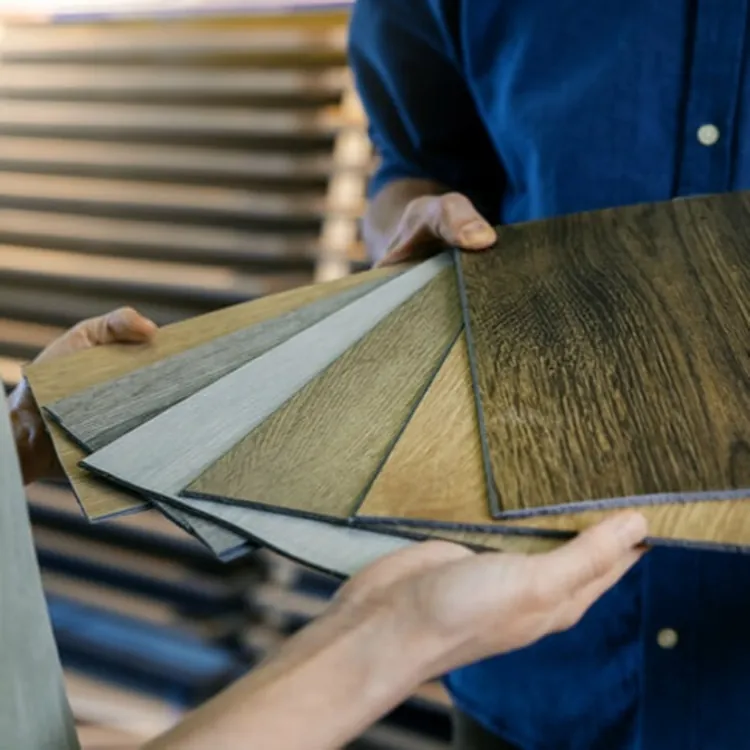
Three distinct business models dominate the flooring market, and understanding each one helps you match the right company to your project:
- Showroom retailers: These companies operate a physical store where you browse samples before committing. Installation is usually handled through subcontracted crews, and the range of products is typically wide.
- Shop-at-home companies: These companies send a rep to your home with samples, measure the space and often schedule installation within a few days from in-stock inventory. Selection is narrower, but the process is fast and convenient.
- Independent installers: These companies focus on labor, either using flooring you purchase separately or sourcing it on your behalf. Labor rates can be lower, though product and workmanship warranties come from different parties.
If your project is in an older neighborhood like Brookside or Hyde Park, look specifically for a company with hands-on experience restoring or incorporating original hardwood.
2. Check online reviews from locals
Reviews from Kansas City homeowners on platforms like ConsumerAffairs give you a window into how a company actually performs once the sales visit is over. The most common complaints we see fall into these categories:
- Warranty claims that go nowhere: Look for reviewers who frequently describe post-installation problems — lifting planks, buckling seams or separating carpet — that companies attribute to homeowner error, reject outright or charge a service fee to even consider.
- Rushed or sloppy installation: Watch for customers who report visible gaps along walls, uneven transitions, planks that separate within weeks and seams placed in high-traffic walkways, often tied to crews pushing to finish quickly.
- Sales promises that don't make it into the contract: Take note if homeowners describe verbal commitments from sales reps — discounts, extra prep work, coverage guarantees — that disappeared by the time the final invoice arrived.
- No-shows and last-minute cancellations: Beware if multiple reviewers mention clearing furniture and taking time off work, only to have the crew cancel because materials were delayed or never ordered.
- Damage to walls, trim and belongings: Take note if some customers report scuffed paint, gouged door jambs and damaged cabinetry after installation, followed by a difficult process getting the company to take responsibility.
A Kansas City resident reported that installers left nicks throughout the woodwork and railings after a laminate job. "However, there were a lot of nicks in our wood, and in our railings. We have somebody else coming out on Saturday to fix a few mistakes on their end."
Pay close attention to how a company responds when a reviewer raises a complaint. A company that engages quickly and resolves issues is often more reliable than one with a handful of glowing reviews and no record of handling problems.
3. Find out who will actually install your floors
Large flooring retailers and shop-at-home companies often schedule crews who aren't on their payroll. That arrangement isn't automatically a problem, but you deserve to know upfront who is entering your home, how long that crew has worked with the company and what the process looks like if you need a callback six months after installation.
4. Look for experience with your material
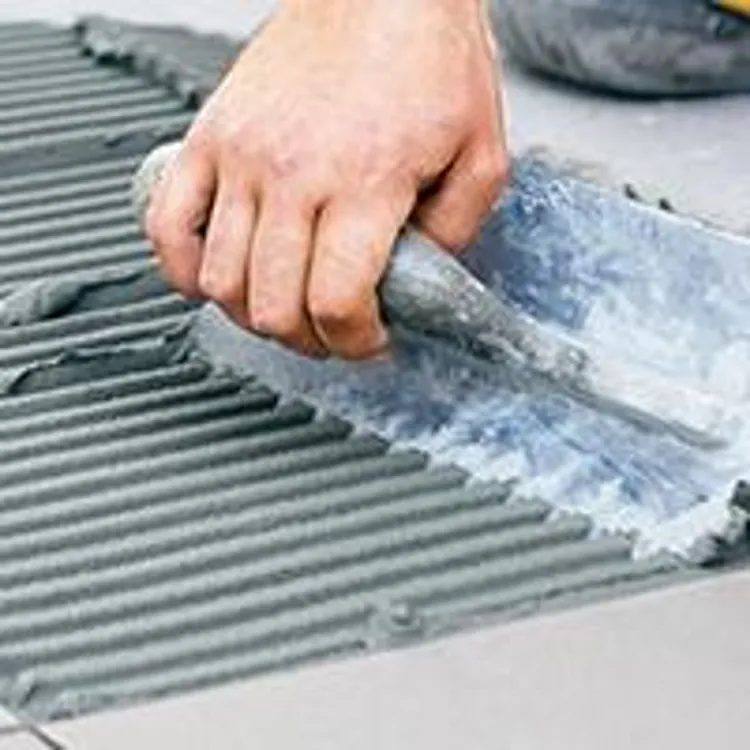
Each flooring material demands a different skill set. A crew that excels at carpet installation may have limited experience with mortar-set tile or hardwood refinishing, so ask directly how often the company works with your chosen product and request photos of comparable completed jobs. Industry certifications can offer a useful baseline of training:
- The National Wood Flooring Association (NWFA) certifies hardwood installers and refinishers.
- The International Certified Flooring Installers Association (CFI) certifies carpet and resilient flooring installers.
- The Ceramic Tile Education Foundation (CTEF) runs the Certified Tile Installer (CTI) program.
Personal referrals carry weight too. Ask neighbors, search the member directory of the Home Builders Association of Greater Kansas City or check with a local real estate agent or general contractor for names they trust.
5. Insist on an in-home measurement and subfloor check
Any quote built without someone physically measuring your rooms and inspecting your subfloor is an unreliable estimate. A thorough site visit should include checking the subfloor for soft spots, out-of-level areas and moisture — particularly over concrete slabs and in basements, where Kansas City's clay soil and spring storm runoff keep conditions damp.
Ask about acclimation requirements before installation day. Solid hardwood often needs several days inside your home to stabilize, and many vinyl and laminate products require at least 48 hours. A company willing to quote a whole-home project over the phone without a site visit is a company to avoid.
6. Compare itemized quotes and warranties
Collect at least three written quotes and make sure each one breaks down the same line items so you're comparing apples to apples:
- Square footage
- The exact product
- Underlayment or padding
- Removal and disposal of old flooring
- Subfloor preparation
- Furniture moving
- Stairs
- Transitions
- Trim
Most quotes add 5% to 10% overage for cuts and waste, and more for diagonal or herringbone layouts. Base your comparison on total installed price rather than the promotional headline rate, since discounts often get offset elsewhere in the quote.
Review warranties carefully. The product manufacturer covers material defects, while the installer is responsible for workmanship — and installation warranties range from one year to a lifetime. Improper installation can void a manufacturer's warranty, which is a strong argument for hiring someone with demonstrated experience in your material.
» COMPARE: Best flooring companies in the U.S.
Average flooring costs in Kansas City
Understanding the cost of flooring in Kansas City helps you budget realistically before the first estimate arrives. Installed flooring typically costs $4 to $15 per square foot, though budget materials may fall below that range and premium options can exceed it. Room size and subfloor preparation also affect your total.
Here’s what you can expect to pay for different flooring materials and related services:
Set aside 10% to 15% extra for subfloor repairs if your Kansas City home was built before 1940.
- In-home estimate: Free
- Carpet with pad (installed): $2 to $8 per square foot
- Luxury vinyl plank or tile (installed): $4 to $16 per square foot
- Laminate (installed): $4 to $14 per square foot
- Engineered hardwood (installed): $7 to $20 per square foot
- Solid hardwood (installed): $11 to $25 per square foot
- Ceramic or porcelain tile (installed): $10 to $45 per square foot
- Hardwood refinishing: $3 to $8 per square foot
- Old flooring removal: $0.70 to $1.60 per square foot for carpet; $2 to $7 per square foot for tile or glue-down floors
- Single room (about 250 square feet): $1,000 to $3,750
- Whole-home flooring (about 1,500 square feet): $6,000 to $22,500
Larger whole-home projects are typically quoted as a package that folds in removal, underlayment, stairs and trim.
» MORE: Costs of different flooring types
How to save money when hiring a flooring company in Kansas City
Quality installation is worth paying for, but there are practical ways to reduce your total spend without cutting corners on the work itself:
- Handle the easy prep yourself: Clearing furniture or pulling up old carpet on your own can reduce labor hours, though you should confirm with the company first so you don't create a warranty issue.
- Combine multiple rooms into one project: Scheduling several rooms at once helps you avoid minimum job fees and often earns a better per-square-foot rate than booking rooms separately.
- Stick with in-stock products: Materials already in the warehouse ship faster and typically cost less than special-order styles.
- Keep the layout straightforward: A standard straight-lay installation costs less in labor than herringbone, diagonal or any pattern that generates more cuts and waste.
- Refinish instead of replacing: If your hardwood is structurally solid, sanding and refinishing it costs a fraction of what new flooring would run.
- Read every line of the contract: Confirm that removal, disposal, transitions and trim are itemized so no surprise charges appear on the final invoice.
- Watch for seasonal promotions: Many flooring companies run discounted installation offers around major holiday weekends or at year-end to clear inventory.
Best flooring types for Kansas City homes
For most Kansas City homes, luxury vinyl plank (LVP) is a practical all-around choice. LVP shrugs off basement dampness, summer humidity swings and tracked-in winter salt. Here's how the most common flooring options stack up locally:
- Luxury vinyl plank: Waterproof, scratch-resistant and pet-friendly. In finished basements across the Northland and south Kansas City, LVP has largely replaced carpet as the default because it survives the occasional sump pump failure.
- Laminate: A budget-friendly wood look that resists scratches, though most products handle standing water worse than LVP. Laminate suits budget updates in rental-heavy areas like Midtown and Westport, but it’s best kept on upper floors since basement seepage can swell its fiberboard core.
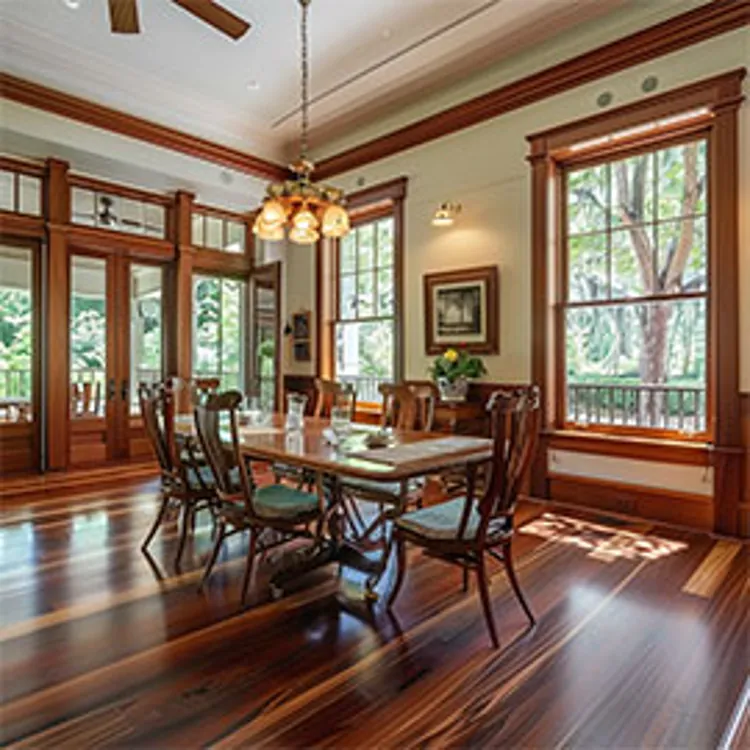
- Solid hardwood: The priciest of the common options, but it can be refinished many times and can add resale value. Original oak floors lie under carpet in many Brookside, Waldo and Hyde Park homes, and refinishing them usually pays off at resale.
- Engineered hardwood: A real wood top layer over a stable core that handles humidity swings and concrete better than solid hardwood. Engineered hardwood is the safer wood choice for walkout basements and newer Northland builds, where moisture swings are hard to control.
- Tile: Extremely durable and water-resistant, but it has the highest labor cost and feels hard and cold underfoot. Porcelain tile shows up in Kansas City bathrooms, mudrooms and basement laundry areas, though it's less common in main living spaces.
- Carpet: The least expensive option per square foot and the most comfortable underfoot. Carpet is a popular choice in bedrooms, where frigid January mornings make a soft, warm surface more desirable.
Room-by-room flooring guide for Kansas City homes
The right material in one room can be the wrong call in the next. Here's what to consider in each part of a typical Kansas City home:
- Kitchens: Kitchens need flooring that can take spills, dropped pots and constant foot traffic, which is why LVP, tile and engineered hardwood are common choices. Many Kansas City bungalows and foursquares have original oak in the dining room next to a narrow kitchen, so homeowners often extend hardwood into the kitchen for a continuous look rather than switching materials.
- Bathrooms and laundry rooms: Fully waterproof materials like porcelain tile or LVP are sensible options. Avoid solid hardwood and standard laminate anywhere water can pool. Older Kansas City bathrooms can hide small hexagon or mosaic tile set in a thick mortar bed, which raises demolition costs.
- Basements: These floors sit closest to ground moisture, so materials that tolerate dampness — like LVP, tile and engineered hardwood — typically outlast solid hardwood by years. Finished basements in Kansas City should start with a slab moisture test, since clay soil and spring storms make dampness common even in basements that look dry.
- Living and dining rooms: These rooms anchor the look of the home, and many homeowners run hardwood or a wood-look option continuously through connected spaces for a seamless feel. Mid-century ranches in south Kansas City and the Northland often have open living and dining areas where one continuous floor makes more sense.
- Bedrooms: Comfort and quiet are the top priorities, which keeps carpet popular here. Hard floors with area rugs are a practical alternative in homes where allergies are a concern. Upstairs bedrooms in Kansas City's two-story older homes can have original hardwood under carpet, so pull up a corner before you buy new flooring.
- Entryways and mudrooms: The first few feet inside the door absorb the most dirt and moisture, making tile or LVP paired with a heavy-duty entry mat the most durable combination. Kansas City's snow and ice season brings salt and grit through the front door, so a hard, sealed surface and a long mat pay off from December through March.
- Stairs: Stairs take concentrated wear and are priced per step, so choose a durable, slip-resistant material with stair nosing that coordinates with the surrounding floors. Many Kansas City homes have both a basement stair and a second-floor stair, so budget for treads, nosing or stair carpet on two flights instead of one.
FAQ
Can I put hardwood flooring in my Kansas City basement?
No, you shouldn't put solid hardwood flooring in your Kansas City basement, because clay soil and spring storms keep below-grade slabs damp. Engineered hardwood can work over a vapor barrier if a moisture test passes, but luxury vinyl plank (LVP) or porcelain tile is the safer choice.
Is it worth restoring original hardwood floors in an older Kansas City home?
Yes, restoring original hardwood floors in an older Kansas City home is usually worth it. Many homes in Brookside, Waldo and Hyde Park have oak under carpet that can be sanded and refinished for less than new flooring. Check for pet stains, deep water damage and boards worn thin by past sanding first.
What's the best flooring for Kansas City's climate?
The best flooring for Kansas City's climate is luxury vinyl plank (LVP) for most rooms. It handles basement dampness, humid summers and winter salt without swelling. Engineered hardwood is a good wood option, and carpet still works well in bedrooms.
How do I protect new floors from Kansas City's climate?
You can protect new floors from Kansas City's climate by keeping indoor humidity between 35% and 55% with a dehumidifier in summer and a humidifier in winter. Let wood acclimate before install, put mats at doors for winter salt, add felt pads and keep your sump pump working.
Could my old floors in Kansas City contain asbestos?
Yes, your old floors in Kansas City could contain asbestos if your home was built before 1980, especially 9-inch-square vinyl tiles and black mastic. Test before removing them. The Kansas City Health Department's Air Quality Program and the Missouri Department of Natural Resources regulate asbestos removal.
Methodology: How we chose the best flooring companies in Kansas City, MO
To rank the best flooring companies in Kansas City, we analyzed thousands of customer reviews across popular review platforms. Weightings were based on how much review data each platform had available, with additional weight given to ConsumerAffairs reviews. Companies were scored on a zero to 10 scale using a blend of their ratings from all review sites.
To keep things fair, a perfect score from 20 reviews carries less weight than a perfect score from 5,000. The more reviews a company has, the more its rating is taken at face value. Companies with very few reviews on one platform were assigned a neutral score for that platform rather than leaving it out entirely.
Guide sources
ConsumerAffairs writers primarily rely on government data, industry experts and original research from reputable publications to inform their work. Specific sources for this article include:
- Federal Trade Commission, “How To Avoid a Home Improvement Scam.” Accessed Nov. 9, 2026.
- National Wood Flooring Association, “Problem Prevention.” Accessed Nov. 9, 2026.
Thanks for subscribing.
You have successfully subscribed to our newsletter! Enjoy reading our tips and recommendations.
Learn more about flooring companies in Kansas City

24/7 customer service available. Offers free in-home consultations. Includes all-inclusive price estimates and next-day installation. Financing and referral programs. Low-price guarantee.
Refinishes and installs hardwood, with herringbone layouts on request. Also lays luxury vinyl plank, carpet, tile and stone. Builds tile showers and swaps stair spindles. Typically screws down squeaky subfloors before installing.
Northland showroom with carpet, laminate, luxury vinyl, porcelain and stone tile plus solid and engineered hardwood. Sands and refinishes worn hardwood. In-home or showroom consults. Serves homes, apartments and offices.

Connects homeowners and renters with home improvement specialists for free. Average home improvement job costs between $120 and $6,000. Includes damage protection guarantee up to $500,000. Online booking available.

Looking for other services in Kansas City, MO?
From moving and renovations to homeownership and maintaining a car, the right company matters. Explore local guides and resources.
Find Local Companies