The Most Flu-Vulnerable States in America (2026)

+1 more

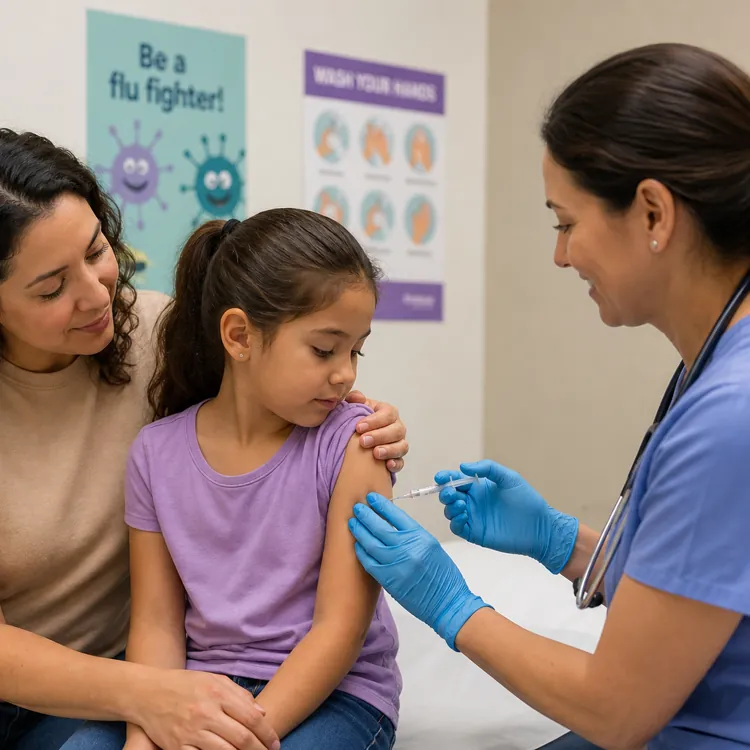
It’s late September, and the flu season is starting up again. Pharmacies are advertising shots, and many of us are asking the same two questions: Am I protected, and does where I live make things worse?
Nationally, flu shot coverage has been declining since the pandemic, and it varies widely by age group, according to the Centers for Disease Control and Prevention. But vaccination rates also differ by state, shaped in part by variations in health insurance coverage, local healthcare infrastructure and how easily residents can access vaccination.
To identify which states are most exposed heading into this season, the ConsumerAffairs Research Team ranked all 50 states and Washington, D.C., on flu vaccination uptake, the share of residents in higher-risk age groups and barriers to care, including being uninsured or in poverty. The result is a vulnerability score out of 100 — a measure of how exposed a state is, not a forecast of where the flu will hit hardest.
Key insights
The 2024-25 season had the lowest flu vaccination coverage among adults in the last seven years (41.9%) and among children in at least the last 15 years (50.2%).
Jump to insightFlorida is the most flu-vulnerable state, with one of the lowest adult vaccination rates and the nation’s largest share of residents 75 and older.
Jump to insightNevada (No. 3) has the lowest adult and senior flu vaccination levels in the country, and its child vaccination rate isn’t far behind.
Jump to insightMassachusetts ranks as the least vulnerable state, with strong vaccination rates and the nation’s lowest share of uninsured residents.
Jump to insightThe states most vulnerable heading into flu season
All 10 of the most vulnerable states are in the South or West (six and four, respectively). Southern states tend to score worse on access and economic barriers, while Western states struggle more with low vaccination coverage.
Check out the map below to see how every state scored, then scroll down for an in-depth look at the five states where residents are most exposed this flu season:

1. Florida
Overall score: 71.41
Florida tops the list because of a combination of low vaccination rates and a large share of seniors, who are at higher risk of developing serious flu complications. Adults 18 to 64 there have the second-lowest vaccination rate in the U.S. Fewer working-age adults getting a shot can mean more opportunities for the virus to reach Florida’s large older population, which includes the largest share of people 75 and over nationwide.
A high uninsured rate certainly doesn’t help. The Sunshine State’s share of residents without health insurance is 10.9%, well above the national average. Going without coverage often means putting off routine care, including flu shots.
“Florida has a unique problem: too many elderly residents who may be getting vaccinated, but a large chunk of young and middle-aged adults who do not get vaccinated and continue to pose a risk for seniors in the state,” said Jagdish Khubchandani, a professor of public health at New Mexico State University.
- Flu vaccination rank: Third lowest in U.S.
- Share of children vaccinated for flu: 41.3% (eighth lowest)
- Share of adults 18 to 64 vaccinated for flu: 27.6% (second lowest)
- Share of adults 65 and older vaccinated for flu: 57.2% (seventh lowest)
- High-risk age population rank: Third highest in U.S.
- Share of residents under 5: 4.9%
- Share of residents 65 to 74: 11.8% (eighth highest)
- Share of residents 75 and older: 10.0% (highest)
- Access and economic barriers rank: 14th worst in U.S.
- Share of residents without health insurance: 10.9% (sixth highest)
- Share of residents living below the poverty line: 12.0%
2. Louisiana
Overall score: 70.61
Louisiana’s No. 2 ranking is due in large part to the state having the highest share of residents living below the poverty line (18.7%). Vaccination rates among children, adults and seniors are all below national averages, adding to overall risk.
Louisiana also has a relatively high percentage of kids under 5, an age group that is subject to flu-related complications. According to the CDC, thousands of children across the U.S. — in particular children younger than 5 — are hospitalized with the flu each year, with complications including pneumonia, dehydration and brain dysfunction. The agency says that annual flu vaccination in children has been shown to reduce illness, doctor’s visits and missed school days, and the risk of hospitalization and death.
- Flu vaccination rank: Seventh lowest in U.S.
- Share of children vaccinated for flu: 40.5% (sixth lowest)
- Share of adults 18 to 64 vaccinated for flu: 30.8%
- Share of adults 65 and older vaccinated for flu: 56.9% (sixth lowest)
- High-risk age population rank: 20th highest in U.S.
- Share of residents under 5: 5.9% (fifth highest)
- Share of residents 65 to 74: 10.8%
- Share of residents 75 and older: 7.0%
- Access and economic barriers rank: Third worst in U.S.
- Share of residents without health insurance: 7.7%
- Share of residents living below the poverty line: 18.7% (highest)
3. Nevada
Overall score: 69.71
No state has lower adult flu vaccination rates than Nevada. And child vaccine levels aren’t far behind, ranking among the 10 lowest nationally.
“Nevada struggles with immunizations in general, and flu shots are no exception,” said Brian Labus, an associate professor of epidemiology and biostatistics at the University of Nevada, Las Vegas. He said younger adults tend to skip flu shots more often than seniors, since the risk of severe illness is lower.
Seeing a doctor isn’t always easy for Nevadans because a relatively high percentage (11.4%) have no health insurance — that’s well above the national uninsured rate of 8.2% and fourth highest in the U.S.
- Flu vaccination rank: Lowest in U.S.
- Share of children vaccinated for flu: 41.4% (ninth lowest)
- Share of adults 18 to 64 vaccinated for flu: 24.5% (lowest)
- Share of adults 65 and older vaccinated for flu: 52.5% (lowest)
- High-risk age population rank: 44th highest in U.S.
- Share of residents under 5: 5.2%
- Share of residents 65 to 74: 10.3%
- Share of residents 75 and older: 7.3%
- Access and economic barriers rank: 12th worst in U.S.
- Share of residents without health insurance: 11.4% (fourth highest)
- Share of residents living below the poverty line: 11.6%
4. Oklahoma
Overall score: 68.49
The Sooner State is one of the worst in the U.S. for access and economic barriers, finishing with the fifth-worst score in that category. The percentage of residents without health insurance, 11.5%, is the highest of any of the five most flu-vulnerable states. Oklahoma also has the ninth-greatest share of people living in poverty (14.9%).
Those statistics may help explain why low percentages of residents in all age groups are getting flu vaccines. Fewer than three in 10 adults 18 to 64 and fewer than four in 10 children get vaccinated.
- Flu vaccination rank: Eighth lowest in U.S.
- Share of children vaccinated for flu: 38.4% (fourth lowest)
- Share of adults 18 to 64 vaccinated for flu: 28.7% (sixth lowest)
- Share of adults 65 and older vaccinated for flu: 60.2%
- High-risk age population rank: 35th highest in U.S.
- Share of residents under 5: 5.9% (fifth highest)
- Share of residents 65 to 74: 10.0%
- Share of residents age 75 and older: 6.9%
- Access and economic barriers rank: Fifth-worst in U.S.
- Share of residents without health insurance: 11.5% (third highest)
- Share of residents living below the poverty line: 14.9% (ninth highest)
5. Wyoming
Overall score: 67.85
Wyoming has the second-lowest flu vaccination rate in the U.S., behind only Nevada. Each age group (children, adults 18 to 64 and adults 65 and over) ranks in the bottom five nationally in vaccine uptake — something no other state has in common.
Wyoming also stands out for having a comparatively high share of residents without health insurance (over one in 10) and a large percentage of residents who are 65 to 74.
- Flu vaccination rank: Second lowest in U.S.
- Share of children vaccinated for flu: 37.4% (third lowest)
- Share of adults 18 to 64 vaccinated for flu: 28.6% (fifth lowest)
- Share of adults 65 and older vaccinated for flu: 54.7% (fourth lowest)
- High-risk age population rank: 30th highest in U.S.
- Share of residents under 5: 4.8%
- Share of residents 65 to 74: 12.2% (seventh highest)
- Share of residents 75 and older: 7.7%
- Access and economic barriers rank: 20th worst in U.S.
- Share of residents without health insurance: 10.3% (seventh highest)
- Share of residents living below the poverty line: 10.1%
The states best prepared for flu season
Five of the 10 least flu-vulnerable states are in the Northeast, and Massachusetts leads as the No. 1 state best prepared for flu season. The state ranks second highest for flu vaccination, with the second-highest share of children, third-highest share of adults 18 to 64 and fourth-highest share of seniors vaccinated. Massachusetts also has the lowest percentage of residents without health insurance.
Vermont has one of the oldest populations in the U.S., but it finishes as second-least vulnerable because of the highest vaccination rates overall.
States that finish in the 10 least vulnerable are a mix of population demographics and insurance coverage, but they all finish near the top for vaccination.
“Strong state and local public health departments are important,” said Dr. Suraj Saggar, the chief of infectious disease at Holy Name Medical Center in Teaneck, New Jersey. He pointed to education campaigns and efforts to bring vaccines to where people are. For example, a vaccine clinic might be held outside a supermarket or in a mall, rather than requiring a separate doctor’s appointment or pharmacy trip.
Here are the 10 places best prepared for this flu season based on our analysis:
- Massachusetts
- Vermont
- Washington, D.C.
- Rhode Island
- Maryland
- New Hampshire
- Connecticut
- Colorado
- California
- Minnesota
How does flu vulnerability vary across the U.S.?
States in the middle of the rankings are there for different reasons.
Utah, for example, has one of the lowest shares of older residents and one of the lowest poverty rates in the U.S., suggesting low vulnerability to flu. But its vaccination levels among children, adults 18 to 64 and seniors are all a few points below national averages, so it places only 22nd least vulnerable.
North Carolina shows the opposite pattern. Adults 18 to 64 and seniors there get vaccinated at above-average rates. But higher percentages of residents in poverty or without insurance pull the state down to 17th least vulnerable.
Use the table below to see how every state and Washington, D.C. scored across all eight metrics we examined:
How to protect yourself during flu season
Flu vaccination rates among U.S. adults have dropped to a seven-year low, and flu cases have climbed in recent years, to 51 million in the 2024-25 season.
Whether your state ranks near the top or the bottom of the list for flu vulnerability, taking these steps can lower your chances of catching the flu this season:
- Get your shot soon. “Middle to end of September and into October is a good time to get vaccinated,” said Saggar, of Holy Name Medical Center. Labus, of UNLV, added that if you’re outside this ideal time window, it isn’t too late. “The vaccine also protects against influenza B, which usually starts to increase later in the season,” he said.
- Check your coverage before you pay out of pocket. Most health plans cover an annual flu shot at no cost when it’s provided by an in-network provider. For those without insurance, a flu shot typically costs between $20 and $130, according to GoodRx.
- Know who’s most at risk, especially at home. According to the CDC, those at higher risk of complications from flu include people 65 and older, young children, pregnant women and those with certain chronic conditions. Nationally, only 50.2% of children got a flu shot in the 2024-25 season, compared with 63.8% of adults 65 and older. Remember that an unvaccinated child in a multigenerational household can still expose a higher-risk grandparent.
- Stick to the basics. Apart from getting vaccinated, you should wash your hands often, avoid touching your face and keep high-touch surfaces, like doorknobs, light switches and your cellphone, clean, Saggar said. He also recommended staying home from work or school while you’re sick until you’ve been fever-free for 24 hours.
Methodology
To identify the states most vulnerable heading into flu season, the ConsumerAffairs Research Team ranked all 50 states, as well as Washington, D.C., across eight metrics in three categories. For each metric, the state with the highest vulnerability was scored the maximum number of points, with other states getting proportional scores. The total score is out of 100 points.
This analysis looks at vulnerability moving into flu season; it is not a prediction of which states will report the most flu cases, hospitalizations or deaths.
Flu vaccination rate (50 points)
Vaccination rates together carry the greatest weight in the ranking. Lower vaccination rates receive higher vulnerability scores. Each of the three metrics below is worth a maximum of 16.67 points:
- Share of children 6 months to 17 years vaccinated for flu during the 2024-25 season
- Share of adults 18 to 64 vaccinated for flu during the 2024-25 season
- Share of adults 65 and older vaccinated for flu during the 2024-25 season
All figures come from the Centers for Disease Control and Prevention FluVaxView dataset.
Because of data limitations, adult vaccination figures for Alabama, California, Idaho and Indiana reflect the 2023-24 season, and figures for Mississippi reflect the 2022-23 season.
Share of residents in the highest-risk age groups (30 points)
Young children and older adults are at greater risk of serious complications from flu. Each of the three metrics below is worth a maximum of 10 points:
- Share of residents under 5
- Share of residents 65 to 74
- Share of residents 75 and older
Data comes from the U.S. Census Bureau American Community Survey (2024).
Access and economic barriers (20 points)
These metrics point to obstacles to preventive care. Each of the two metrics below is worth a maximum of 10 points:
- Share of residents without health insurance
- Share of residents living below the poverty line
Both come from the U.S. Census Bureau American Community Survey (2024).
Reference policy
We love it when people share our findings! If you do, please link back to our original article to credit our research.
Questions?
For questions about the data or if you'd like to set up an interview, please contact jrodriguez@consumeraffairs.com.
Article sources
ConsumerAffairs writers primarily rely on government data, industry experts and original research from other reputable publications to inform their work. Specific sources for this article include:
- Centers for Disease Control and Prevention, "Influenza Vaccination Coverage for Persons 6 Months and Older." Accessed Sept. 5, 2026.
- U.S. Census Bureau, “Explore Census Data.” Accessed Sept. 5, 2026.
- Centers for Disease Control and Prevention, "Flu Vaccination Coverage, United States, 2024–25 Influenza Season." Accessed Sept. 5, 2026.
- Centers for Disease Control and Prevention, "Flu and Children." Accessed Sept. 5, 2026.
- HealthCare.gov, “Health benefits & coverage.” Accessed Sept. 5, 2026.
- GoodRx, "How Much Does a Flu Shot Cost Without Insurance?" Accessed Sept. 5, 2026.
- Centers for Disease Control and Prevention, "People at Increased Risk for Flu Complications." Accessed Sept. 5, 2026.
Figures