

Compare our top walk-in tub picks
| Company | Customer rating | Best for | Seat width | Tub dimensions | Tub warranty | |
|---|---|---|---|---|---|---|
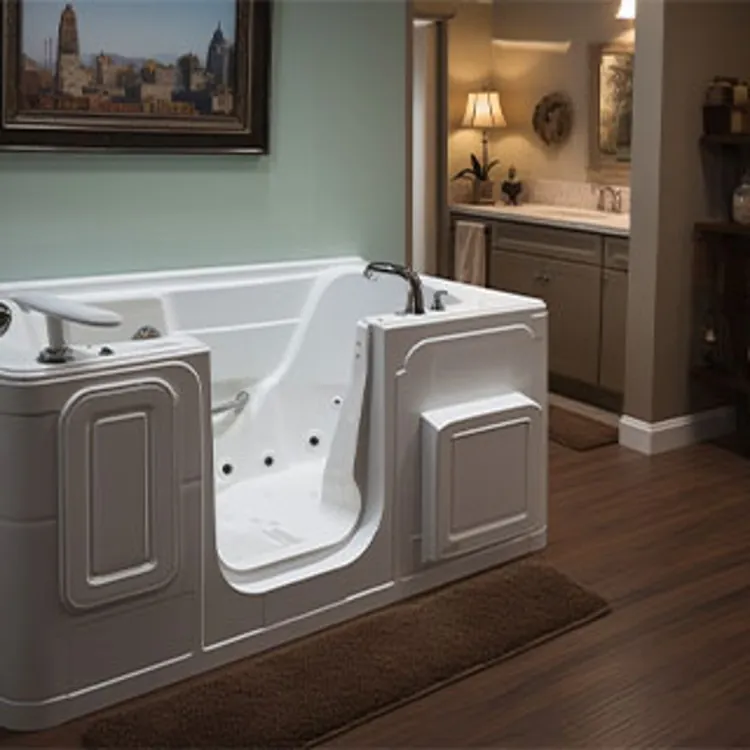
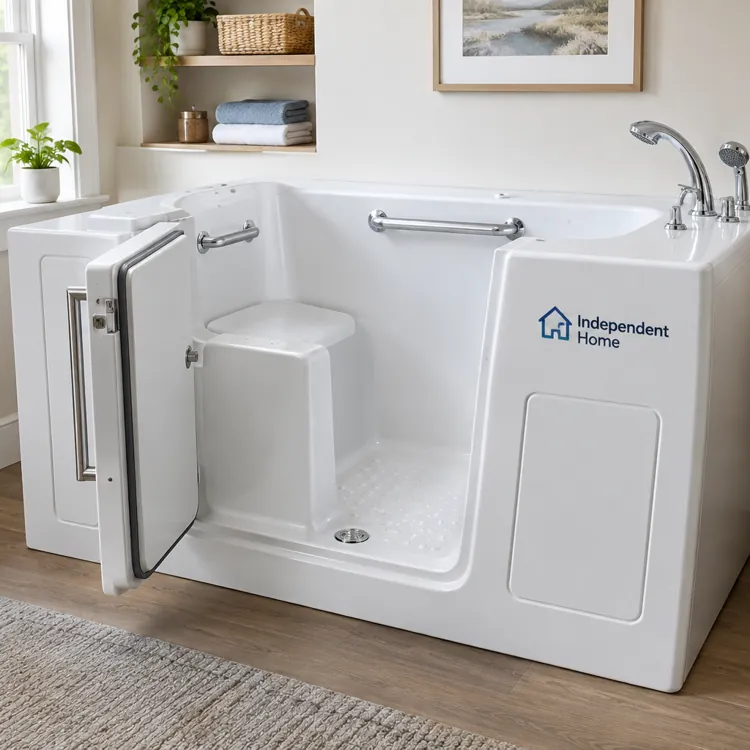
 Independent Home | Get Started | 4.6 | Best overall | Varies | Varies | Lifetime |
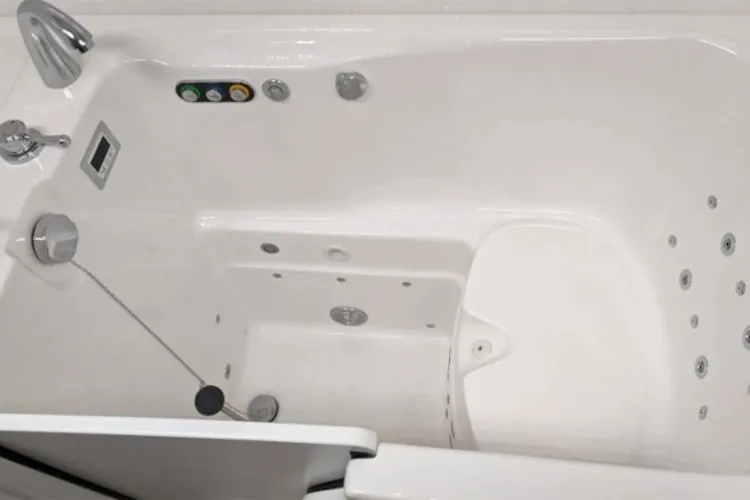
 Boca Walk-In Tubs | Learn More | 4.3 | Best warranty coverage | 27 inches | 32”x56”x36” | Lifetime |
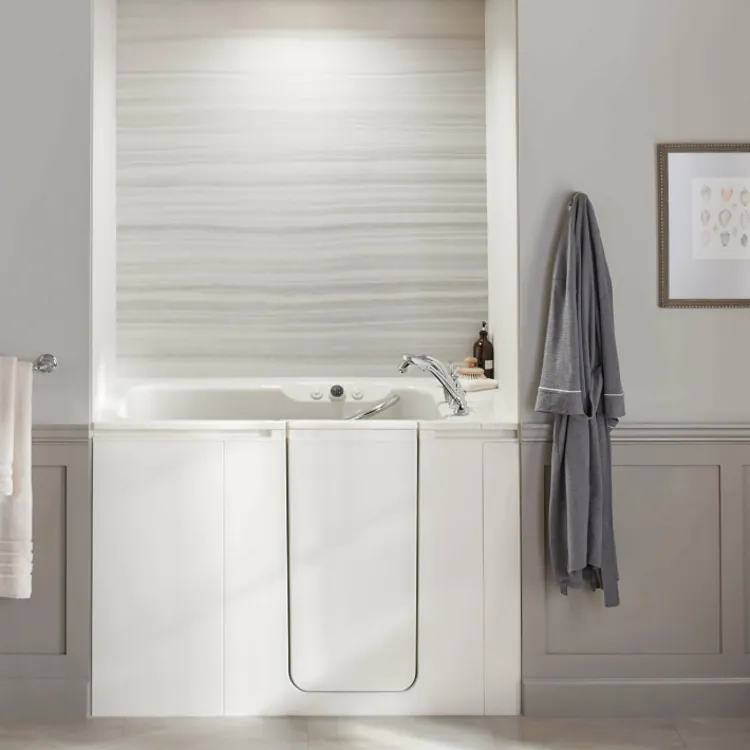
 Kohler Walk-In Bath | Get Started | 4.5 | Best customer service | 21.5 inches | 32”x60”x39” | Limited lifetime |
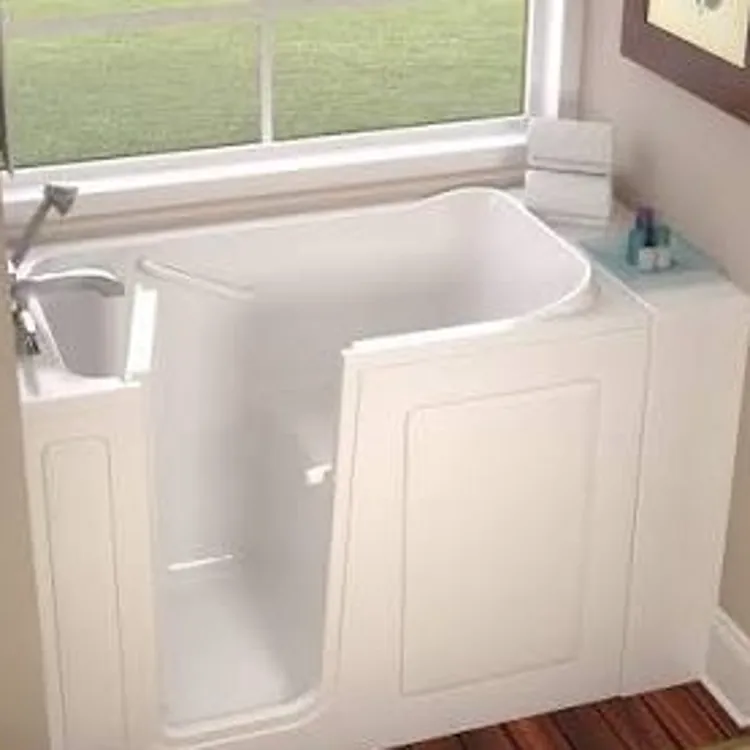
 Hydro Dimensions | Learn More | 3.9 | Best for extra-large tubs | 28.5 inches | 35.75”x55”x40” | Lifetime |
Independent Home

- Soaking depth
- Varies
- Door width
- -
- Warranty - Parts
- Lifetime
- Wheelchair-accessible tub
- Yes
Boca Walk-In Tubs

- Soaking depth
- 27 inches
- Door width
- -
- Warranty - Parts
- Lifetime
- Wheelchair-accessible tub
- Yes
Kohler Walk-In Bath

- Soaking depth
- 21.5 inches
- Door width
- -
- Warranty - Parts
- Limited lifetime
- Wheelchair-accessible tub
- Yes
Hydro Dimensions

- Soaking depth
- 28.5 inches
- Door width
- -
- Warranty - Parts
- Limited (10-year prorated)
- Wheelchair-accessible tub
- Yes
Methodology: How we chose the best extra-wide walk-in tubs
The ConsumerAffairs Research Team compared extra-wide walk-in tub companies using verified customer reviews, product details and company policies. To qualify, companies needed verified reviews submitted between Sept. 1, 2019, and Aug. 31, 2026.
We scored each brand in three areas:
- Customer experience: Satisfaction with installation and setup, customer service and price
- Tub performance: Satisfaction with features and fill or drain time
- Size and warranty: Maximum tub width and warranty coverage
Each company received a score from zero to 10 for every metric. The top performer earned a 10, and we scored the other companies relative to it. We used different weightings for each award.
For example, the customer service award focused more on customer service and installation ratings, while the extra-large tub award emphasized maximum tub width.
Extra-wide walk-in tub buyers guide
Choosing an extra-wide walk-in tub provides more space and comfort, creating a more luxurious experience than a smaller, cramped utility tub. Shopping for an extra-wide tub means looking at more than just width. Safety features, seating, depth, required floor space and cost also factor into the decision.
Key insights
Accessible and wider doorways often help add comfort to even extra-wide walk-in tubs.
Jump to insightHome remodeling to support a walk-in tub may cost more than the tub itself.
Jump to insightWalk-in tubs improve independence and reduce fall risks for seniors and those with mobility challenges.
Jump to insightHow to choose an extra-wide walk-in tub
Extra-wide walk-in tubs feature wider tub interiors, roomier seats and wider door entries for accessibility and comfort. Sometimes called bariatric tubs, these extra-wide tubs offer more comfort than standard-width tubs for people of all sizes, although they take more floor space.
Types of walk-in tubs
Walk-in tubs are typically divided into five types of tubs, and units may fall into multiple categories. The types of walk-in tubs are:
- Soaker tubs: Basic walk-in tubs without hydrojets or other advanced features
- Bariatric tubs: Extra-wide walk-in tubs designed to provide more space and comfort
- Accessible tubs: Walk-in tubs designed for easy transfers from wheelchairs and for people with limited mobility
- Hybrid tubs: Combination walk-in tubs with showers, making them a popular option for multi-user households
- Therapy tubs: Walk-in tubs with hydrotherapy or air therapy features, such as water jets and bubblers, to target muscle soreness and poor circulation
Features
Options and features for extra-wide walk-in tubs are surprisingly robust. From basic models to high-end models bordering on personal spas, there are models to suit every need, space and budget when choosing a walk-in tub.
Tub sizes
While standard walk-in tubs are typically around 28 inches wide, bariatric extra-wide models are typically 32 to 35 inches wide assembled. Several manufacturers, like Kohler, offer customized dimensions to fit your bathroom space and needs.
However, the biggest limits on walk-in tub sizes are often your doorways (even after temporarily removing the doors themselves).
Entryway features
How you enter your walk-in tub varies widely. While all have a much lower lip to step over than a traditional bathtub, entry direction, width and lip height vary widely. Extra-wide walk-in tubs tend to offer the largest opening options. Walk-in tub entryways include:
- Outward swing: Most walk-in tub doors swing outward, away from the tub. This saves space inside the tub during entry but requires more bathroom space.
- Inward swing: An inward-swing door, into the tub itself, saves bathroom space but may make getting into the tub more complicated.
- Curved side: Curved-entry tubs add to the tub width, but may cost more because of the structural requirements needed to prevent leaks.
- Accessible entry: ADA-compliant tubs with accessible entries often include a very low lip, wider doors and seats positioned for easier transfer from a wheelchair or other mobility device.
- Wide entry/L-shaped entry: Wide door entries, typically L-shaped to allow you to transfer directly to a seat, make walk-in tubs easier for larger people, those transferring from a wheelchair and those needing help from another person to enter the tub.
Comfort and safety features
Beyond access and tub style, most top walk-in tub manufacturers offer a wide range of comfort and safety features. These features include:
- Hydrotherapy jets: Powered water jets in the tub, similar to hot tub jets, help to massage muscles and increase circulation.
- Air therapy: Similar to hydrotherapy jets but using air, air therapy is typically easier on delicate skin.
- Larger seat: Tub seat width is important, but depth also affects comfort and safety. Deeper seats typically make a safer, more comfortable bathing experience.
- Grab bars: A vital safety feature, grab bars help prevent falls during entry and exit of your walk-in tub.
- Anti-slip flooring: Anti-slip coatings help prevent falls, the number one cause of injury for seniors.
- Quick fill: Walk-in tubs require a lot of water to fill, around 60 gallons in many cases. Quick-fill systems help reduce waiting time and prevent water from cooling off too much while filling.
- Quick drain: Since you must wait for a walk-in tub to drain before exiting, quick-drain systems help prevent chills while you wait.
- Anti-scald technology: Constant-temperature faucet systems, called thermostatic faucets, mix hot and cold water before it enters the tub, preventing sudden temperature changes.
- Heated seats: Heated seats and backrests help prevent chills while waiting for a walk-in tub to fill or empty.
- Aromatherapy: Dedicated scent dispensers allow users to add scents to baths without risking clogs or other damage to the tub.
- Chromatherapy: In-tub LED lighting allows users to select a color or preset changes to enhance moods.
- Remote control: Water-resistant remote controls for features such as hydrotherapy jets and heated seats add convenience.
Walk-in tub cost
The cost of walk-in tubs with installation typically ranges from $3,000 to $30,000, depending on tub size and features, as well as the installation work needed. Extra-wide walk-in tubs tend to fall toward the higher end of that range. Walk-in tubs also have ongoing costs from water, electricity use and maintenance.
Installation requirements
Beyond the tub's cost, installation requirements vary widely, from simple assembly with plumbing and wiring connections to full remodeling with additional floor supports. Depending on your home, installation costs may exceed the cost of the tub itself.
"Homeowners often focus on the tub itself and overlook the surrounding bathroom modifications needed to make it truly accessible. Things like doorway width for wheelchair access, anti-slip flooring throughout the space, and overall layout can be just as important as the tub itself in creating a bathroom that's safe and functional for aging in place," said Jenny Marrs, co-star of HGTV’s ‘Fixer to Fabulous’ and national designer for Re-Bath.
Doorway width for wheelchair access, anti-slip flooring throughout the space, and overall layout can be just as important as the tub itself…”
Two of the most common issues are doorway size and hot water availability.
You may need to widen doorways or install a new hot water tank. Since walk-in tubs typically require between 40 and 70 gallons of water, your water heater must handle the load. If you have a smaller water heater, you’ll likely need to install a larger one to support your walk-in tub.
Other common additional installation needs include permits, additional floor support, plumbing updates, drywall repair after plumbing and electrical changes and upgraded ventilation to prevent mold.
Pros and cons of extra-wide walk-in tubs
Walk-in tubs offer many benefits, but they also come with specific downsides. Deciding if a walk-in tub is for you and choosing the best walk-in bathtub for your home often means balancing the costs with the health and comfort benefits.
Consider the following pros and cons of walk-in tubs:
Pros
- Safety improvement vs. traditional tub due to lower entry step and grab bars
- Therapeutic soaks in privacy of your own home vs. travel to a facility
- Hydrotherapy and air therapy may improve circulation as well as relieve aches and pains
- May increase home value
Cons
- High water usage
- May require significant home upgrades for installation
- Must wait in the tub while tub fills/drains
FAQ
What is the largest walk-in tub size?
Most large walk-in tubs are only as wide as a household door, with the largest typically capping at a 36 inches wide exterior dimension.
What are the best bathtubs for large people?
While extra-wide or bariatric walk-in tubs are typically best for larger people, standard walk-in tubs with deeper seating or wider doors may also be good choices.
How much does an extra-wide walk-in tub cost?
Extra-wide walk-in tubs are typically called bariatric walk-in tubs, and costs start around $6,000 plus shipping and installation. However, most bariatric walk-in tubs cost considerably more.
How wide is an extra-wide walk-in tub door?
Bariatric tub doors are often standard sizes, around 17.25 inches wide, unless you upgrade to a wide-door model. L-shaped door upgrades for wheelchair transfers often offer the largest opening options, around 36 inches wide at seat height.
Is a walk-in tub covered by insurance or Medicare?
No, Medicare does not cover walk-in tubs and does not consider them durable medical equipment (DME).
Guide sources
ConsumerAffairs writers primarily rely on government data, industry experts and original research from other reputable publications to inform their work. Specific sources for this guide include:
- National Library of Medicine, “Can aging in place be cost effective? A systematic review.” Accessed Sept. 9, 2026.
- University of the West of England (UWE Bristol), “The role of home adaptations in improving later life.” Accessed Sept. 9, 2026.
- CDC, “Older Adults Fall Data.” Accessed Sept. 12, 2026.
- National Library of Medicine, “Scientific Evidence-Based Effects of Hydrotherapy on Various Systems of the Body.” Accessed Sept. 10, 2026.
- Cleveland Clinic, “Hydrotherapy.” Accessed Sept. 10, 2026.
- National Library of Medicine, “Unmet Need for Equipment to Help With Bathing and Toileting Among Older US Adults.” Accessed Sept. 13, 2026.
- Centers for Medicare & Medicaid Services (CMS), “National Coverage Determination (NCD) Durable Medical Equipment Reference List.” Accessed Sept. 13, 2026.