

Defining synthetic identity theft
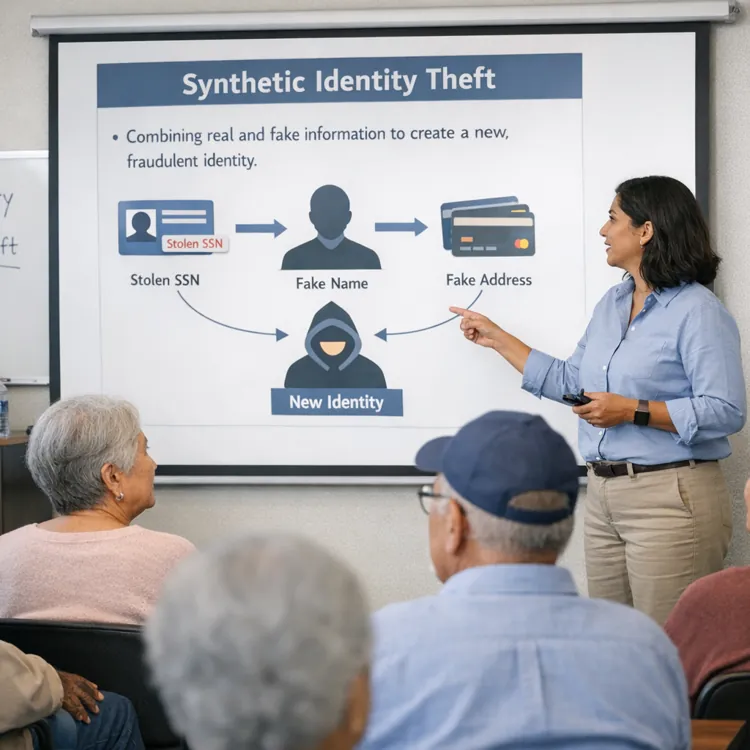
Synthetic identity fraud is a type of identity theft that combines a person’s authentic personal information with fabricated details to create a fake identity based on your personal details. This false identity can then be used for illegal purposes, such as fraud, money laundering, misdirection and unauthorized access to your accounts.
Gabriella Marzola, creative strategist at ConsumerDirect, said that criminals create a fake identity by taking real information, such as Social Security numbers (SSNs) found through public people search and third-party data broker websites, and pairing it with fabricated information, such as a fake name or birthdate.
“With this new fake identity, criminals can open credit accounts, take out loans and commit other financial fraud.” Marzola said. “Unfortunately, since the identity is not fully real, victims may not even realize their information is being exploited until they are denied credit or loans,” she explained.
Targets of synthetic identity theft
Most cases of synthetic identity theft affect certain groups who are less likely to monitor and use their credit:
- Seniors
- Homeless population
- The deceased
Additionally, Nate Nead, managing director at HOLD.co, said, “Children are common targets because their SSNs are ‘clean.’”
Especially with these groups, synthetic identity theft can remain undetected for years.
Synthetic identity theft vs. traditional identity theft
The difference between traditional identity theft and. synthetic identity theft is simple: Traditional identity theft uses a real identity, while synthetic identity theft creates a fake one using details that are partially real.
Traditional identity theft uses your real identity, with hackers posing as you in order to open lines of credit. However, with synthetic identity fraud, they only use some of your actual details, blending them in with false information to create a false identity.
This identity may be based on true information, but it is fraudulent all the same.
How synthetic identity theft works
To create a synthetic identity, criminals can either steal your personal information or purchase it from the dark web. They may also scam you into giving up your information through a fake phone, email or mail request.
Often, your information is compromised in a data breach, which is all too common today. From October through December 2025 alone, Petco, the University of Phoenix, DoorDash, Qantas Airways, Volvo and Harrod’s all experienced data breaches that compromised personal data. The Washington Post even suffered a breach of employee data, showing that no industry is immune to fraud.
Once hackers have your personal details, they can create a synthetic identity in multiple ways:
- Identity compilation. Also known as Frankenstein fraud, hackers steal your real information, such as your SSN, and use it to create a fake identity using a false name, date of birth, mailing address, email address and phone number.
- Identity manipulation. Criminals may steal your personal information, make slight changes and then try to use it to create a new identity.
- Identity fabrication. This involves an entirely fictitious account based on false personal information.
- Backstopping. With this method, thieves develop backstories to create a more realistic identity.
With this new identity, identity thieves can create fraudulent documents, such as fake IDs, birth certificates and medical records. They can also leave a digital footprint by using your personal details to establish public records and social media accounts.
Building a fake credit profile
Over time, they build a credit profile for these accounts, further legitimizing them through a healthy credit score that will earn them lines of credit. This enables them to open personal loans, credit cards and bank accounts. They can even claim your government benefits.
Overall, synthetic identity theft isn't just ‘someone stole my card.’ It's someone quietly inventing a person using your data, then letting you deal with the consequences.”
Nead explained that the thief uses the synthetic identity to apply for credit that gets denied at first, then approved as they ‘age’ the profile. For instance, they might open a small account, make on-time payments and slowly increase limits.
“Once the credit looks legitimate, the fraud ramps up,” he said.
However they go about it, it ends in a bust-out scheme: they open these accounts, take the cash for themselves and leave you with the bill – plus all of the accumulated interest.
“The end game is often a big cash-out: maxing credit lines, taking loans, or committing benefits and tax fraud, then disappearing,” Nead continued.
The impact of synthetic identity theft
The exact impact of synthetic identity theft depends on how criminals use your information.
“From a tax perspective, the damage can be brutal because it's confusing,” said Nead. “Cleaning it up can take months’ worth of paperwork, and it can delay legitimate refunds at the worst possible time.”
Plus, he says, the impact goes well beyond money. “It can wreck credit reports, block access to housing or loans and create a constant stress loop of proving you are who you say you are,” he explained.
Synthetic identity theft can negatively affect you in several ways.
- Damage to your credit score
- Future denial of credit
- A poor credit history
- Delinquent accounts
- Large financial losses
- Future denial of government and medical benefits
- Loss of business revenue
- Reputational damage
With damage to your credit, it will be extremely difficult to obtain new credit in the future, whether you are buying a new house, applying for a new credit card or getting a new job.
“I've seen qualified buyers get turned down for a mortgage because someone using their credentials to make a fake name defaulted on a car loan,” shared Scott Bialek, co-founder of Hurst Lending in Dallas, Texas.
Detecting synthetic identity theft
The most dangerous aspect of synthetic identity fraud is that it’s growing increasingly difficult to detect. While lenders do employ fraud detection tools, they have failed to solve the problem because they rarely keep up with technological advances that are only growing smarter.
These accounts are especially difficult to recognize because they appear legitimate, using real information to bypass identity verification checks and other security protocols. Therefore, it may be months or even years before they are discovered.
The best defense is proactive vigilance.”
Protecting against synthetic identity theft
Today, synthetic identity theft has become so widespread that experts have gone as far as to call it a “scamdemic.”
It’s an issue at the federal level, too, with the government taking steps to heighten privacy and cybersecurity protocols, strengthen IRS procedures for scam detection and prevention and create support programs for citizens and employees.
However, you can take some preventive measures to better protect your personal data and help prevent synthetic identity fraud.
- Don’t share your SSN unless absolutely necessary.
- Never share personal details online.
- Use strong passwords and change them regularly.
- Enable two-factor authentication on your accounts.
- Activate fraud alerts with financial institutions and credit monitoring services, such as your bank, credit card company and services like Experian and TransUnion.
- Sign up with a credit monitoring service like IDShield or LifeLock for enhanced alerts.
- Regularly check your credit report for updates. You can get a free credit report from AnnualCreditReport.com for each of the three major credit bureaus.
- Educate yourself on the latest phishing scams, so you recognize the signs if a criminal contacts you directly.
- Secure your network with a VPN service like Hotspot Shield and NordVPN that can help keep scammers out of your accounts and away from your personal information. Avoid public Wi-Fi networks and shared devices when accessing sensitive data.
“The best defense is proactive vigilance,” said Marzola.
Marzola recommended monitoring your credit reports regularly and reducing the exposure of your personal information (especially on data broker and public record sites), which limits the data that criminals can use to build synthetic identities.
“By remaining proactive, you can better secure your private data and reduce your chances of synthetic identity theft,” she said.
What to do if you’re a victim
If you experience synthetic identity theft, it’s imperative that you act immediately when reporting the scam.
Notify your financial institution and all other involved parties to let them know that your information has been stolen. Be sure to thoroughly review your accounts to pinpoint all fraudulent transactions and activities.
You can file a report with the Federal Trade Commission by visiting IdentityTheft.gov or calling 877-438-4338. You should also file a police report with the local police department. This will help later if you need to file an identity theft insurance claim.
You should also contact the credit bureaus, Equifax, Experian and TransUnion, to notify them of the breach.
Be sure to also place a credit lock on your credit report or freeze your credit to prevent further use. “This is one of the strongest defenses, and it's free,” said Nead.
“Overall, synthetic identity theft isn't just ‘someone stole my card.’ It's someone quietly inventing a person using your data, then letting you deal with the consequences,” he warned. “A credit freeze and early monitoring are your secret weapons.”
» COMPARE: Best credit monitoring services
FAQ
What is a synthetic identity?
A synthetic identity is one created with both real and false information, such as a real Social Security number combined with a fake name and address.
What are the three common types of identity theft?
Common types of identity theft include financial, medical and tax identity theft. More specifically, there is elder and child identity theft, as well as synthetic identity theft.
How does synthetic identity theft differ from traditional identity theft?
Synthetic identity theft uses some real details mixed with false information, while traditional identity theft creates an entirely new identity.
Why is synthetic identity theft a growing problem?
Technology has made it extremely easy for hackers and scammers to steal your most sensitive details. It’s an issue only exacerbated by the rise of GenAI and deepfakes, which now allow thieves to generate realistic images of you that can bypass biometric protocols. While the government struggles to catch up, it’s more important than ever to safeguard your data.
Article sources
ConsumerAffairs writers primarily rely on government data, industry experts and original research from other reputable publications to inform their work. Specific sources for this article include:
- Deloitte Insights, “Using biometrics to fight back against rising synthetic identity fraud.” Accessed Jan. 25, 2026.
- Equifax, “What Is Synthetic Identity Theft?” Accessed Jan. 25, 2026.
- Equifax, “8 Types of Identity Theft You Should Know.” Accessed Jan. 25, 2026.
- Federal Trade Commission, “The Changing Face of Identity Theft.” Accessed Jan. 25, 2026.
- Moody’s, “Synthetic identities and why they are important in today’s digital landscape.” Accessed Jan. 25, 2026.
- Nord Security, “What is synthetic identity theft? Avoid becoming a victim.” Accessed Jan. 25, 2026.
- PKWARE, “Data Breaches 2025: Biggest Cybersecurity Incidents So Far.” Accessed Jan. 25, 2026.
- Federal Reserve Banks, “Synthetic Identity Fraud in the U.S. Payment System.” Accessed Jan. 25, 2026.
- Thomson Reuters, “Synthetic Identity Fraud: What is it and How to Combat it.” Accessed Jan. 25, 2026.
- TransUnion, “What Is Synthetic Identity Fraud?” Accessed Jan. 25, 2026.
- U.S. Government Accountability Office, “Watching Out for Synthetic Identity Fraud.” Accessed Jan. 25, 2026.