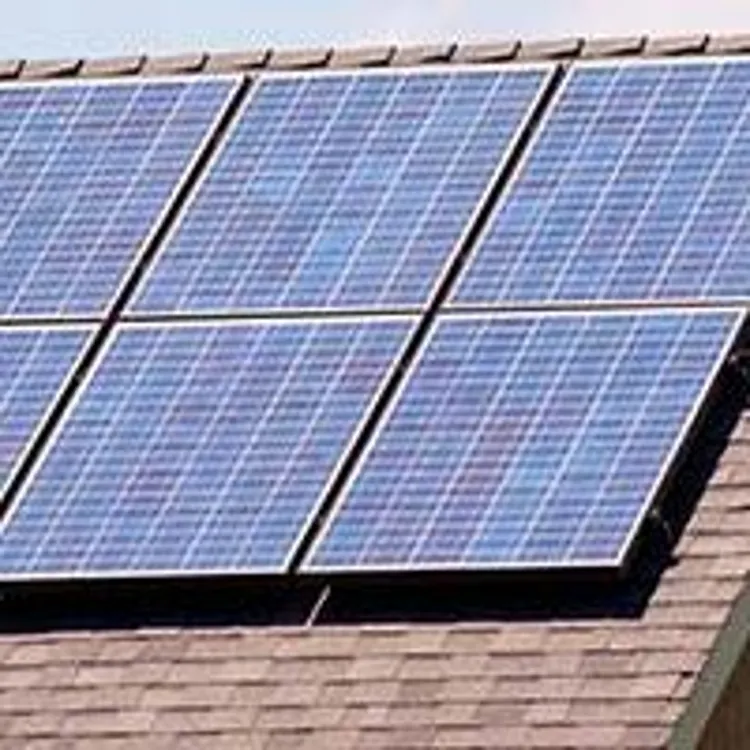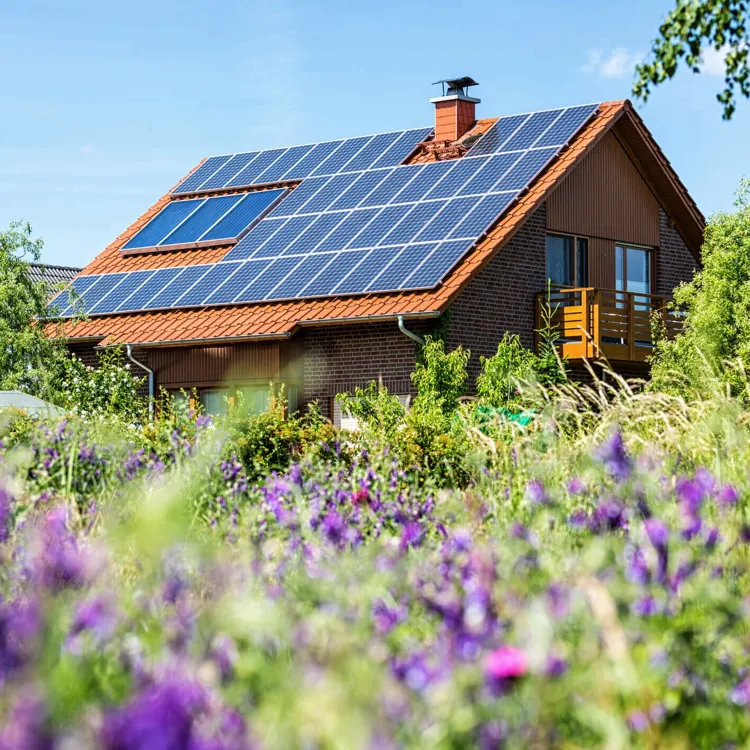


Georgia offers few state-level tax breaks or rebates specifically for residential solar. However, utility programs, solar-friendly policies and certain financing options can still help make a system more affordable. Plus, on average, Georgia homeowners with solar panels avoid $45,038 in utility costs over 25 years.
Here’s what to know about making solar more affordable in the Peach State.
Key insights
Central Georgia EMC’s PowerUp loan program can help eligible members finance solar panels.
Jump to insightGeorgia Power’s net billing program compensates customers for excess solar generation.
Jump to insightEligible borrowers may be able to finance solar panels through FHA- or VA-backed mortgage programs.
Jump to insightSolar financing options in Georgia
Central Georgia EMC’s PowerUp Lending Program offers financing to help eligible homeowners pay for energy-efficient home improvements, including solar panels.
Loan amounts range from $500 to $25,000, with a fixed 9.9% APR. Repayment terms range from three to eight years, depending on the amount borrowed.
PowerUp is a loan, not a rebate.
Borrowers need a credit score of at least 650 and must enroll in automatic payments. Loans over $7,500 may require a lien on the financed equipment, which gives the lender a legal claim to it until the loan is repaid.
Federal mortgage options for solar panels
Some federal mortgage programs allow eligible borrowers to finance solar panels and other energy upgrades as part of a home purchase or refinance. Eligibility and lender requirements vary.
- FHA Energy Efficient Mortgage: This program lets borrowers finance qualifying energy-efficient improvements through an FHA-insured mortgage. A home energy assessment is generally required, and the projected energy savings must justify the cost of the upgrades. Separate FHA provisions apply to solar and wind systems.
- VA Energy Efficient Mortgage: Eligible VA borrowers may be able to finance up to $6,000 in qualifying energy-efficiency improvements. For improvements costing more than $3,000, the projected monthly energy savings generally must exceed the increase in the mortgage payment.
What to know about net metering in Georgia
Traditional net metering is no longer widely available to Georgia homeowners. Instead, many utilities use net billing, which compensates customers for excess solar power at a lower rate than the retail price of electricity.
With net billing, your solar panels power your home first. Any excess electricity sent to the grid earns bill credits, but those credits are typically worth less than the electricity you buy from the utility. As a result, net billing generally provides lower savings than traditional net metering.
Georgia Power's RNR Monthly Netting program reached its 5,000-customer cap in 2021 and is closed to new participants. Eligible new customers can instead enroll in RNR-Instantaneous Netting, which credits excess solar generation at the annual Solar Avoided Cost Rate, plus an additional 4 cents per kWh.
Eligibility and system-size limits vary by utility. For example, some residential programs limit qualifying systems to 10 kW or less and may cap how much customer-generated solar they accept.
Pro tip
As of 2026, pairing solar with a battery can help you use more of your own power at night instead of sending excess electricity into the local grid.
How much are solar panels in Georgia?
Average solar panel costs in Georgia generally range from $12,500 to $25,000.
System size is a big cost factor of going solar. A typical Georgia household needs about a 12.97 kW system, which costs $32,425 on average. Depending on your energy needs, you might need a smaller or larger system.
Your total price also depends on whether you add battery storage to your system. Solar batteries cost $7,000 to $18,000, which can nearly double the total system price. The table below shows average solar panel costs by system size in Georgia and its capital city.
| 5 kW | 6 kW | 7 kW | 8 kW | 9 kW | 10 kW | |
|---|---|---|---|---|---|---|
| Statewide | $12,500 | $15,000 | $17,500 | $20,000 | $22,500 | $25,000 |
| Atlanta | $12,700 | $15,240 | $17,780 | $20,320 | $22,860 | $25,400 |
Compare solar companies in Georgia
Working with a local solar company in Georgia makes it easier to understand local incentives.
| Company | Customer rating | Pro install | Max panel efficiency | Solar panel warranty | Payment options | Year founded | |
|---|---|---|---|---|---|---|---|
 Freedom Forever | Learn More | 3.6 |  | Varies | 25 years | Cash, loan, lease | 2011 |
 ShopSolar | Learn More | 4.3 |  | Varies | Varies | Cash, loan | 2018 |
 Project Solar | Learn More | 3.4 | | 20.9% | 25 years | Cash, loan | 2020 |
» RELATED: Top solar companies in Atlanta
FAQ
Can I get free solar panels in Georgia?
Georgia doesn’t have a free solar panel program that we’re aware of. You can lease or enter a PPA with little to no upfront costs. Still, neither is totally free. Solar leases generally require a flat monthly fee; PPAs make you pay per unit of electricity.
» FREE SOLAR PANELS: Are they really free?
Are solar panels worth it in Georgia?
Going solar is often worth it for Georgia homeowners because of long-term utility bill savings. Over 25 years, residents with solar panels avoid $45,038 in utility costs on average.
Your current electric bill is the starting point for assessing the financial benefits of transitioning to solar energy. Your average energy consumption tells you what size solar system you need. Once you know this, you can figure out potential savings and how long it should take for your solar installation to pay for itself.
» COMPARE: Best solar companies
How can I pay for solar panels?
You could pay cash, but a lot of people finance or lease with minimal upfront costs.
- Solar loans work like any other home improvement loan. There’s an application and approval process. You pay it back over time (with interest) each month.
- Leasing solar panels lets you set up a system without high upfront costs. A solar company installs and maintains the panels on your property, and you pay a monthly fee to use them.
» SOLAR PANELS: Lease vs. buy
How do I know if my house is a good candidate for solar?
It’s best to have plenty of unshaded roof space that faces south or west for optimal sun exposure. It’s also smart to upgrade any old, inefficient appliances first. Reducing your electrical loads now means you can get a smaller system, which will be cheaper.
The condition of your roof matters too — if it needs replacement soon, do that before installing solar panels. Installing solar panels on an old roof might mean you have to remove the panels, replace your roof and then reinstall the panels. This will cost around $5,000 for a 19-panel setup.
Solar photovoltaic (PV) technologies, more commonly known as solar panels, absorb sunlight and convert it into usable electricity. If you have a lot of shading around your house, they might not get enough sun to power your home.
Is my HOA allowed to restrict solar panels?
There’s no active solar rights law in the state, so your homeowners association (HOA) may try to prevent you from putting up panels. Many states have laws that prevent HOAs from making rules against solar panels, but Georgia does not.
What has Georgia’s investment in solar been so far?
Total solar investments in the state amount to $9.7 billion, according to the Solar Energy Industries Association.
Article sources
ConsumerAffairs writers primarily rely on government data, industry experts and original research from other reputable publications to inform their work. Specific sources for this article include:
- DSIRE, "Programs." Accessed July 28, 2026.
- Central Georgia EMC, "PowerUp." Accessed July 28, 2026.
- Georgia Power, "Frequently Asked Questions, Residential Rooftop Solar." Accessed July 28, 2026.
- Solar Energy Industries Association, "Georgia." Accessed July 28, 2026.