
Key insights
Depending on the size of your system and what financial incentives you qualify for, a typical residential solar panel installation costs $14,700 to $29,400 in Maine.
Jump to insightOn average, it takes solar panels approximately 8.8 years to pay for themselves in Maine.
Jump to insightOver 25 years, Maine homeowners with solar panels avoid $65,297 in total utility costs on average.
Jump to insight6 factors to consider before getting solar panels in Maine
ConsumerAffairs has heard from thousands of solar customers who have already gone through the installation process. It’s generally worth it if you like the idea of lowering your monthly utility bills, helping the environment and gaining more energy independence. But it doesn’t work out for everyone. Here’s what to consider before making the switch.
1. Solar panel installation costs
Average solar panel costs in Maine are comparable to the national average. A typical residential solar panel installation costs $33,810 in Maine. That doesn’t include a solar battery, which can add $7,000 to $18,000 to your total system costs.
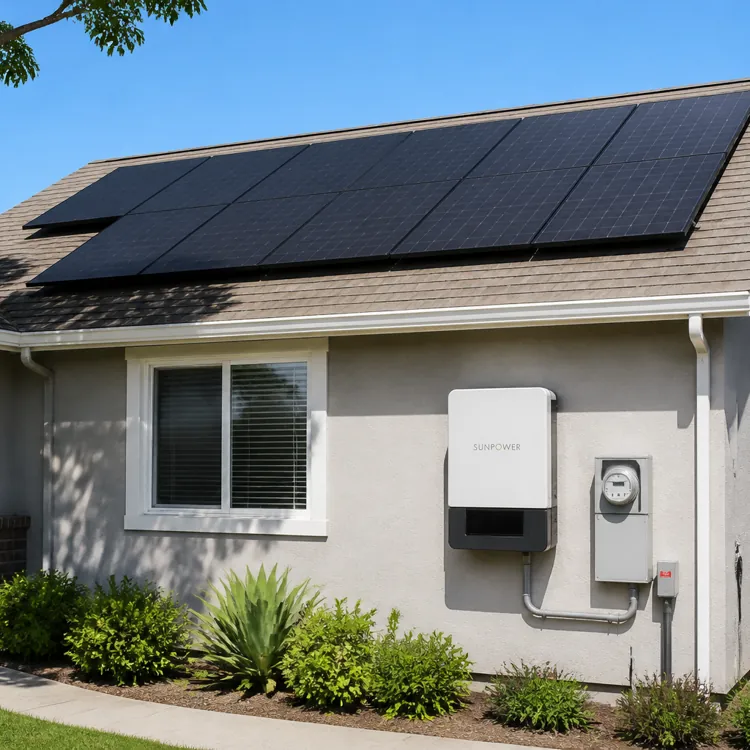
Some homeowners pair solar with battery storage for more energy independence and backup power during outages. Grid-tied systems need battery storage or another backup setup to keep powering a home during an outage.
Most installers set the price according to the system's wattage, with a typical cost between $2.50 and $5 per watt. “Cost per watt” is a little like looking at the price per square foot when you buy a house. It helps you compare the value of solar energy systems in different sizes. In Maine, the average cost per watt is only $2.94.
Solar panel costs by system size in Maine
| 5 kW | 6 kW | 7 kW | 8 kW | 9 kW | 10 kW | |
|---|---|---|---|---|---|---|
| Statewide average | $14,700 | $17,640 | $20,580 | $23,520 | $26,460 | $29,400 |
2. Your current energy consumption
Look at your most recent utility bills to see how much electricity your house needs each month. This tells you what size and capacity your solar system needs to be. A typical Maine household needs a 11.5 kW system to offset its electricity needs with solar energy. You might need a larger or smaller system, depending on your current energy consumption.
Maine has some of the highest electricity costs in the country, and it’s not likely they'll go down anytime soon. Switching to solar now is a smart way to make your monthly utility bills more predictable.
3. Maine solar incentives
The 30% federal residential solar tax credit has expired, and Maine doesn’t offer many direct solar incentives. Homeowners may still save through a property tax exemption, battery programs and financing options.
Property tax exemption: Qualifying solar equipment generally won’t increase your property tax bill.
Battery incentives: Eligible homeowners can earn payments for sharing stored battery power with the grid during high-demand periods.
Time-of-use savings: Central Maine Power customers may save by charging a battery when electricity is cheaper and using it when rates are higher.
What to know about net energy billing in Maine
Maine uses net energy billing instead of traditional net metering. This means that homeowners with solar panels can earn credits for extra solar power sent to the grid and use those credits to offset electricity they buy later. Unused credits expire after 12 months.
» EXPLORE: Maine solar incentives
4. How you pay
Solar loans are one common way Maine homeowners pay for solar. Some loans require little or no money down, although interest increases your total cost over time.
Leasing solar panels is another way to go solar with little upfront cost. You make monthly payments to use a system owned by a third party, typically for 20 to 25 years.
Monthly costs: solar payments vs. savings
Compare what you’d pay each month with solar to what you pay for electricity now. Ideally, your solar loan payment plus any remaining utility bill should be lower than your current electric bill.
» SOLAR PANELS: Lease vs. buy
5. How long you plan to stay in your house
Solar panel installations are expensive, and it takes years for electric bill savings to make up for the initial cost. Solar panels typically pay for themselves within 8.8 years in Maine. If you sell your house and move before then, you might not fully realize the financial benefits of your solar investment.
Solar panels last 25 to 30 years.
A 2019 Zillow study found that, on average, houses with solar panels sell for 4.1% more. Let’s say you spend $25,000 putting solar panels on a house that costs $400,000. It might sell for $16,400 more in a few years.
But, you miss out on some of that $65,297 in total avoided utility costs over 25 years.
In other words, don't get solar panels just because you want to sell your house soon. Instead, consider a home improvement project with a better return on investment, like remodeling the bathroom or kitchen.
6. The solar company you hire
People have had mixed experiences with solar companies. In the best-case scenario, it’s easy to make the switch and you’re happy with the system’s performance. In the worst-case scenario, you end up paying thousands for mid-tier solar equipment from a company with poor customer service and no follow-up or support.
One of the most common complaints is related to pushy sales reps who make promises that can’t be delivered. That’s why it’s so important to thoroughly research and verify claims made by sales teams before making a decision.
» COMPARE: Best solar companies
Pros and cons of solar panels in Maine
It’s a common misconception that solar panels will completely eliminate your monthly power bill — this is not always the case. Maine gets less sunlight than many southern states, so homeowners may need a larger system to offset the same amount of electricity
Pros
- Long-term savings
- Better for the environment
- Low maintenance costs
- May increase home resale value
Cons
- Upfront costs
- Seasonal production variations
- Potential roof leaks
- May make your house harder to sell
Is my house a good candidate for solar panels?
Going solar ends up being worth it for many homeowners as long as their house is a good candidate to support a solar panel installation. Here’s what to ask yourself before you commit:
How old are my appliances? The first step is to ensure that your electrical loads are as small as possible. If you have an older refrigerator or air conditioning unit, for instance, it’s smart to upgrade those before investing in solar panels. That way, you can get a smaller system, which will be cheaper overall.
How much sunlight do I get? Solar panels need regular exposure to sunlight to produce the most energy possible. Maine averages three to five peak sun hours each day. However, lots of shading — like trees or tall buildings above your roof — could make your solar system less efficient.
What is the size and angle of my roof? Maine (and the rest of the United States) is in the northern hemisphere, so solar panels perform best on south-facing roofs. The worst place to install would be on north-facing roofs, especially if those roofs have a high pitch. North-facing roofs generally produce less solar energy, especially at steeper pitches, so you may need a larger system to offset the same amount of electricity.
What is the condition of my roof? If you have to replace your roof, do that before you install solar panels. Solar panels are designed to last up to 30 years, so you want your roof to last just as long. Otherwise, it could cost thousands to remove the panels, fix your roof and reinstall the panels again.
Find solar companies in Maine
A good solar company helps you navigate local incentives, permitting and net metering policies. Compare our picks for the top solar companies in Maine to learn more.
| Company | Customer rating | Pro install | Payment options | Year founded | |
|---|---|---|---|---|---|
 Project Solar | Learn More | 3.9 |  | Cash, loan | 2020 |
 Tesla Energy | Learn More | 1.9 | | Cash, loan and lease | 2015 |
 ShopSolar | Learn More | 4.3 |  | Cash, loan | 2018 |
Maine solar FAQ
What are the benefits of solar panels in Maine?
Solar panels have several benefits in Maine:
Cheaper energy bills: The average homeowner in Maine uses a lot of power, which adds up to a lot of savings when you switch to solar. Going solar now means that your monthly energy expenses will be more predictable (and very often significantly lower). It also protects you from future energy cost increases.
Better for the environment: Traditional energy sources like coal and natural gas release carbon dioxide and other harmful pollutants into the air. Installing solar panels on your roof helps the environment primarily by reducing greenhouse gas emissions and dependence on fossil fuels.
Higher home resale value: Installing solar panels can increase a home's value. The exact increase in value varies by location, with homes in active solar markets sometimes seeing even higher boosts.
More energy independence: Embracing solar paves the path toward true energy independence. It works especially well for people in areas susceptible to power outages.
What are the drawbacks of solar panels in Maine?
Solar panels have a few drawbacks in Maine:
Solar equipment is expensive: Solar panel prices typically start between $10,000 and $30,000. It’s even more expensive if you want a solar battery for energy storage. Solar battery costs are generally between $7,000 and $18,000.
Potential roof leaks: The installation process involves drilling holes into the roof to anchor the panel mounting systems. If not done correctly, this can lead to leaks or structural damage.
Could make your house harder to sell: Solar panels can make a home harder to sell if they’re leased or financed, since the buyer may have to take over the agreement. Some buyers may also worry about roof repairs, maintenance or whether the system will actually save them money.
Energy production varies: Solar panels are dependent on weather conditions and seasonality. Solar panels still work on cloudy days, but less available sunlight does affect how efficiently they produce energy. Snow cover may also temporarily reduce efficiency until it's removed or melts off.
» MORE: Solar energy pros and cons
Do solar panels increase property taxes in Maine?
No, Maine has a property tax exemption for solar panels, which means you won’t pay property taxes on the increased value they add to your home.
How long does it take to install solar panels in Maine?
Installation times depend on a range of factors, especially seasonality and supply chain issues. The actual installation might take only a day, but it takes time to design and plan, you also have to activate the system.
What solar scams are common in Maine?
In 2023, a man from Manchester was accused of scamming a homeowner in York County, Maine. The homeowner said she paid $33,000 for a solar panel installation, but investigators said the man’s business address was fake and he cut off communication once he received the payment upfront.
Bottom line: Is going solar in Maine worth it for you?
Going solar in Maine might be easier than you think. The main obstacle is the high upfront cost of purchasing and installing solar panels, inverters and other equipment. For a lot of homeowners, it ends up being worth it as long as their cost savings over time outweigh the initial investment.
Solar costs vs. savings: Maine and nearby states
| 6-kW system cost (before incentives) | 10-kW system cost (before incentives) | Typical system size needed* | Average cost per watt | Total utility power cost savings** | |
|---|---|---|---|---|---|
| Maine | $17,640 | $29,400 | 11.5 kW | $2.94 | $65,297 |
| Massachusetts | $17,460 | $29,100 | 10.98 kW | $2.91 | $92,499 |
| New Hampshire | $17,280 | $28,800 | 12.83 kW | $2.88 | $35,806 |
| Vermont | $16,500 | $27,500 | 11.15 kW | $2.75 | $98,684 |
Article sources
- DSIRE, "Maine Programs." Accessed Sept. 10, 2026.
- Maine Public Utilities Commission, "Net Energy Billing." Accessed Sept. 10, 2026.
- Maine Department of Energy Resources, "Maine Solar Dashboard." Accessed Sept. 10, 2026.
- EnergySage, “The cost of solar panels in Maine.” Accessed Sept. 10, 2026.
- Solar Energy Industries Association, "Maine Solar." Accessed Sept. 10, 2026..
- SolarReviews, “How much do solar panels cost in Maine?” Accessed Sept. 10, 2026.
- WMUR-TV, “Man accused in Maine solar panel scam.” Accessed Sept. 10, 2026.