
How well do solar panels work on cloudy days?
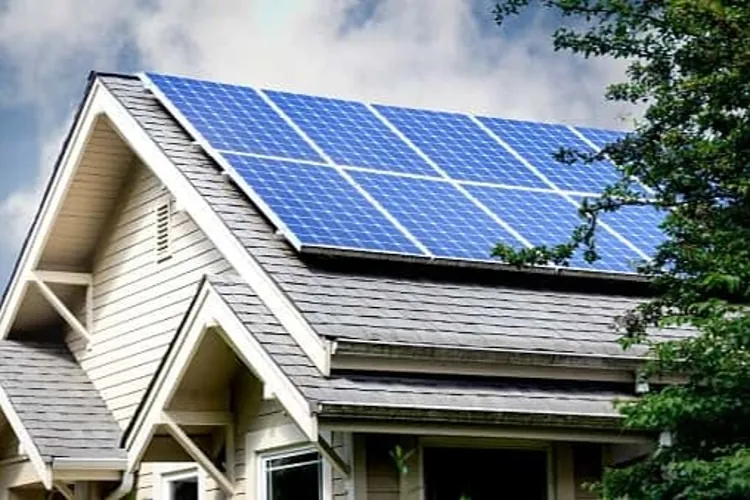
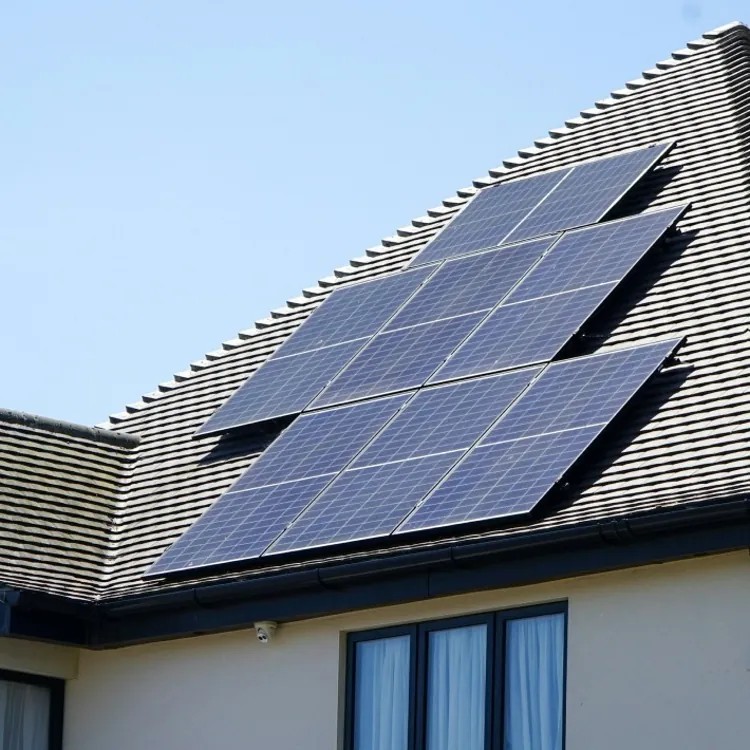
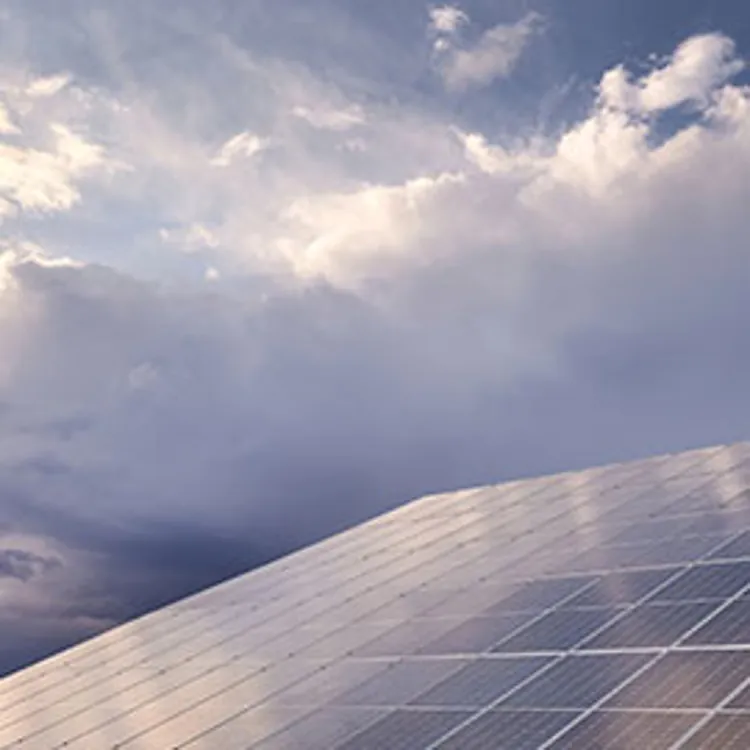
Capturing sunlight during cloudy days is more challenging but not impossible with solar technology. PV panels absorb both reflected and weak light — while direct sunlight is optimal, it’s not required. What's more important is your solar panels’ tilt angle and orientation. The array also needs to be free from obstructions and the right temperature.
» READ MORE: How do solar panels work?
According to the Environmental and Energy Study Institute, the solar panels’ power output may decrease by around 20%, depending on the thickness of the clouds.
Though this may seem like a large percentage, your solar system can still harness energy. Knowing the maximum voltage potential is helpful when determining the right number of panels and wattage for powering your home and other solar-powered items.
Based on the solar potential calculator provided by the National Renewable Energy Laboratory (NREL), even in cloudy Seattle, you can have an energy output of up to 6,784 kilowatt-hours (kWh) per year with an average-sized 6-kilowatt (kW) system. To put this in perspective, sunny Sacramento has an output of up to 9,951 kWh per year.
Do solar panels work on rainy days?
Rain itself isn’t detrimental to solar panels. In many cases, rain is beneficial to clear a panel’s surface of dust and debris. Don’t worry too much about rain damage; ground- and roof-mounted solar systems are built with this in mind.
When determining the best panel type, consider their characteristics. Monocrystalline is one of the most effective solar panel types for this type of weather. Bifacial systems are also useful because they are — like the name suggests — double-faced and highly reflective of other surfaces such as sand or concrete.
Among the most durable solar system types, monocrystalline solar panels are also one of the most efficient models, with high energy outputs. These systems are made of single silicon crystals and have the widest temperature range and life span, making them the perfect candidate for drawing sunlight even in rainy weather. However, monocrystalline solar panels tend to carry a hefty price tag.
Do solar panels work in snow or during winter?
Depending on where you live, winter might actually be a good time to have solar panels, as extremely hot temperatures can make panels less efficient. And while there are fewer hours of sunlight per day during the winter than there are in the summer, as long as the sun is shining, your panels are absorbing that sunlight.
Heavy snow sitting atop solar panels can block sunlight from reaching them, and therefore prevent panels from generating power efficiently. But when the wind blows snow off your panels during a dusting, or the sun melts it, your solar panels can go back to doing their job.
Do solar panels work at night?
PV innovations have not entirely solved the sun-setting issue. At night, photons from the sun's rays are absorbed into the atmosphere, causing the solar panels to no longer conduct electricity.
The good news is breakthrough research supported by Stanford University in 2022 revealed that a thermoelectric generator works with solar cells to harvest the radiative heat flow of the earth. Essentially, the difference in temperature between the PV panels and the air reacts to create energy with this new technology.
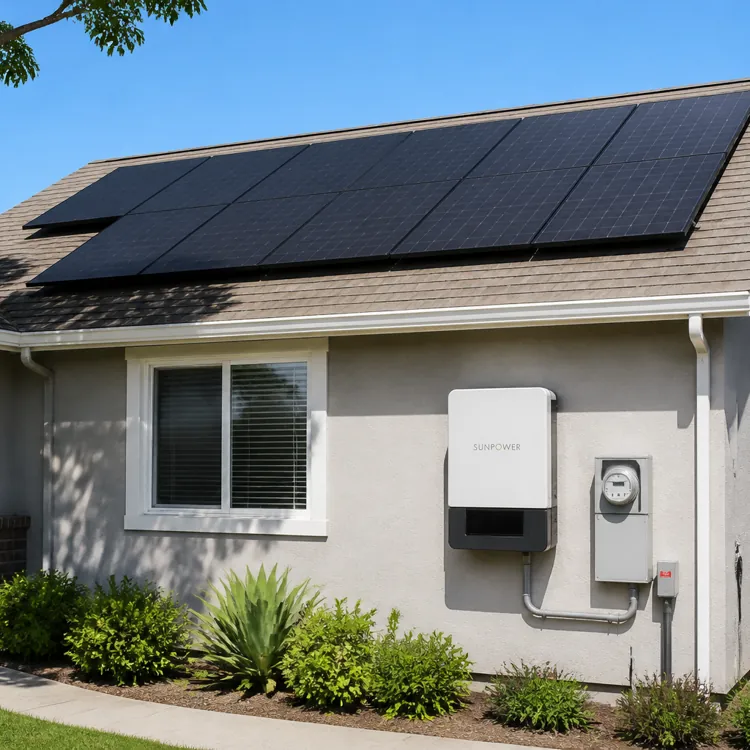
Until these advancements are further proven and made into mass production, solar energy systems can either rely on the local power grid for power at night or function independently with an off-grid battery storage system. The latter option can save you from a local power outage. This stored electricity can take energy created during the day and use it during nighttime.
» LEARN: Solar energy pros and cons
How to store solar energy for later use
Solar storage systems, also known as solar-plus-storage systems, are proven to maintain a balance between the supply of electricity and the level of demand.
Grid-tied vs. off-grid systems
For going off-grid, solar batteries reduce reliance on utility service providers. Going this route may be more costly upfront — solar batteries can cost upward of $7,000 — but this may prove to be more cost-effective than a monthly utility bill.
On the other hand, systems tied to the grid can pull energy from it when needed — such as on cloudy days — potentially resulting in more consistent and reliable power. This comes at the expense of having a monthly utility bill, though you may be able to offset that charge with net metering.
Net metering
Oversizing your solar power system with larger or more panels and using net metering can compensate for energy lost during cloudy weather and at night.
When your solar panels create more power than your household consumes, the panels send this power to the electric grid. If you live in an area that offers net metering, you can earn credits for this excess power you create. These credits can help reduce your monthly power bill.
FAQ
Can solar panels generate electricity during a storm or heavy cloud cover?
Solar panels can generate electricity during bad weather. However, the cloud's thickness affects these energy levels. The electricity output will decrease due to the diffused sunlight, but that doesn’t mean PV systems can’t collect some energy.
What types of solar panels are most efficient on cloudy days?
Monocrystalline solar panels are an excellent option for cloudy weather. They’re highly efficient, meaning the panels have a high conversion rate of turning sunlight into usable energy.
How does the location and climate affect the efficiency of solar panels?
Since direct sunlight keeps PV systems running, the sunnier the region, the better. This means areas closer to the equator generally have a higher chance of harnessing electricity more efficiently.
To calculate the solar potential of your region, the NREL and other organizations offer solar potential calculators. Additionally, temperature plays a huge role in output — when temperatures increase or decrease too extremely, solar panels can immensely decrease production.
Can solar panels generate enough energy during the day to power my home at night?
If you have a solar battery storage system, yes, it is possible. The battery will store any excess energy generated during the day and use it at night or on cloudy days. Another alternative is connecting to your local power grid, but this will rack up a monthly utility bill.
Article sources
ConsumerAffairs writers primarily rely on government data, industry experts and original research from other reputable publications to inform their work. Specific sources for this article include:
- United States Department of Energy, "Solar Integration: Solar Energy and Storage Basics." Accessed Nov. 25, 2025.
- Environmental and Energy Study Institute, "Solar Energy." Accessed Nov. 25, 2025.
- National Renewable Energy Laboratory, "PVWatts Calculator." Accessed Nov. 25, 2025.
- AIP Publishing, "Nighttime electric power generation at a density of 50 mW/m2 via radiative cooling of a photovoltaic cell." Accessed Nov. 25, 2025.
- Boston Solar, "Do Solar Panels Work in the Winter?" Accessed Nov. 25, 2025.
- Sundance Power Systems Inc, "Off-Grid vs. Grid-Tied Solar Systems: Which is Right for Your Home?" Accessed Nov. 25, 2025.