

What is a commercial solar installation?
Commercial solar sits between residential solar (for homes) and utility-scale solar (for power companies). It serves a wide range of organizations, including:
- Malls, stores and other retail businesses
- Hotels and multifamily buildings (e.g., apartment complexes)
- Manufacturing and processing plants
- Local governments, schools and universities
- Places of worship and nonprofits
These systems are designed to offset all or part of a property’s electricity use through on-site renewable energy production.
Types of commercial solar panels
Projects can use several types of solar panels. Most commercial projects use photovoltaic (PV) solar panels, which convert sunlight into electricity.
Common panel types
Most commercial installations today use high-efficiency monocrystalline panels.
| Performance potential | Relative cost | Space needed | Common use | |
|---|---|---|---|---|
| Monocrystalline | High | Higher | Less | Offices, retail |
| Polycrystalline | Medium | Lower | More | Warehouses |
| Thin-film | Lower | Varies | Most | Industrial roofs |
| Bifacial | Very high output | Higher | Moderate | Ground-mount |
| Building-integrated photovoltaics (BIPV) | Varies | High | Design-based | Modern buildings |
Types of commercial solar panel installations
Most commercial solar panel installations fall into one of three categories:
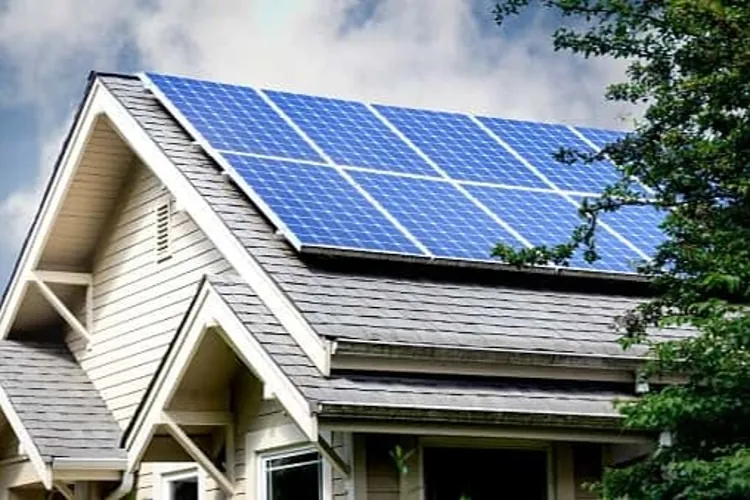
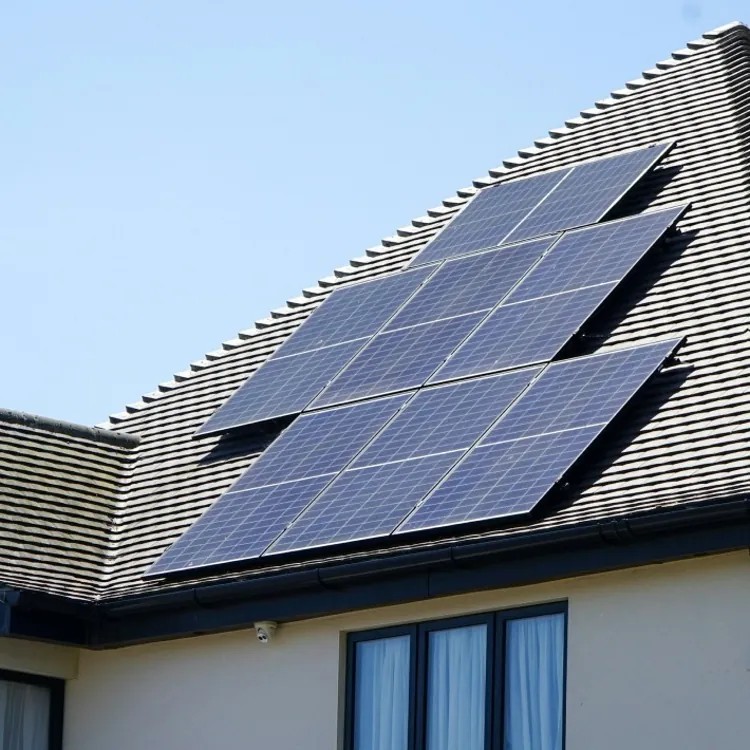
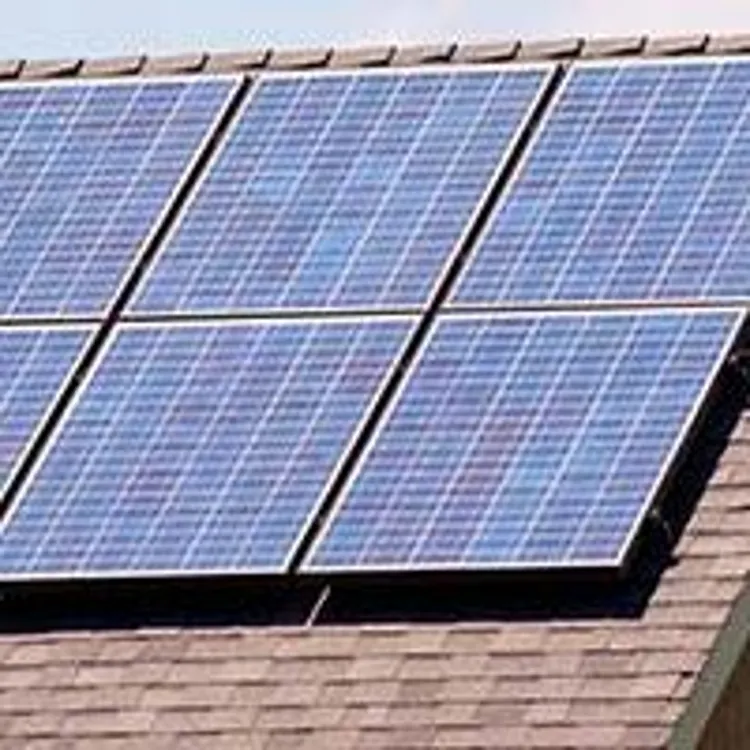
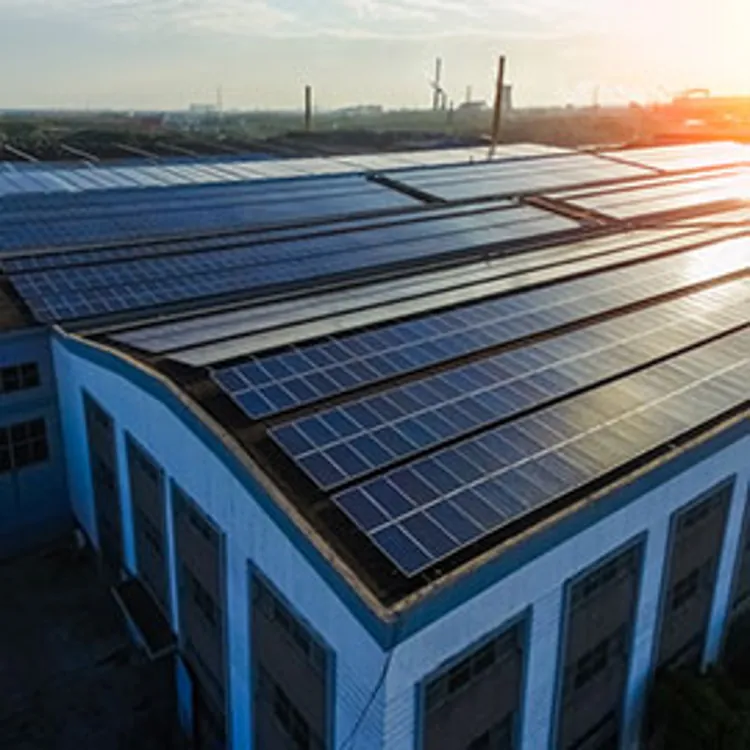
- Rooftop systems are installed on flat or low-slope commercial roofs. These are often the most cost-effective option.
- Ground-mount systems are installed on open land. They might cost 15% to 20% more than rooftop systems due to the need for foundations and trenching.
- Solar carports are mounted over parking lots to generate power while providing shaded parking.
Did you know?
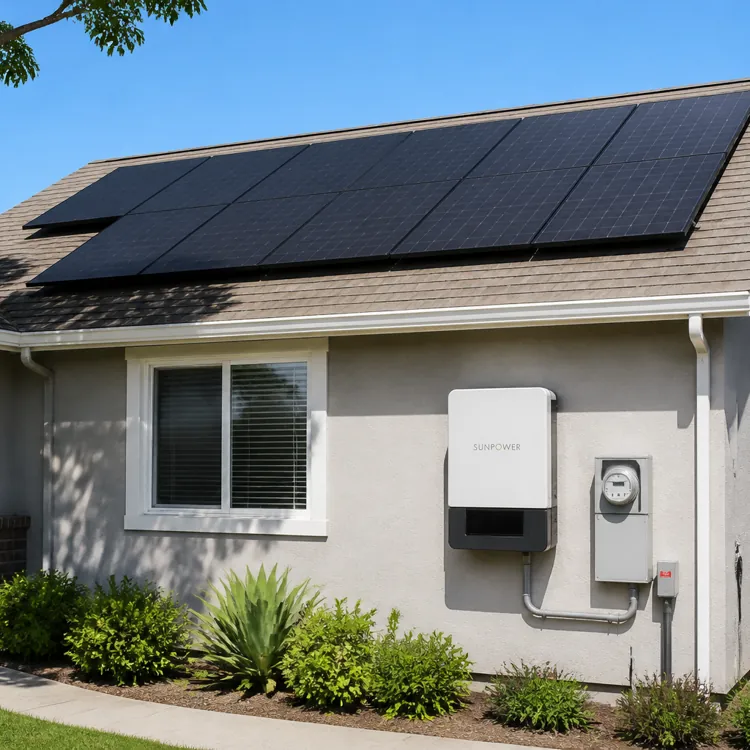
Businesses are increasingly pairing commercial solar panels with battery storage systems. Batteries improve energy security and maintain power during grid outages. This is especially important for critical organizations (such as hospitals, transportation hubs and other public services).
» LEARN: What is solar storage technology?
How much do commercial solar panels cost?
According to the National Renewable Energy Laboratory (NREL), commercial rooftop systems have averaged around $1.84 per watt, while ground-mounted systems have averaged around $1.94 per watt in recent years.
Every installation is unique. Costs can vary widely.
Actual solar panel costs may be around $0.30 per watt, but the total installed price includes equipment, labor, permitting and interconnection.
Large commercial systems often require “grid studies” or transformer upgrades, which can add $10,000 to $50,000 to a project.
“Most companies do not have the cash on hand for a good-sized solar system. They’re expensive. That’s why specialty solar loans are helping fund projects all over the world,” Andrew Eckhardt, former head of energy transition at Westend Bank AG, said.
Many organizations take advantage of financing options to fund their solar investments with a loan.
Commercial solar cost factors
Several variables influence total project cost:
- System size: Larger systems generally have a lower cost per watt.
- Mounting type: Carports and ground-mounted arrays cost more than standard rooftop systems.
- Electrical upgrades: Transformer upgrades, trenching or interconnection work can add $10,000 to $50,000 or more.
» RELATED: Why are solar panels so expensive?
Commercial solar incentives
Most federal solar tax credits are either already expired or are set to soon. On the bright side, state governments now offer a variety of tax incentives, rebates and aid programs for commercial solar power upgrades. For example, California has several state-level solar incentive programs for its business owners.
» EXPLORE: Solar incentives by state
Are commercial solar panels worth it?
While commercial solar panels can cost larger companies hundreds of thousands of dollars upfront, decades of clean energy production can also help save money over time.
For many organizations, commercial solar reduces long-term electricity costs by replacing utility power with on-site renewable energy.
In addition to financial savings, solar can:
- Improve energy price stability
- Strengthen sustainability goals
- Enhance brand reputation
Because it’s a clean energy source, installing commercial solar panels can also help improve an organization's image among its internal team, partners, customers and the greater community. So, although every installation is different, commercial solar panels are often worth it for companies hoping to save money, go green and contribute to a more sustainable future.
What real business owners say
Robert in California, who runs a commercial vineyard, was using a lot of energy, “and we've got about 300 days of sunshine out here so looking into solar energy services was something that we had thought about for the last few years,” he wrote in a review. “I wanted to buy a system outright and not lease or rent. Dividend Solar made it easier to afford putting one in. Enrolling with them was extremely easy. We submitted an application which got approved after the installer representative called them up.”
Kimberly in California met with 14 different solar companies before hiring one for her commercial project in Beverly Hills. “Most companies were just trying to get us to sign a contract without walking us through anything—some didn’t even mention solar batteries,” she wrote in a review. She liked that Sun Studios “took the time to fly a drone over our property, scan the roof, and design a solar system that completely eliminates our electricity bill.”
“Once the system was installed, we were so impressed with the savings and the entire process that we decided to install solar at our retail location in Studio City as well,” Kimberly added.
» COMPARE: Solar energy vs. fossil fuels
Find commercial solar panel installers
If you’re still considering a solar panel project, contact a few of the best solar energy companies in your area to compare proposals. You can also sometimes find commercial solar panels for sale through online retailers like ShopSolar.
| Company | Customer rating | Availability | Year founded | |
|---|---|---|---|---|
 Sunlux | Get Started | 4.7 | California | 2015 |
 Freedom Power Solar | Get Started | 4.1 | Texas and Florida | 2007 |
 Project Solar | Learn More | 3.9 | Most states | 2020 |
 Sun Studios | Learn More | 5.0 | California | 2024 |
FAQ
What are the different types of commercial solar technology?
There are two main types of technologies used to harness solar energy in commercial settings. While PV solar panels generate electricity from sunlight, thermal solar systems can harness the sun’s thermal energy to help heat buildings, water systems and other facilities.
- Photovoltaic (PV) systems: Generate electricity from sunlight (most common).
- Solar thermal systems: Use sunlight to heat water or buildings.
How can I pay for commercial solar panels?
Businesses can pay for commercial solar with cash, loans, leases or power purchase agreements (PPAs). A cash purchase offers the highest long-term savings and access to more incentives.
Solar loans allow ownership with lower upfront costs. Leases and PPAs typically require little to no upfront investment but involve third-party ownership. The best option depends on your budget and tax situation.
How long do commercial solar panels last?
Commercial solar panels typically last 25 to 30 years or longer. Most manufacturers provide 25-year performance warranties. Panels gradually lose efficiency over time, usually at a rate of 0.3% to 0.5% per year. Inverters may need replacement after 10 to 15 years. With proper maintenance, systems often operate well beyond their warranty period.
Will solar disrupt business operations?
Most commercial solar installations cause minimal disruption. Rooftop work happens outside normal business operations. Brief power interruptions may occur during electrical connections. Installers typically schedule this work in advance to avoid downtime. Larger projects may require more coordination, but rarely shut down operations.
What maintenance is required?
Commercial solar systems require minimal maintenance. Most systems include monitoring to track performance. Occasional inspections and panel cleaning may be needed in dusty or snowy areas. Inverters may require servicing or replacement over time. Overall, solar is considered a low-maintenance energy solution.
Article sources
ConsumerAffairs writers primarily rely on government data, industry experts and original research from other reputable publications to inform their work. Specific sources for this article include:
- Berkeley Lab, “Tracking the Sun: Pricing and Design Trends for Distributed Photovoltaic Systems in the United States.” Accessed Feb. 25, 2026.
- U.S. Department of Energy, “Solar Photovoltaic System Cost Benchmarks.” Accessed Feb. 25, 2026.
- National Renewable Energy Laboratory, “Fall 2024 Solar Industry Update.” Accessed Feb. 25, 2026.
- ESA, “All You Need to Know About Commercial Solar Development.” Accessed Feb. 25, 2026.