

Key insights
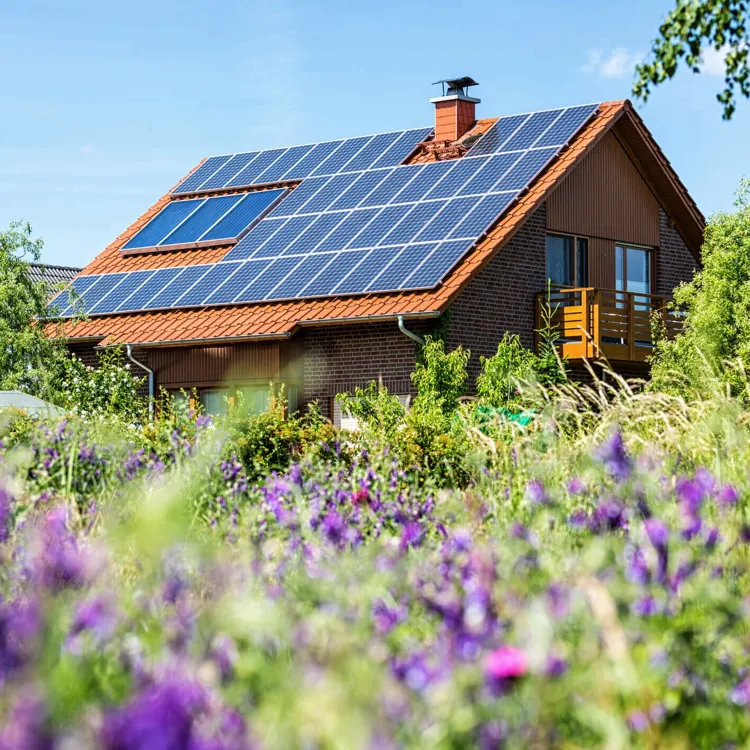
Solar panels can power residential homes, as well as commercial and industrial buildings.
Jump to insightMonocrystalline solar panels are the standard for residential rooftops in 2026.
Jump to insightMost solar panels last 25 to 30 years, regardless of type.
Jump to insightSolar panels by application
Solar panels are generally grouped by how and where they’re used: residential, commercial or industrial, portable, and specialty or integrated systems. Each category is designed for different energy needs, installation methods and performance expectations.
Residential systems often prioritize efficiency and aesthetics, while commercial and industrial systems emphasize scale and long-term output. Portable panels focus on mobility, convenience and specialty solutions. Understanding these categories helps users choose the correct type of solar panel for their energy goals.
Residential solar panels
Residential solar panels are designed for homes and smaller rooftops, typically using monocrystalline or high-efficiency half-cut cell technologies. They balance strong energy production with limited roof space, making efficiency an important factor. Costs vary by brand and wattage, but homeowners often prioritize panels that provide high output per square foot. Aesthetics also matter, with many choosing all-black modules for a low-profile look.
Commercial and industrial solar panels
Commercial and industrial systems serve larger buildings, warehouses, and facilities with high energy demands. These applications often use monocrystalline or large-format polycrystalline panels designed for scale, durability and predictable output. Because space is less limited, system size and total production matter more than aesthetics. These installations often pair panels with advanced mounting systems optimized for flat, expansive rooftops.
Portable solar panels
Portable solar panels are lightweight, compact modules designed for mobility. They’re commonly used for camping, RVs, emergency backup and small off-grid setups. Most portable panels use monocrystalline cells for strong output in a small footprint, and some fold or roll for easy transport. While not meant for whole-home power, they provide flexible charging for small devices and batteries.
Specialty and integrated solar panels
Specialty solar panels include building-integrated photovoltaics (BIPV), custom-sized modules, and products where solar is embedded directly into materials like shingles, facades or windows. These are used when aesthetics, structure or design requirements limit traditional panels. They often cost more and may have lower efficiency, but they offer seamless integration and unique architectural applications.
Solar panel materials and types
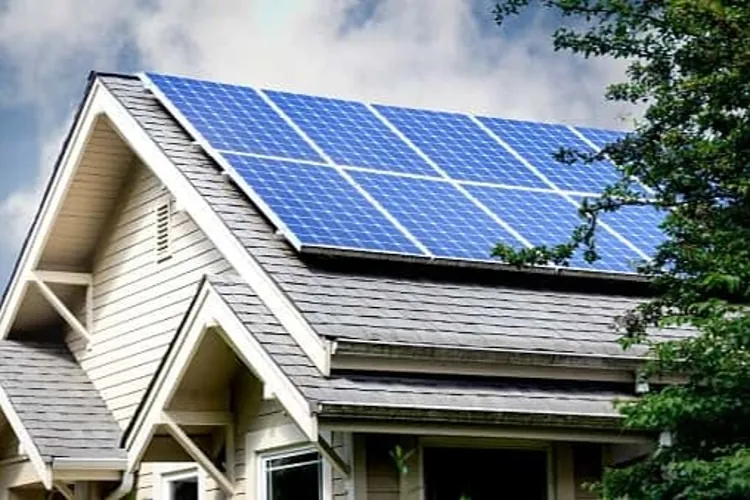
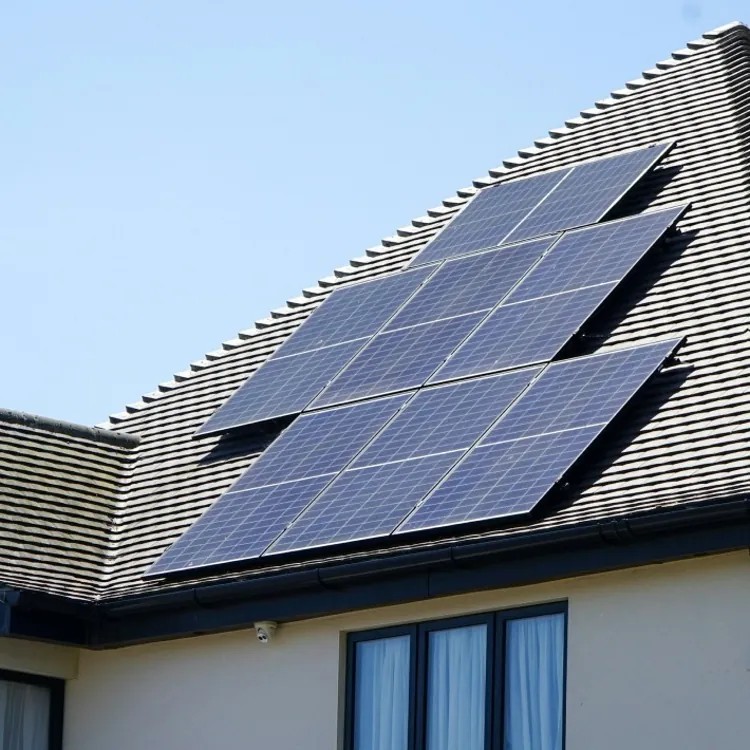
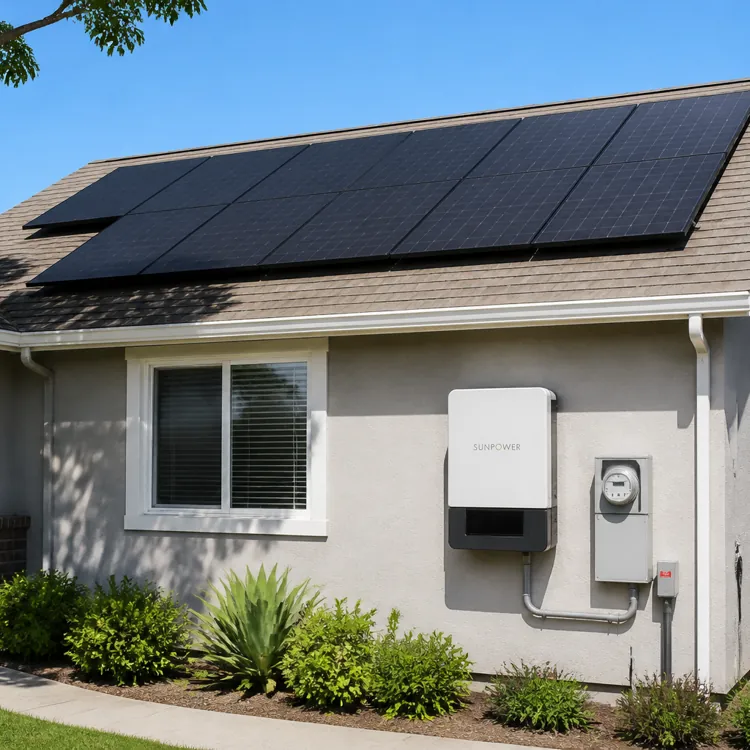
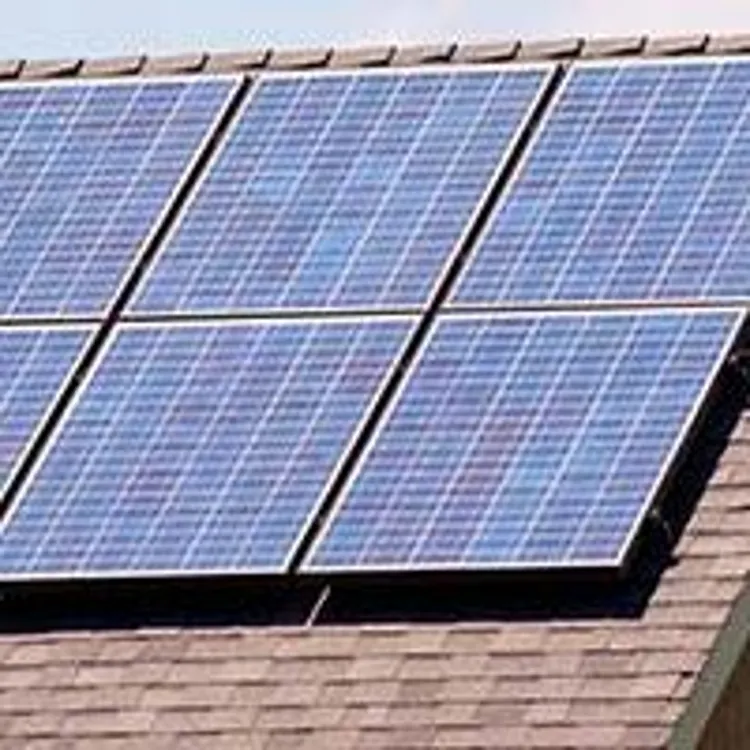
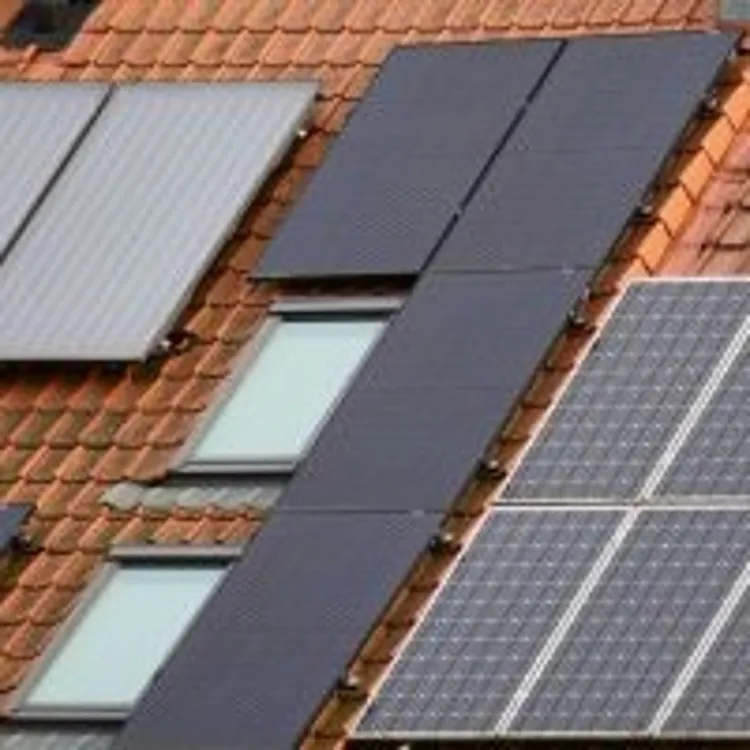
As a general rule, solar panel “type” depends on the materials and technologies used in the construction. However, you can often identify the different types of solar panels based on appearance. Black solar panels are generally monocrystalline, while polycrystalline panels have a blue hue. Thin-film panels have a very low profile and may look like a uniform dark surface.
Monocrystalline solar panels
Monocrystalline (“mono”) solar panels are made from a single silicon crystal, making them highly efficient. These panels can generate more power per square foot than other panel types. They also work better in high-heat climates or shaded areas.
Because single-crystal panels are harder to make, monocrystalline panels are also more expensive. Still, monocrystalline panels are more widely available than other kinds.
There are a few types of modern monocrystalline cells. These include:
- TOPCon (Tunnel Oxide Passivated Contact): Increasingly mainstream, high-efficiency option that is often more cost-effective
- HJT (Heterojunction Technology): Premium option offering high-temperature performance and bifacial benefits
- IBC (Interdigitated Back Contact): Premium option offering maximum sunlight absorption because the metal contacts are on the back of the cell
Many homeowners also appreciate that monocrystalline panels have a uniform black appearance that’s more aesthetically pleasing than other types of solar panels.
Polycrystalline solar panels
Polycrystalline (“poly”) solar panels are made from multiple silicon crystals and are slightly less efficient than monocrystalline panels. However, they’re less expensive because they’re easier to make.
While polycrystalline panels were once a popular residential option because of the lower price point, most manufacturers have moved away from polycrystalline because monocrystalline panels have become more affordable and are more efficient.
In terms of aesthetics, polycrystalline solar panels have a blue appearance due to their manufacturing process. This may not be the look you're going for, especially if it clashes with your trim color.
Thin-film solar panels
Thin-film solar panels (not to be confused with flexible solar panels) are made from layers of different photovoltaic materials, such as amorphous silicon. These panels are lightweight and flexible, making them easier to install in various locations. They’re also more affordable than mono and poly panels.
Thin-film solar panels are typically not efficient enough to power an entire solar energy system.
Thin-film panels are significantly less efficient than the other two types, so they require a larger area to generate the same amount of power.
There are a few variants of thin-film solar panels to know about, including:
- CdTe (Cadmium Telluride): Most common thin-film option for utility-scale installations
- CIGS (Copper Indium Gallium Selenide): Strong performance and flexibility
- Amorphous silicon: Lightweight and versatile, but less efficient
Thin-film solar panels aren’t commonly used for residential solar arrays. According to Andrew Meyer, CEO of Arbor and co-founder of Swell Energy, an energy tech company, they're typically better for small projects, like powering an outdoor light.
PERC
PERC solar panels are monocrystalline or polycrystalline panels with an added layer of material on the backside. This layer bounces the unused sunlight back across the array, creating more energy than a typical panel produces.
More energy production means fewer panels, which can be ideal for homeowners with limited space or who want to save money on panels. These panels are a little more expensive, but the need for fewer panels can make up for the higher cost.
Bifacial
Bifacial panels have solar cells on both sides. They’re also mounted at an angle so they take in light on two sides. Bifacial panels are more durable because the placement makes them less prone to damage from hail or heavy loads of snow.
This layout boosts energy production, but there are some downsides. Bifacial panels are more expensive, and you have to pay more for mounts and other special equipment. Plus, because these panels are mounted laterally, they’re more susceptible to high winds. Bifacial panels can also be hard to come by — they’re manufactured by just a few companies.
Solar panel costs
According to Meyer, the co-founder of Swell Energy, the average homebuyer can expect to pay $16,000 for solar panels, but costs for a home solar energy system can range anywhere from $3,500 to $35,000. The cost typically depends on the type of solar panel, system size and brand.
» READ MORE: Cost of solar panels
Monocrystalline panels are the most expensive option because they’re the hardest to manufacture, with an average cost of 75 cents to $1.50 per watt. Polycrystalline panels cost between 70 cents and $1 per watt. Thin-film panels are the most affordable of the three main types of solar panels because they’re made out of thin conductive material that’s easy to manufacture, coming in at an average cost of 50 cents to 75 cents per watt.
PERCs are the least expensive of the less common types of solar panels, at 32 cents to 65 cents per watt; bifacial panels cost 50 to 70 cents per watt.
In addition to the cost of the panels, homeowners should also consider installation costs (for example, if you choose solar panels or shingles) and other charges. Extra charges may include the cost of labor, permits and any necessary electrical upgrades and may range from $1 to $3 per watt.
Estimated cost by panel type
While prices may vary, the table below shows the average cost per watt for different solar panel types.
| Panel type | Cost per watt (on average) |
|---|---|
| Monocrystalline | $0.75 to $1.50 |
| Polycrystalline | $0.70 to $1 |
| Thin-film | $0.50 to $0.75 |
| PERC | $0.32 to $0.65 |
| Bifacial | $0.50 to $1.70 |
Solar panel lifespan and warranties
Most solar panels last at least 25 to 30 years, and many companies guarantee them for that time. "They'll most likely still work for longer, but they won't be as efficient. Monocrystalline typically last the longest, but polycrystalline panels are also a good option,” Meyer, the co-founder of Swell Energy, said.
When shopping, look for warranties that cover performance and equipment — this way, if your panel starts producing less energy because of a defect, you're covered. Look for warranties that guarantee 90% of the panel's original efficiency after 10 years and 80% efficiency after 25 years or longer. “Make sure you work with a trusted provider who will ensure your panels are high-quality and will last as long as possible," Meyer advised.
» READ MORE: Do home warranties cover solar panels?
Solar panel efficiency
Efficiency is how well a solar panel converts solar energy into power your home can use, usually expressed as a percentage. Most solar panels have an efficiency rating of 18% to 23%, which means 18% to 23% of the light that hits the solar panel is turned into energy your home can use. The higher the percentage, the more power the panel can create.
Bifacial panels usually come in at 19% to 20% efficiency. Monocrystalline panels often have a rating over 20%, and PERCs may offer an efficiency of 24% or more. With polycrystalline panels, you can expect an efficiency of around 15% to 17%.
Thin-film panel ratings depend on the conductor used in making the panel. Conductors can range between an efficiency of 6% and 15%.
FAQ
How many solar panels do I need?
How many solar panels you need depends on how much power your home uses, the panels you buy and how much sun you get per day. Using a solar power calculator can take a lot of the guesswork out of determining how many panels you need.
What type of solar panel is best?
Monocrystalline is often the best and most common solar panel choice for homeowners. These panels are more efficient than polycrystalline or thin-film panels — and, because they’re a more typical choice, they’re easier to find.
Can you power a whole house with solar energy?
You can, as long as you get a significant amount of direct sunlight (or peak sunlight hours) on your roof per day. You can find out how many hours of direct sunlight your area gets by looking up “peak hours of daylight in [state]” to get a good idea of how well solar would power your home. Remember, trees around your home can block direct sunlight, making the panels less efficient.
Bottom line
For most homeowners, monocrystalline panels are the way to go. They're efficient, but most importantly, they’re easy to source. The solar energy company you choose may not offer polycrystalline, PERC or bifacial panels — fewer manufacturers produce them, so they can be hard to find. Be sure to consult with reputable companies about your panel options, costs and warranties before signing a contract.
Article sources
ConsumerAffairs writers primarily rely on government data, industry experts and original research from other reputable publications to inform their work. Specific sources for this article include:
- U. S. Department of Energy, "Homeowner’s Guide to Solar." Accessed June 25, 2026.
- Center for Sustainable Energy, “Solar Energy Adoption: Information for Homeowners and Small Businesses.” Accessed June 25, 2026.
- American Solar Energy Society, “Monocrystalline vs Polycrystalline Solar Panels.” Accessed June 25, 2026.