Home Repair and Maintenance

This living topic revolves around essential home maintenance and repair tasks that can improve the efficiency, longevity, and overall value of a home. It includes practical advice on maintaining air conditioners to endure summer heat, highlights issues with rising rent costs and their impact on home affordability, and discusses the lifespan of various household appliances. Additionally, it covers the importance of trust in contractors when upgrading windows and patio doors, emphasizing the role of customer satisfaction in home improvement projects.

Latest

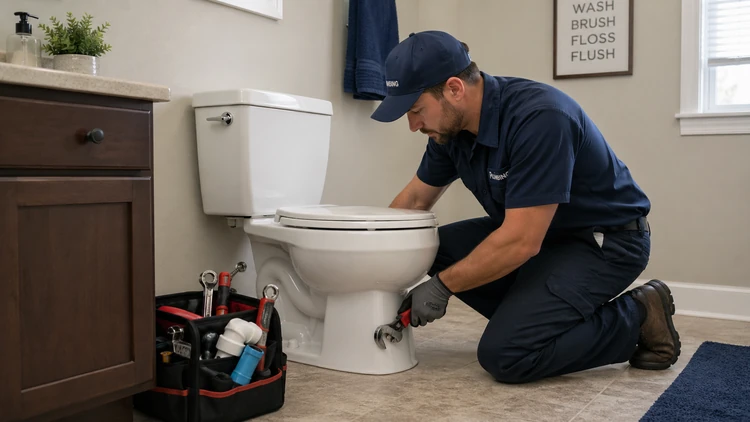
Think before you flush: The costly mistakes clogging American homes

Many consumers know they’re flushing the wrong things — so why are they still doing it?

Featured Home and Living News photo

Many Americans are flushing the wrong things — and they know it. Half admit to sending clog-causing items down the toilet, leading to frequent (and avoidable) problems.

“Flushable” doesn’t mean safe for your plumbing. Wipes, hair, and paper products don’t break down like toilet paper and are a major cause of blockages.

Those small habits can get expensive fast. Nearly a third of households have needed a plumber for a clog, with the average visit costing around $265.

What yo...

Read Article
Featured Home and Living News photo
2025
Article Image

Why clutter always wins - and what to do about it

  • Consumers are battling two types of disorder—messiness and overabundance—but often mistake one for the other.

  • The way we view our stuff—through either a “possessive” or “post-materialist” lens—shapes how (and if) we ever regain control.

  • Decluttering efforts often fail because consumers misdiagnose the problem, applying the wrong strategy to the wrong kind of disorder.


“I’m not proud of this"

A new academic study dives deep into the personal turmoil and social contradictions faced by consumers trying—and often failing—to control clutter in their homes. Drawing on interviews and ethnographic research with relatively affluent individuals in Switzerland and Germany, the researchers argue that most homes are simultaneously fighting not one, but two material disorders: untidiness (disorder of placement) and clutteredness (disorder of quantity).

Yet consumers, social media influencers, and even decluttering experts routinely collapse the two, leaving people stuck in a frustrating cycle of tidying up without ever solving the real problem.

“Material disorder is easy to see but hard to fix,” the authors note. “That’s because we focus on the wrong kind of mess.”

The study appears in the August 2025 Journal of Consumer Research, published by Oxford University. 

Two lenses, two problems

To explain why clutter persists, the researchers introduce two powerful conceptual frameworks:

  • The Possessive Materialist Lens views possessions as extensions of the self. Disorder, in this view, is about misplaced objects—solved through tidying, categorizing, and finding a “right place” for everything. Think: color-coded bookshelves, storage bins, and home organization hacks.

  • The Post-Materialist Lens sees clutter as an overabundance that oppresses rather than empowers. Here, disorder isn’t about where stuff is—it’s about how much of it there is. The solution isn’t tidying, but purging.

Both lenses are valid, the study finds—but dangerously incomplete when applied in isolation. A home may be perfectly tidy but feel suffocatingly full. Or it may be sparse in quantity but visually chaotic.

“Clutter returns” 

The findings explain why millions of consumers turn to social media, self-help books, and Netflix shows like Tidying Up with Marie Kondo, yet still feel defeated. Misdiagnosis is the core issue: we try to declutter when we should be tidying, or tidy when we should be letting go.

Popular advice also stacks the odds against consumers. For instance, Kondo’s brand promises transformation through “tidying,” even though her process often requires significant disposal. The confusion creates what the authors call a “conceptual mess”—one that mirrors the physical mess in many homes.

Understanding disorder

The study’s key contribution is a redefinition of clutter as plural—not one disorder, but several, often overlapping. By distinguishing between disorder-as-untidiness and disorder-as-clutteredness, consumers can better target their efforts and win back control of their spaces.

“What we’ve done in the past isn’t working,” one frustrated Facebook user says. This study suggests they’re right—not because they lack discipline, but because the problem has been misframed.

To truly clear the clutter, consumers must ask not just “Where does this go?” but “Should this even be here?” Only by viewing disorder through both lenses can we stop our possessions from possessing us.
Article Image

Another Florida condo building evacuated after cracks found

Aging condo buildings, a history of violent weather and sometimes lagging upkeep are all taking their toll on the high-rise condo building that dot the Florida coasts. 

In the latest instance, authorities Tuesday evening ordered the evacuation of a building in Clearwater after cracks developed in a concrete support beam in the parking garage.

The South Beach III condo building on Sand Key “is currently being evacuated due to a support beam splitting,” Pinellas County Commissioner Chris Latvala posted to social media late Tuesday.

About 60 residents were ordered out, and by 6 p.m. the 12-story building was clear, according to local news reports. The structure has 161 units and was about half-occupied at the time the split beam was noticed by construction workers who were renovating the bottom-floor parking area, WFTS TV news reported.

A contractor and engineer soon began investigating the damage.

The evacuation is the latest of several in the Southeast that have been ordered since the deadly collapse of the Champlain Towers South in Surfside, Florida, in 2021.

The South Beach III, located on Sand Key, was evacuated just days after the Florida Legislature revised 2022 laws that required more inspections of condo buildings and more reserve funding to make needed repairs.

A storm surge reportedly inundated part of the lower level parking area during Hurricane Milton last October. 

Article Image

Toilet paper supplier to Trader Joe's, Kroger files for bankruptcy

Key takeaways:

  • Royal Paper, a key supplier for Trader Joe’s and Kroger, is filing for bankruptcy amid a planned asset sale

  • The company says operations will continue as normal during the transition to new ownership

  • Toilet paper remains a sensitive commodity for consumers, with pandemic-era shortages still fresh in memory


Royal Paper has filed for bankruptcy. Why should you care? Well, not to sow widespread panic buying but Royal supplies toilet paper and other paper products to Trader Joe's, Kroger and other major outlets.

The bankruptcy isn't necessarily a crisis for those without bidets or other cleansing methods though. It's part of a sale of the Arizona company's assets to Sofidel America Corp., the companies announced.

The sale is subject to court approval but Royal said it "intends to move through this process while operating in the ordinary course – providing the high-quality products that its customers and partners rely on."

"Our team has been working diligently to strengthen our financial foundation in the face of difficult macroeconomic circumstances and other challenges facing Royal,” said Steve Schoembs, Chief Executive of Royal.

The company sells paper goods under a variety of brand names and store brands. 

"Some (stores) prefer to carry one of our proven retail brands like Earth First, SuperSoft, and EcoFirst. Others want to build their brands by working with us to create their own private label brand," the company said. 

A vital staple

Toilet paper is no small consideration for American consumers. During the early days of the COVID pandemic, supermarkets' paper goods shelves were bare as worried shoppers stocked up on vital supplies.

Driving the frenzy was the closure of many offices and institutions, where many consumers normally used on-site bathrooms. Those who suddenly began working from home found themselves running through their paper goods supplies, sparking an anguished reaction comparable to the fear of infection.

Paper manufacturers were caught with their plans down and did not have vast quantities of home-style toilet paper in stock. The office variety typically comes in huge rolls and is thinner than the more luxe version preferred by homeowners. 

Thus, there was an uncomfortable waiting period while supplies caught up with demand. 

2024
Article Image

New rule aims to protect homeowners taking out solar panel loans

The Consumer Financial Protection Bureau (CFPB) has finalized a rule to provide stronger protections for homeowners who take out Property Assessed Clean Energy (PACE) loans.

These loans, used for clean energy upgrades and disaster preparedness, are paid back through property tax bills. Due to concerns about homeowners being misled or taking on unaffordable loans, Congress required the CFPB to improve protections.

The new rule ensures that PACE borrowers receive the same standard mortgage disclosures as those applying for traditional mortgages. This will help homeowners compare PACE loans to other financing options and prevent them from being pushed into loans they cannot afford.

“Today’s rule stops unscrupulous companies and salespeople from luring homeowners into unaffordable loans based on false promises of energy savings,” said CFPB Director Rohit Chopra. “Homeowners deserve to know just how much they are paying when they put their home and financial future on the line.”

Most PACE loans are sold through door-to-door sales and often promise energy savings or disaster preparedness benefits. However, research shows PACE loans can lead to higher property taxes, higher interest rates, and an increased risk of falling behind on other mortgage payments. PACE loans tend to be more expensive than regular mortgages, with rates about five percentage points higher.

The CFPB has been closely monitoring the market and recently issued warnings about predatory solar loans. The new rule, effective March 1, 2026, aims to protect consumers from deceptive practices and ensure they have the information they need to make informed decisions.

Read CFPB's tips about PACE loans. 

Article Image

Landlords' profits rise as housing affordability declines

Sleeping in your car is more and more looking like a better option than putting up with rapidly-rising rent.

A new analysis from Accountable.US, a self-described watchdog organization, shows that amid rent hikes and the new game of apartment rent price fixing, some rental companies are raking in huge profits from their residents.

The Accountable.US analysis calls out Invitation Homes and AMH, the largest and second-largest single-family rental companies, which made a cool, combined $953.1 million in profit in 2023 -- up 37% from 2022 -- largely thanks to rent hikes.

In addition, Equity Residential, the third largest publicly traded apartment owner, reported increased profits while raising rent, spending millions to acquire new properties and fighting lawsuits related to privacy violations in background checks and late fees.

Accountable.US defends its analysis as following the U.S. Labor Department’s latest Consumer Price Index (CPI) report which showed shelter costs were among the biggest causes of inflation in February, with the report stating “The shelter index increased 5.7% over the last year, accounting for roughly two-thirds of the total 12-month increase in the all items less food and energy index.”

“For many corporate landlords, there’s clearly no ceiling on rent increases or housing junk fees despite bragging about hundreds of millions of dollars in profits,” said Accountable.US’ Liz Zelnick.

“If price-gouging property companies had any intention of self-regulating their greed, they would have done it by now instead of inviting a housing affordability crisis. It’s why conservatives in Congress must quickly act on President Biden’s proposals to lower housing costs for everyday families – not obstruct them on behalf of their greedy landlord donors.” 

Key findings

Highlights from the Accountale.US report suggest that Invitation Homes's abuses date back to COVID-19 in July 2022 when the company was found to have "engaged in abusive tactics to remove tenants from their homes" and "shoddy repairs and maintenance" putting tenants at risk, as the company raised rents and engaged in "'fee-stacking'" to maximize profits. 

The company has paid the price, however. “Since January 2023, Invitation Homes has paid at least $10.8 million in civil penalties and redress over allegations the company broke California state tenant protection and price-gouging laws and illegally charged ‘exorbitant’ late fees,” the report said.

“Meanwhile, tenants across Charlotte, N.C., protested outside its Charlotte office over living conditions, with one tenant even being forced to start a GoFundMe to help with moving expenses after a rental unit was deemed ‘uninhabitable’ by code enforcement officials.”

AMH, or American Homes 4 Rent, is the second largest single-family rental company as of February 2024 with over 59,000 homes owned. For 2023, AMH reported that the increase in its rise in a yearly income of $366.2 million “was primarily due to higher net gains on property sales, higher rental rates and a larger number of occupied properties.” For example, AMH's Q4 2023 revenue climbed by 5.5% year-over-year, "driven by a 6.1% increase in average monthly realized rent."

AMH might not be phased by Accountable.US’ analysis or critics' complaints, though. In 2023, the company paid two outside firms $130,000 total to lobby against legislation aimed at addressing the housing affordability crisis, including S. 3402, the End Hedge Fund Control of American Homes Act, and S.2224, the Stop Predatory Investing Act.

Ranking fifth according to the National Multifamily Housing Council, sitting pretty with nearly 80,000 units, Equity Residential is one of the largest apartment owners in the United States. The company appears to be financially successful, with its net income climbing to over $868 million, and its fourth-quarter 2023 results climbing by 95% year-over-year to over $322 million, a good portion of that thanks to recent acquisitions in Atlanta. 

However, their reputation has been tarnished by lawsuits alleging they participated in a price-fixing scheme with other landlords through a third-party company. These lawsuits allege that Equity Residential worked with others to illegally raise rent prices, raising concerns about their business practices.

2022
2017