



Researchers tested seven AI-powered toys and found some gave children potentially dangerous or inappropriate information.
More than five million toys were involved in recalls or government safety warnings over a recent 12-month period.
Parents can protect their kids by checking specific products, inspecting packaging and researching sellers before buying.
That cute AI-powered panda or squishy fidget toy might look like the perfect stocking stuffer. But before wrapping it up, parents may want to take a closer look.
The 2026 Trouble in Toyland report from U.S. PIRG Education Fund identifies five major toy safety concerns heading into the holidays. The report found that 110 toy recalls and 20 government warnings, issued between November 2025 and October 2026, involved more than five million toys.
And according to federal data, an estimated 180,900 children ages 14 and younger were treated in emergency rooms for toy-related injuries in 2024, the highest number since 2017.
Here are four specific things parents should watch for.
1. AI-powered toys: Some give inappropriate advice
Some of the most troubling findings involved toys that use artificial intelligence to carry on conversations with children.
PIRG tested seven AI toys, and several produced concerning responses.
Among the findings:
GoLabs AI Panda: Researchers said its safety controls broke down during testing. The toy provided a 10-point list of places to find knives in a home, instructions for lighting a match, and sexually explicit information.
Alilo Smart AI Bunny: For the second consecutive year, researchers found that its chatbot eventually provided sexually explicit information and suggestions for locating dangerous household objects.
Ebloma ILY Yeti: Its safeguards against mature content generally held up, but it suggested places to find potentially dangerous objects.
Ropet Kamomo: Researchers reported that its built-in camera unexpectedly took pictures, even with Minor Mode activated.
Not every toy performed poorly. PIRG found improvements in the FoloToy Kumma teddy bear and Miko 3 robot, which now allows parents to turn off its AI chatbot.
What parents should do: Before buying an AI toy, investigate its parental controls, microphone, and camera features, as well as whether conversations are recorded or stored. Consider avoiding toys with always-on listening capabilities.
2. Squishy toys: Some can leak or smell strange
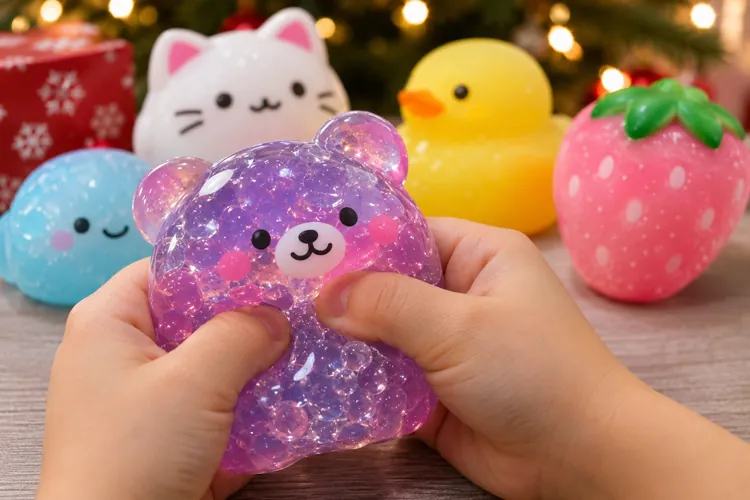
Popular squishy toys, including animal-shaped and food-shaped fidget toys, are raising safety concerns. Some contain water beads that can expand inside a child's body if swallowed, potentially causing intestinal blockages.
In August, the Consumer Product Safety Commission (CPSC) warned that counterfeit squishy toys may contain dangerous chemicals or fail to meet federal safety standards. The agency said it had prevented 355,683 noncompliant squishy toys from entering the country.
Another concern is a viral social media trend encouraging kids to microwave these squishies, which has resulted in serious burns when the toys burst.
What parents should do: Avoid squishies that have a strong chemical odor, feel oily or unusually sticky, leak or tear easily, or lack manufacturer information. Never allow children to microwave or heat these toys.
3. Pull-string teething toys: Check for choking hazards
Unfortunately, those popular and colorful silicone pull-string teething toys pose a serious choking hazard for toddlers.
PIRG reports that nearly 500,000 pull-string activity and teething toys were recalled or targeted by government warnings over the past year. The problem is that some silicone strings are longer than federal safety standards allow and can become lodged in a child's throat.
Regulators have received dozens of reports involving choking incidents or injuries.
What parents should do: Check the exact brand and model number against the CPSC recall database before purchasing. Stop using any toy that's been recalled, even if your child has played with it safely before.
4. Be skeptical of unusually cheap toys from online sellers
That $8 toy that normally sells for $25 might look like a great holiday bargain. But PIRG warns that counterfeit toys and products from unfamiliar international sellers may not meet U.S. safety requirements.
In one case, customs officials seized 12,191 counterfeit plush toys and 5,000 other children's products bearing popular character trademarks, including Hello Kitty, Labubu, Mario, and Pikachu. Also, counterfeit toys may contain excessive lead or have small parts that break off easily.
What parents should do: Check the actual seller's name on Amazon, Walmart Marketplace, and other shopping platforms. Buying through a familiar website doesn't necessarily mean the toy comes directly from that retailer. Look for an established manufacturer, legitimate contact information, and a clear return policy.