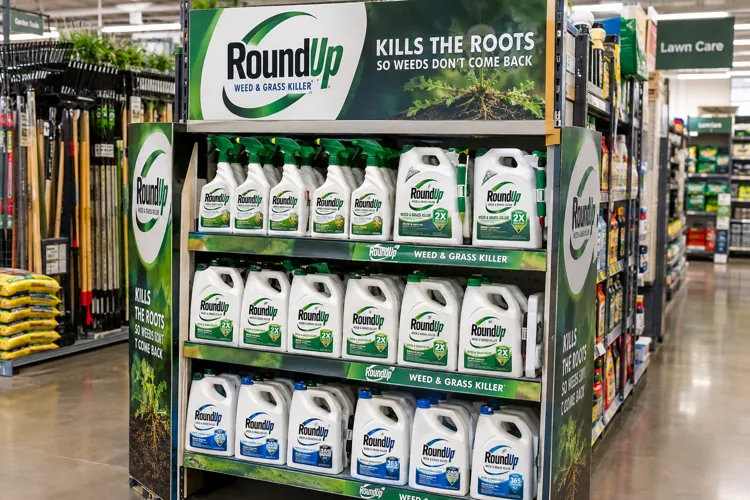

A Missouri judge has approved a $7.25 billion settlement involving Bayer's Roundup weed killer, potentially providing compensation to thousands of Americans who claim exposure caused cancer.
Eligible consumers could receive average payments ranging from $10,000 to $165,000, depending on their age, cancer diagnosis and history of exposure to Roundup.
The settlement covers some future cancer diagnoses, but consumers must meet specific eligibility requirements, and appeals could delay payments.
A Missouri judge has approved one of the largest product liability settlements in U.S. history, clearing the way for Bayer to pay up to $7.25 billion to resolve claims that its popular Roundup weed killer caused cancer.
The ruling could provide compensation to thousands of consumers who used Roundup on their lawns, gardens or farms and later developed non-Hodgkin lymphoma, a cancer affecting the body's lymphatic system.
The agreement also covers certain people who have not yet developed the disease but were exposed to Roundup before February 17, 2026.
Bayer, the German pharmaceutical and agricultural company that acquired Roundup manufacturer Monsanto in 2018, continues to deny that the product causes cancer.
The settlement does not constitute an admission of wrongdoing.
In a statement announcing the court's approval, Bayer CEO Bill Anderson described the decision as a major milestone in the company's effort to resolve years of litigation.
The court's decision remains subject to appeal, meaning consumers should not assume settlement checks will arrive immediately.
Who qualifies for compensation?
The settlement is not a general refund program for everyone who purchased Roundup.
Instead, it is intended for people who developed non-Hodgkin lymphoma after exposure to Roundup products containing glyphosate, the herbicide at the center of the lawsuits.
Under the approved agreement, consumers generally must have been exposed to Roundup before February 17, 2026, and either already have a diagnosis of non-Hodgkin lymphoma or receive one within a specified 16-year period after the agreement takes effect.
The settlement covers qualifying residential users as well as people exposed through agricultural, industrial and landscaping work.
Compensation will depend on several factors, including how frequently and extensively a person used Roundup, whether exposure occurred at home or on the job, the person's age at diagnosis and the severity of the cancer.
According to court documents, average payments could range from approximately $10,000 to $165,000.
For example, an agricultural worker younger than 60 who experienced prolonged exposure and developed an aggressive form of non-Hodgkin lymphoma could qualify for an average payment near the upper end of that range.
Older individuals, particularly those diagnosed at age 78 or later, could receive considerably less.
These figures are estimates for different categories of claimants, not guaranteed payments.
What should consumers do now?
Consumers who believe they may qualify should begin gathering documentation rather than waiting until a claims deadline approaches.
Useful records may include medical documents confirming a non-Hodgkin lymphoma diagnosis, employment records showing occupational exposure, and any available evidence of past Roundup purchases or use.
People who regularly used Roundup around their homes may have difficulty producing receipts from many years ago. However, other documentation or testimony may help establish a history of exposure, depending on the settlement's requirements.
Consumers who have already filed Roundup lawsuits should consult their attorneys about how the settlement affects their cases.
Those who have not filed claims but believe they qualify may want to seek advice from an attorney familiar with the litigation.
Importantly, the court's approval does not mean payments are immediately available. Bayer says an appeal would suspend further settlement payments until the appeal is resolved.
Consumers should also be wary of unsolicited calls, emails or text messages promising immediate settlement payments in exchange for an upfront fee or sensitive financial information.
Why is Bayer agreeing to pay billions?
Roundup has been sold since 1974 and became one of the world's most widely used herbicides.
Its original active ingredient, glyphosate, has been the subject of a long-running scientific and legal controversy.
In 2015, the World Health Organization's International Agency for Research on Cancer classified glyphosate as probably carcinogenic to humans.
However, the U.S. Environmental Protection Agency has reached a different conclusion, finding that glyphosate is not likely to cause cancer in humans when used according to label directions.
Bayer maintains that scientific research supports the product's safety.
Approximately 200,000 Roundup-related claims have been made against Bayer over the years, resulting in billions of dollars in settlements and some substantial jury awards.
The company previously agreed to pay roughly $10 billion to $11 billion to resolve earlier claims. The latest settlement is intended to address much of the remaining litigation and certain future claims.
The agreement provides for payments into a settlement fund over as many as 21 years.
A Supreme Court ruling changed the legal landscape
The settlement comes just months after a major U.S. Supreme Court decision made it more difficult for some consumers to sue Bayer.
In June, the court ruled that federal pesticide labeling requirements prevent certain state-law lawsuits alleging Monsanto failed to warn consumers about potential cancer risks.
Because the EPA does not require a cancer warning on Roundup, the court determined that states cannot impose conflicting labeling requirements through those types of lawsuits.
The decision significantly weakened a central argument used by plaintiffs in Roundup litigation.
That development made the settlement especially important.
Some attorneys representing cancer patients believe the agreement offers a more reliable path to compensation than pursuing individual lawsuits with uncertain outcomes.
Others argue that the payments are too small and that the settlement restricts the ability of people diagnosed in future years to seek larger awards.
St. Louis Circuit Judge Timothy Boyer concluded that the settlement was fair and adequate, although his approval could still be challenged.
Is Roundup still being sold?
Yes, but consumers should know that Roundup's formulation has changed.
Bayer has removed glyphosate from newer versions of Roundup marketed to residential consumers in the United States.
Glyphosate-based herbicides, however, remain available for agricultural and other uses.
That distinction matters because the settlement concerns alleged injuries associated with earlier exposure to Roundup products containing glyphosate, not simply the purchase of any product carrying the Roundup name.
For consumers who have used Roundup for years, the most important questions are which formulation they used, when they used it and whether they have received a qualifying cancer diagnosis.
The settlement does not establish that glyphosate causes cancer, and the scientific disagreement over its risks continues.
For eligible consumers, however, Friday's ruling represents a potentially significant opportunity for compensation after years of litigation.
The next steps will depend on whether the approval is appealed and when the settlement's claims administration process moves forward.