





2025 Savings Accounts and Financial Planning

Article Image

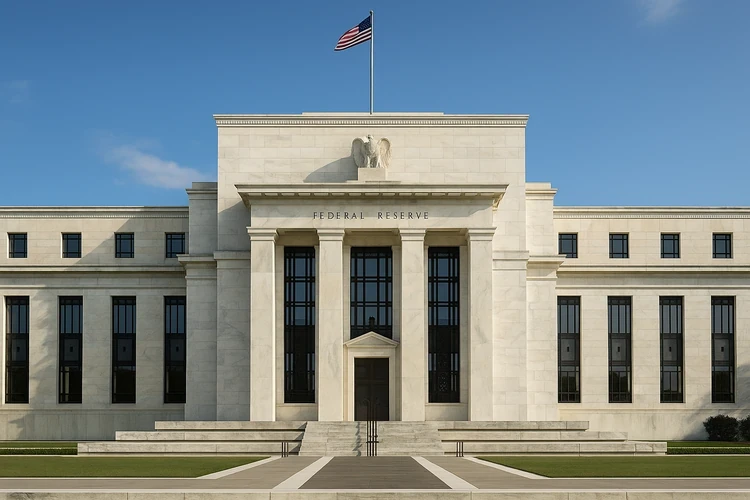
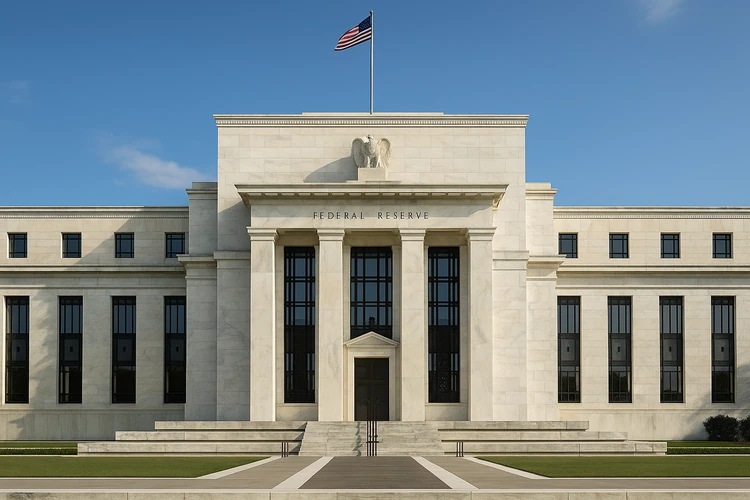
How a Federal Reserve rate cut would affect consumers

  • A Federal Reserve rate cut lowers borrowing costs across the economy, influencing credit cards, mortgages, and auto loans.

  • The Fed decides whether to cut rates based on inflation, employment trends, and overall economic stability.

  • Consumers may not see immediate relief, but over time lower rates ripple through to household budgets and business investment.


The Federal Reserve Open Market Committee began a two-day meeting in Washington on Tuesday, where it is widely expected to announce the first cut in 2025 of the federal funds interest rate.

President Trump has pushed for a “big” cut, but policymakers have not tipped their hand. No matter what the committee decides, it will have an effect on consumers.

When the Fed cuts the federal funds interest rate, the rate banks charge each other for overnight loans, it sets off a chain reaction across the U.S. financial system. While consumers don’t borrow at this specific rate, the decision influences nearly every type of borrowing cost, from mortgages and auto loans to credit cards and student loans.

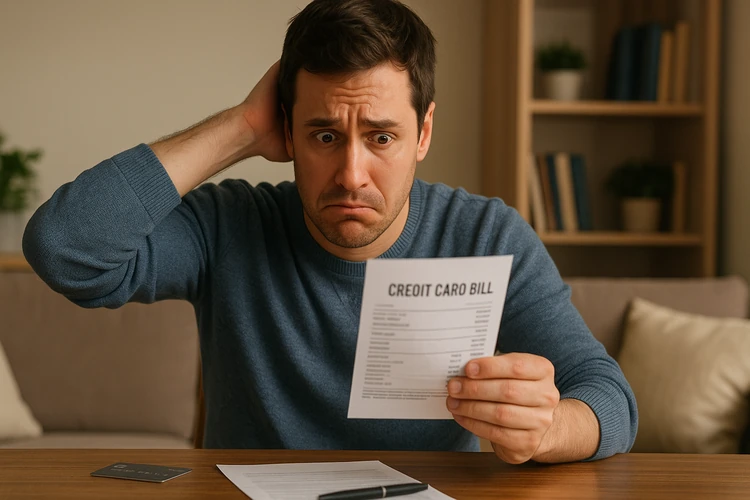
Credit card rates, which are tied closely to banks’ prime lending rates, often fall soon after a Fed rate cut. This can provide modest relief for households carrying balances. 

Mortgage rates, especially those for adjustable-rate loans, tend to follow suit, though fixed-rate mortgages are influenced by broader bond market trends as well. 

Auto loans, personal loans, and home equity lines of credit also generally become cheaper when the Fed eases borrowing costs, potentially making large purchases or refinancing more attractive.

Savers could earn less

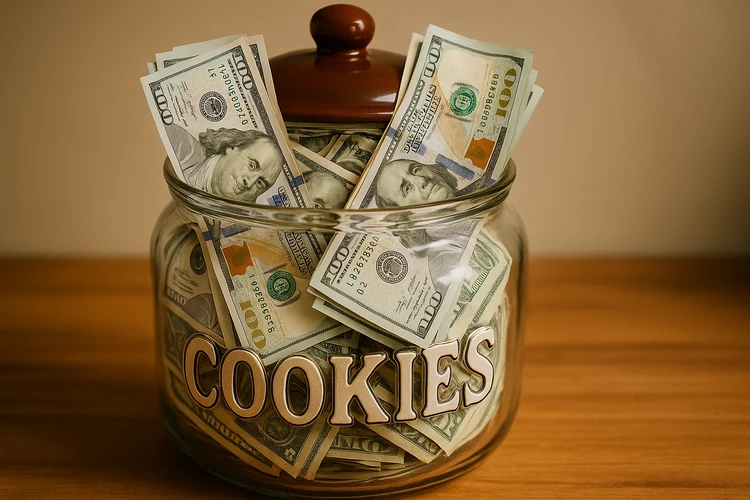
Savings accounts and certificates of deposit (CDs), however, move in the opposite direction. Consumers who rely on interest income may see their returns shrink as banks lower deposit rates to reflect cheaper borrowing conditions.

The Fed does not take rate cuts lightly. The central bank’s dual mandate is to promote maximum employment and stable prices. When inflation runs above its 2% target, policymakers are reluctant to cut rates because easier borrowing could fuel further price pressures. 

Conversely, when unemployment rises, economic growth slows, or financial markets show signs of strain, the Fed may reduce rates to stimulate borrowing, investment, and consumer spending.

Other factors include global economic conditions, geopolitical risks, and credit market stability. For instance, if international tensions or financial shocks threaten U.S. growth, the Fed may cut rates as a precaution to keep money flowing through the economy.

Timing and consumer expectations

Rate cuts don’t translate instantly into lower monthly bills. Credit card APRs may fall within a billing cycle or two, while mortgage and auto loan impacts can take weeks to filter through. 

Still, the broader signal – that borrowing is becoming cheaper – encourages both consumers and businesses to spend and invest, which is exactly what the Fed aims to achieve during periods of slowing growth.

While consumers won’t feel the effects overnight, a Fed rate cut gradually reduces the cost of borrowing across the economy, offering relief to indebted households and support for continued economic expansion.
Article Image

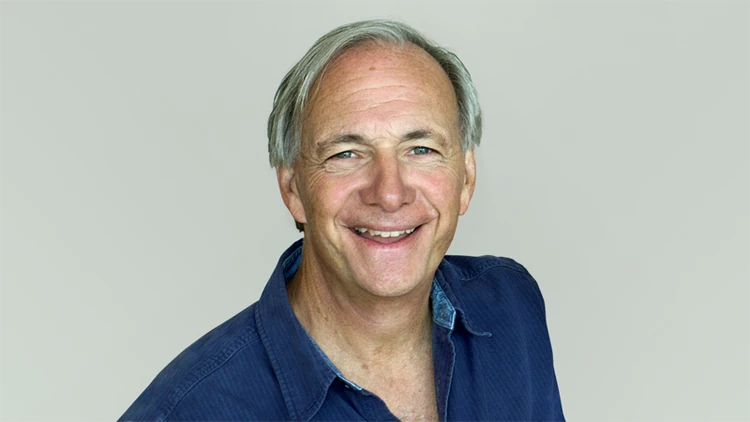
Who is Ray Dalio, and why is he so worried about the economy?

  • Billionaire investor Ray Dalio has warned that the U.S. economy faces mounting risks from debt, inflation, and geopolitical tensions.

  • He cautions that America’s debt-fueled spending and rising interest rates could trigger a painful “debt crisis.”

  • For everyday Americans, this could mean higher borrowing costs, weaker job markets, and lower investment returns.


For the last couple of years, billionaire hedge fund manager Ray Dalio, founder of Bridgewater Associates, has been sounding alarms about the U.S. economy. In recent interviews and writings, the warnings have increased.

Dalio has cautioned that rising government debt, persistent inflation, and geopolitical rifts could converge into a “perfect storm” with significant consequences for both markets and ordinary households.

Dalio has repeatedly said that the U.S. government’s debt burden is becoming unsustainable. Federal debt has climbed above $34 trillion, and higher interest rates mean that servicing that debt is increasingly expensive. 

“We’re reaching a point where borrowing to finance deficits is no longer sustainable without consequences,” he warned. Higher borrowing costs, he added, could crowd out private investment and reduce overall economic growth.

Inflation and geopolitical strains

Despite some signs of easing inflation in 2025, Dalio cautioned that the threat remains. He pointed to global supply chain realignments, deglobalization, and geopolitical tensions, particularly between the U.S. and China, as long-term inflationary pressures. In his view, the world is moving into a more fragmented era, which could make goods and capital more expensive and less available.

In an interview with Fortune Magazine, Dalio said he is a lone voice warning about the economy because others are remaining silent, fearing retaliation. However, ConsumerAffairs found some others who have voiced similar concerns lately.

A recent Business Insider commentary spotlighted consensus among expert economists:

  • Economist Ken Rogoff forecasts a debt crisis within four to five years due to rising rates and warns against complacency on the costs of debt.

  • Historian Niall Ferguson points out that when debt interest approaches defense spending levels—as seen in fiscal year 2024—it signals growing financial vulnerability and waning investor confidence.

  • A Wall Street Journal analysis warned that the U.S. deficit has ballooned toward $2 trillion, exceeding sustainable norms. Without structural reforms, its analysis concludes that markets may be compelled to react with higher yields and diminished demand for Treasuries, leading to higher mortgage rates.

Impact on average Americans

For everyday Americans, Dalio’s warnings, should they materialize, could translate into real-life concerns:

  • Higher borrowing costs: Rising interest rates mean mortgages, car loans, and credit card debt are more expensive.

  • Job market uncertainty: Slower growth could limit hiring and wage gains, putting pressure on household budgets.

  • Weaker investment returns: Stocks and bonds may deliver lower returns in the coming years, challenging retirement savings and long-term financial planning.

  • Potential policy shifts: To manage its debt, the government may consider higher taxes or changes to entitlement programs, both of which would directly affect households.

Dalio advised investors and households to diversify their assets, manage risk carefully, and avoid overexposure to debt. He has long argued that resilience—whether in personal finances, businesses, or national economies—comes from preparing for a range of scenarios, not just the most optimistic ones.

Article Image

Consumers have cut spending – but not all spending categories

  • Over half of Americans (56%) have already started cutting back on spending due to recession concerns.

  • 40% of Americans have switched to store-brand groceries to save money on essentials amid a potential recession.

  • Over half of Americans (52%) could only cover expenses for 2 months or less if they lost their income. Gen Z (58%) is the most likely to say so.


As the specter of a recession looms over the U.S. economy, Americans are bracing for impact by tightening their wallets and reevaluating spending priorities. A recent survey conducted by CouponFollow offers a revealing look at how over 1,000 consumers are adapting to growing economic uncertainty. 

The findings paint a complex picture: while many are cutting back on spending, others are standing firm on purchases they believe are essential to their well-being.

Anxious nation

The mood across the country is one of mounting concern. A staggering 69% of Americans say they feel more financially anxious this year than they did last year, and nearly half (45%) admit they feel unprepared for a potential recession. The financial unease is prompting widespread changes in household economics, including dipping into savings—29% have done so in the past six months just to cover everyday expenses.

Generation Z, often lauded for its adaptability and digital fluency, appears especially vulnerable. Over half (58%) of Gen Z respondents said they could only cover expenses for two months or less if they lost their income. Nearly half (48%) said they feel unprepared for a recession, the highest among all age groups.

The illusion of normalcy

In a bid to project stability, many Americans are maintaining appearances even as they scale back. About 1 in 4 respondents (26%) said they're "pretending" to spend normally, though they're actively cutting expenses behind the scenes. This behavior is particularly common among Gen Z, with 40% admitting to putting on a financial façade.

Overall, 56% of Americans reported that they've already begun cutting back on spending due to recession concerns. Tactics range from the practical—43% are buying fewer groceries or smaller quantities—to the strategic, with 40% switching to store-brand products and 38% relying more heavily on coupons and discounts.

What consumers won’t sacrifice

Even amid financial strain, not all spending is negotiable. Mental health care, pet essentials, and creative outlets remain budget priorities for many—especially for Gen Z.

  • Mental health: 27% of Gen Z say therapy or mental health care is a non-negotiable expense.

  • Personal expression: One in five Gen Zers refuses to cut spending on fitness memberships and hobbies.

  • Personal care: 15% of Gen Z find it emotionally difficult to reduce spending on personal grooming, a rate more than double that of Gen X and baby boomers.

  • Pet care, a top priority across all generations, is slightly less sacrosanct for Gen Z (36%) compared to older Americans—baby boomers lead with 44% unwilling to compromise.

Interestingly, travel—a traditional luxury expense—has become easier to forego for younger Americans. Only 8% of Gen Z cite travel as the hardest thing to give up, compared to 18% of baby boomers.

But in the face of economic stress, Americans are proving resilient. Rather than panic, the survey found many are adopting a pragmatic approach: cutting back where it hurts least, preserving what matters most, and searching for ways to stretch every dollar without sacrificing well-being.

These shifts hint at a broader trend of mindful spending. While a full-blown recession remains uncertain, the emotional and financial recalibration already underway is shaping a more value-conscious consumer. And if the current patterns are any indication, Americans—especially younger generations—are rewriting the rules of budgeting with both survival and self-care in mind.

Article Image

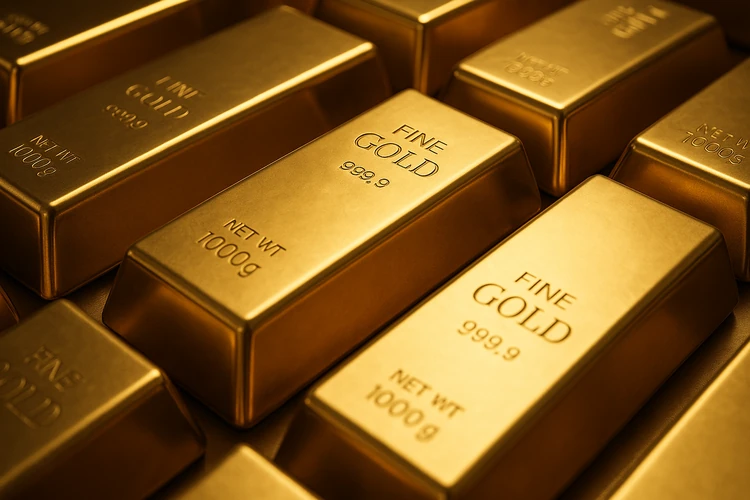
Gold prices plunge after the US and China reach a tariff truce

  • Gold prices dropped over 3% to $2,228 per ounce after a temporary tariff rollback between the U.S. and China reduced the metal's appeal as a safe-haven asset.

  • Despite the dip, analysts from Zaner Metals and Citi expect gold to stabilize and potentially rise, with long-term projections ranging from $3,150 to as high as $4,000.

  • Ongoing gold purchases by central banks—especially in China—signal strong demand and reinforce gold’s role as a hedge amid persistent global economic uncertainties.


Gold prices fell by more than 3% on Monday, falling to $2,228 per ounce, following the announcement of a temporary tariff reduction between the U.S. and China.

Gold had rallied as a safe haven from the economic uncertainty caused by a potential trade war. The sudden de-escalation in trade tensions seemed to diminish  gold's appeal as a safe-haven asset -- at  least for the moment. 

But despite this short-term dip, some market analysts maintain a bullish outlook for gold as an investment and hedge. Peter Grant of Zaner Metals anticipates that gold will consolidate between $3,200 and $3,500, with potential dips to $3,150, but expects a retest of the $3,500 level soon. 

Similarly, Citi has revised its short-term gold outlook, projecting price consolidation in the $3,000 to $3,300 range and lowering its zero- to 3-month target to $3,150. 

Other long-term forecasts also remain optimistic. Business Insider reports Jeff Gundlach, CEO of DoubleLine Capital, predicts a continued bullish trend for gold, forecasting a price surge up to $4,000 per ounce—a 20% rise from its current level. 

Rising price targets

Goldman Sachs and UBS have also raised their gold price targets to $3,500, citing rising tariffs, slowing growth, elevated inflation, and lingering geopolitical risks. 

Concerns about trade aren’t the only factor supporting gold prices. Central banks continue to add to their gold reserves, supporting the price. According to JPMorgan, central bank buying, particularly from China, could be a source of stronger demand in 2025. This trend reflects increasing demand for safe-haven investments in unstable times. 

While gold prices have recently dipped due to improved U.S.-China trade relations, analysts suggest that the metal's long-term prospects remain strong, supported by central bank buying, investor demand, and ongoing economic uncertainties.

In Tuesday's futures trading, Gold reclaimed 0.81% of Monday's decline.

Article Image

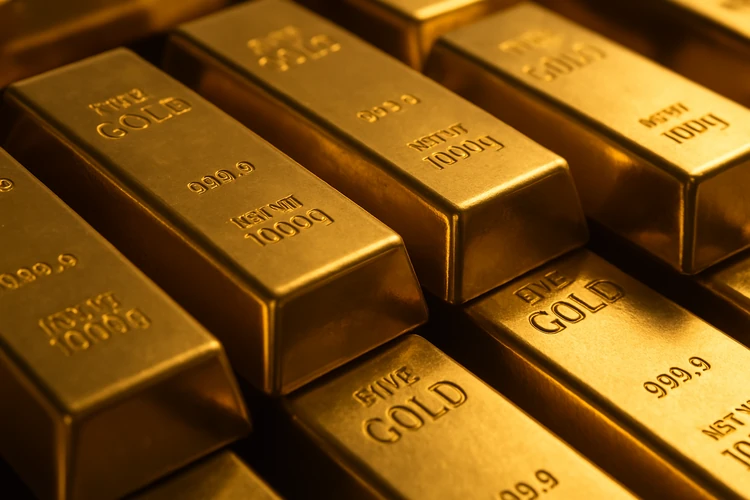
Six reasons gold prices keep hitting record highs

Key takeaways

  • Geopolitical and trade tensions: The dramatic rise in gold prices is largely driven by escalating U.S.-China trade tensions, including new tariffs and retaliatory actions. Coupled with ongoing geopolitical instability (e.g., unresolved conflict in Ukraine and uncertainty around U.S. foreign policy), these factors have made gold an appealing safe-haven investment.

  • Economic uncertainty: A weakening U.S. dollar—now at a three-year low—has amplified gold's appeal by increasing its relative value. Simultaneously, fears of a recession, stoked by the tariff policies, have led institutional investors to shift assets from stocks to gold.

  • Central bank actions and Fed policy speculation: China’s strategic tripling of gold in its reserves highlights a broader trend of central banks accumulating gold to reduce reliance on U.S. bonds. Additionally, speculation about potential political interference with the Federal Reserve has intensified market anxiety, further boosting gold demand.

The price of gold moved steadily higher throughout 2024, but in recent weeks it has surged. From approximately $2,657.60 per ounce at the beginning of 2025, the price of gold has now surpassed $3,400 an ounce.

According to economists, there are at least six factors driving the price skyward.

1. Escalating U.S.-China trade tensions

On April 2, President Trump announced steep tariffs on just about every trading partner, with the highest tariffs on China. China responded with tariffs of its own and the potential trade war made investors extremely nervous. They responded by selling stocks and bonds and buying gold, a traditional safe haven in times of uncertainty.

2. Weaker dollar

Because of growing economic uncertainty, investors have shied away from the U.S. dollar, sending its value to a three-year low. A weaker dollar makes gold more attractive, since it now takes more dollars to buy an ounce of goal – a strong reason for the rising price. ​

3. Central bank activity

Central banks, especially China's, have significantly increased their gold reserves over the last few months, and stepped up that activity amid this month’s uncertainty. China has actually tripled the share of gold in its foreign reserves to 8%. It appears to be a strategic move aimed and reducing reliance on U.S. bonds.

4. Recession fears

The U.S. Tariffs have also increased worried about an economic slowdown that could turn intoo a recession. That’s prompted many institutional investors around the world to reallocate more of their assets from equities to gold. A Bank of America survey indicates that 42% of fund managers now favor gold, up from 23% in March.​

5. Geopolitical instability

President Trump had hoped to broker a peace deal by now between Russian and Ukraine, but has been frustrated. The fighting goes on. There are also growing uncertainties surrounding U.S. foreign policy. That uncertainty has also driven gold prices higher​

6. Speculation about Federal Reserve policies

President Trump’s dissatisfaction with Federal Reserve Chairman Jerome Powell spilled into public view last week, leading to speculation that Trump might try to affect changes to Fed policies and even try to fire Powell. Concerns about the Fed's independence and future monetary policy directions have made gold look like a safe place to put your assets.

Article Image

Odds of a US recession are growing, Wall Street bank warns

Economists at Goldman Sachs have issued a more pessimistic forecast for the U.S. economy, saying the chances of a recession in the U.S. are now 35%. They attribute the rise to Trump administration tariffs, which they say will slow economic growth.

In a note to clients over the weekend, Goldman economists predicted the average tariff on all goods imported into the U.S. will be 15%, adding to the cost to merchants, with the expectation that most of the increase will be passed along to consumers.

As a result, the bank now predicts the end-of-year inflation rate will be 3.5%, up from 2.8%  in February, and the unemployment rate will rise to 4.5% from 4.1%.

With higher prices caused by tariffs, economists expect consumers will buy fewer products. Profit margins will shrink, businesses will hire fewer new employees and layoffs may increase.

A recession is defined as two consecutive quarters of negative GDP growth. The fourth quarter of 2024 saw positive growth, so all eyes will be on the announcement of first quarter 2025 growth, sometime in late April or early May.

What happens in a recession?

In a recession, consumers prioritize spending on essential goods and services like food, healthcare and the utility bill. They are less likely to spend on things like entertainment and travel.

Large expenditures would likely take the biggest hit. With an anticipated 25% tariff on imported cars and trucks, vehicle sales could slow significantly, impacting employment for autoworkers and car dealer employees.

Retirees’ 401(k) accounts could also take a significant hit. Goldman analysts said they expect the S&P 500 to suffer a 5% decline over the next three months, though they said it should rebound late in the year.

Since the turn of the century, the U.S. has suffered two recessions. The Great Recession lasted from 2007 to 2009, caused by the collapse of the U.S. housing market.

The economy most recently suffered a short but sharp recession that occurred at the start of the COVID-19 pandemic.

Article Image

Gold prices hit a record high for the 17th time in 2025

The price of gold, which has been rising for well over two years, has hit yet another record high price – the 17th time so far this year that the precious metal has established a new record.

The price is climbing on the futures market. Gold is ending the week after hitting a high of $3,114 an ounce, a gain of 17% since Jan. 2, outperforming the stock market.

What’s behind gold’s meteoric rise? Wall Street analysts point to a pair of drivers. The Trump administration’s tariffs on cars and other products are creating fears of a global trade war that will harm the economy in the U.S. and dozens of other countries. 

At the same time, the dollar has weakened in the face of trade tensions. As the dollar goes down, gold priced in dollars gets more expensive.

How much higher?

A question some investors may be asking is, “How much higher can the price of gold go?” No one has a crystal ball but analysts at Bank of America this week put out a note raising their price target from $3,000 to $3,500 an ounce. They note China and other central banks have increased their gold purchases.

The note reiterates the belief that U.S. trade policies will continue to weaken the dollar, increasing the number of dollars required to purchase an ounce of gold.

Consumers who are considering investing in gold should consult a trusted and objective financial adviser before taking the plunge at gold’s record high. While Wall Street remains bullish on gold – JPMorgan doesn’t rule out a price of $4,000 an ounce – the current price run is largely based on economic uncertainty, which is subject to change.

Article Image

Robinhood not only wants to help you trade stocks, it wants to be your bank

Robinhood, the online stock trading platform that enjoyed explosive growth during the early days of the COVID-19 pandemic when meme stocks were the rage, has announced plans to offer banking services.

It plans to launch a new platform called Robinhood Banking. Users can access their accounts and engage in other banking services, such as sending and receiving money. Even though it’s a virtual bank, Robinhood says account holders will be able to have cash withdrawals “delivered on demand right to your doorstep.”

Depositors can earn interest of up to 4% APR and enjoy insurance on deposits. While Robinhood is not a bank that can qualify for FDIC insurance, the company said it is partnering with a third-party bank that will provide that guarantee.

Robinhood Banking, which will offer checking and savings accounts to Robinhood Gold customer, will launch later in 2025, the company said.