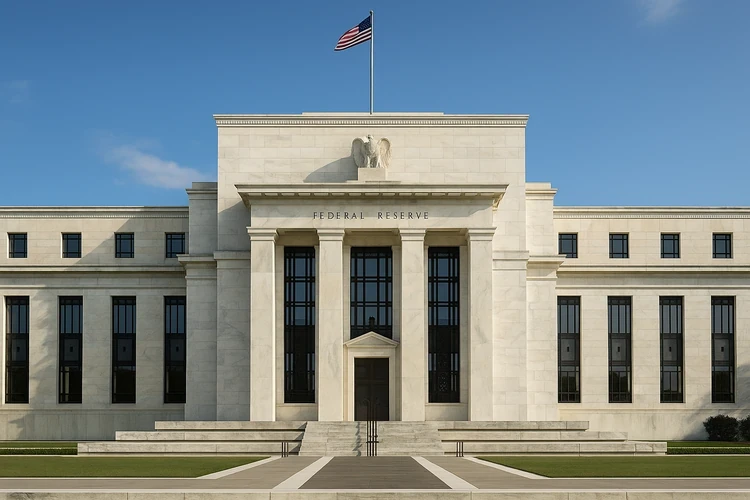

Federal Reserve cuts its benchmark interest rate by 0.25 percentage points, bringing the federal-funds rate to 3.50 %–3.75 % — the lowest in nearly three years.
The decision, made amid internal division among policymakers, marks the third consecutive rate reduction this year as the central bank balances sluggish labor market data with persistent inflation.
Consumers can expect mixed effects: cheaper borrowing costs for many loans, but likely lower yields on savings and deposit accounts over time.
The Federal Reserve has announced a quarter-point cut in its benchmark interest rate, setting the federal-funds target range at 3.50 % to 3.75 % — the lowest level in nearly three years. The rate reduction, the third in 2025, reflects growing concern among central bankers about a cooling job market and slowing economic momentum, even as inflation remains stubbornly above the Fed’s long-term 2 % objective.
The Federal Open Market Committee (FOMC) vote was not unanimous; divisions within the Fed underscored how policymakers differ on the risks facing the U.S. economy and the appropriate pace of future rate changes. These debates are likely to shape the bank’s approach well into 2026.
What it means for consumers
For everyday Americans, the Fed’s rate cut has a range of tangible effects — some immediately noticeable, others emerging gradually over months:
When the Fed lowers its benchmark rate, it generally reduces short-term borrowing costs throughout the economy. That can translate into slightly lower interest rates on variable-rate loans and new credit products. For example:
Credit cards & personal loans: Interest rates on credit cards and personal lines of credit often move in tandem with broader lending benchmarks such as the prime rate, which is tied to the federal funds rate. As the Fed cuts, banks may reduce the cost of borrowing on some cards and loans, offering relief to households carrying balances.
Mortgages: While fixed-rate mortgage rates are influenced mainly by long-term bond yields, adjustable-rate mortgages (ARMs) and new mortgages can benefit from lower short-term rates. Mortgage rates could dip modestly if broader market conditions align with the Fed’s stance.
Auto loans & student debt: Auto loans and other consumer financing also become incrementally cheaper as lenders adjust to the softer rate environment, though savings may be modest and can lag the Fed’s decision by several weeks.
Mixed news for savers
Lower policy rates tend to put downward pressure on interest earned in savings accounts, certificates of deposit (CDs), and money market funds. Banks typically reduce yields on these products in response to Fed cuts, meaning savers could see lower returns on their deposits over time.
Business and investment impact
For businesses that rely on credit — especially small and medium enterprises — cheaper borrowing can support investment and hiring. This is part of the Fed’s intention: to stimulate economic activity by making financing less costly for companies and consumers alike. Longer-term impacts, however, depend on how quickly businesses ramp up investment and whether inflation pressures ease.
What rates are affected?
The Fed’s move directly adjusts the federal-funds rate, which is the rate at which banks lend to each other overnight. Changes in this rate indirectly influence many interest rates across the economy:
Prime rate: The base rate that banks use as a reference for many consumer and business loans typically moves in step with changes to the federal funds rates.
Variable-rate consumer loans: Credit cards, home-equity lines of credit, and ARMs often adjust more quickly to changes in policy rates.
Business loans and commercial credit: Lower policy costs can ease financing for corporate borrowers.
Fixed-rate products like some mortgages and long-term bonds are influenced more by market expectations for inflation and growth than by the Fed’s policy rate alone, though shifts in the benchmark can still affect pricing over time.
Fed projections signal that policymakers see potential for one more rate cut in 2026, though views vary widely within the committee. Some members have even suggested rates could remain unchanged or rise if inflation fails to moderate. Such divergent forecasts highlight the uncertainty policymakers face in balancing inflation, employment, and financial stability.