
Traders are now pricing in about a 90% chance of a 25‑basis‑point interest rate cut by the Federal Reserve in mid‑September, which diminishes yields on dollar assets and boosts gold’s appeal as a non‑yielding haven.
Economic instability, inflation fears, and geopolitical tensions, combined with political pressure on the Fed and diminishing confidence in dollar‑based assets, are driving investors and central banks alike toward gold for stability.
Unexpected tariff rulings, such as new duties on large gold bars, along with broader trade tensions and geopolitical threats, are spurring fresh interest in gold as a protective asset.
Gold prices started the holiday-shortened trading week by surging past $3,500 per ounce, reaching an all-time high. By the close of trading Tuesday, spot gold hovered around $3,496–$3,509, while futures echoed the rally, signaling widespread investor confidence in the metal as a safe haven.
What’s behind the move? Markets are now pricing in a 90% chance of a 25‑basis‑point cut at the Federal Reserve’s upcoming meeting on September 17, a shift that further diminishes return on treasury assets and elevates gold’s position as a non-yielding alternative.
This expectation-driven weakening of the U.S. dollar has made gold, which is priced in dollars, more affordable for foreign buyers, lifting demand and prices across global markets.
Flight to quality
Politically, President Trump’s vocal criticism of the Federal Reserve, particularly his proposals to remove Fed officials, may have rattled investor confidence, raising concerns about central bank independence and long-run economic stewardship.
At the same time, inflation concerns, geopolitical flashpoints, and fragile markets are pushing investors and central banks to lean heavily into gold. Gold has now overtaken the euro as the world’s second-largest reserve asset, with large-scale accumulation seen in India, China, Turkey, and Poland.
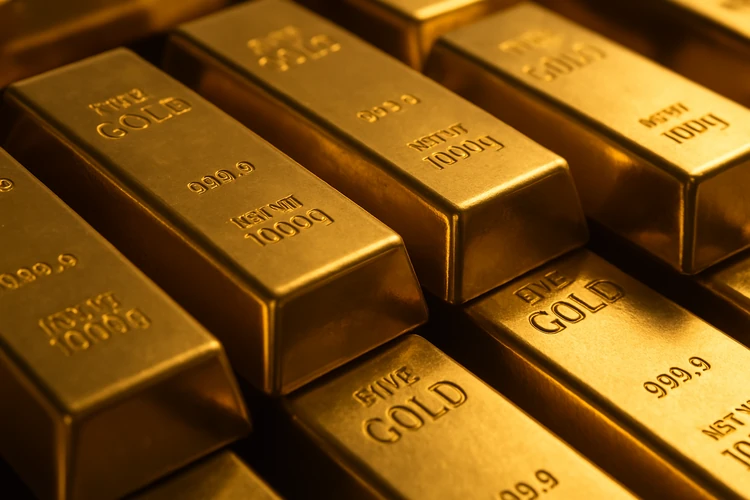
A dramatic twist arrived when U.S. Customs unexpectedly ruled that one-kilo and 100-ounce gold bars would attract tariffs, potentially as high as 39%, a move that took markets by surprise and spurred a fresh surge in gold purchases. Additionally, persistent trade and geopolitical tensions—especially involving Russia, China, and the Ukraine conflict—have exacerbated economic fears, further inflating safe-haven demand.
Gold’s rise so far in 2025, rising by roughly 30%–35% year-to-date, stems from a potent blend of rate-cut speculation, safe-haven flows, central bank demand, and geopolitical jitters.
Analysts from major institutions like Goldman Sachs now speculate that gold could potentially reach $4,000 per ounce by mid‑2026, if current trends persist.