

NVIDIA and Uber are teaming up to build the world’s largest Level 4-ready autonomous mobility network, beginning in 2027.
Up to 100,000 self-driving vehicles will join Uber’s global fleet, powered by NVIDIA’s next-gen DRIVE AGX Hyperion 10 platform.
AI and generative technology will help vehicles navigate complex, real-world environments with humanlike reasoning.
NVIDIA and Uber have announced a major new partnership designed to fast-track the era of autonomous transportation. How it will impact Uber drivers is not exactly clear, though in the beginning, it may make their jobs easier.
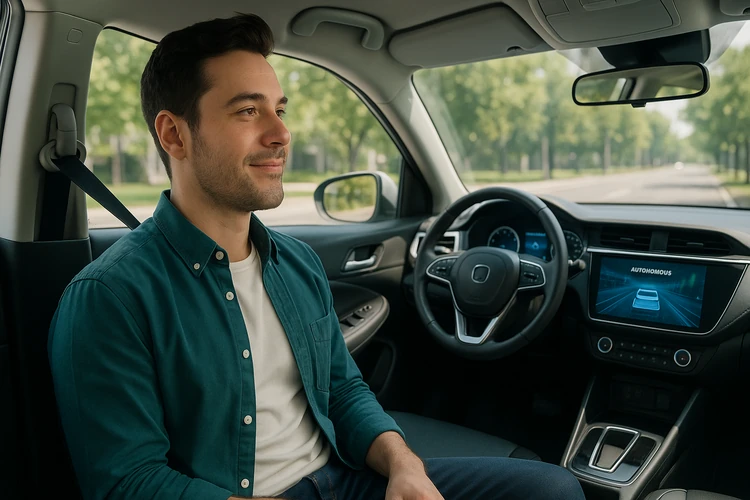
The two tech leaders plan to deploy the world’s largest Level 4-ready robotaxi and autonomous delivery network. Level 4 refers to vehicles capable of operating safely without human intervention in most environments – starting as soon as 2027.
At the heart of this collaboration is NVIDIA’s DRIVE AGX Hyperion 10, a new autonomous vehicle development platform that provides the computing power and sensors needed to make vehicles “Level 4-ready.” The system combines AI, radar, lidar and camera data to enable safe, real-time decision-making on the road.
From rides to robotaxis
Uber’s vision is to create a single mobility network that connects human drivers and autonomous vehicles. In the near future, riders may not notice whether their trip is handled by a person or an AI-powered robotaxi – both will operate on one unified Uber platform.
“Robotaxis mark the beginning of a global transformation in mobility — making transportation safer, cleaner and more efficient,” said Jensen Huang, founder and CEO of NVIDIA. “Together with Uber, we’re creating a framework for the entire industry to deploy autonomous fleets at scale.”
Uber CEO Dara Khosrowshahi called NVIDIA “the backbone of the AI era,” adding that the collaboration will help autonomous vehicles reach consumers faster while transforming city transportation.
Building a scalable autonomous future
To support Uber’s massive rollout goal of 100,000 autonomous vehicles, the companies are developing a global “data factory” powered by NVIDIA Cosmos, a platform that curates and processes real-world and simulated data for AI model training.
Other major automakers and mobility partners—including Stellantis, Lucid, Mercedes-Benz, Volvo, and Aurora—are also joining the broader NVIDIA ecosystem to integrate Level 4 capabilities into their fleets.
This collaboration means consumers could soon see NVIDIA-powered automation not only in robotaxis but also in delivery vans, trucks and even luxury sedans.