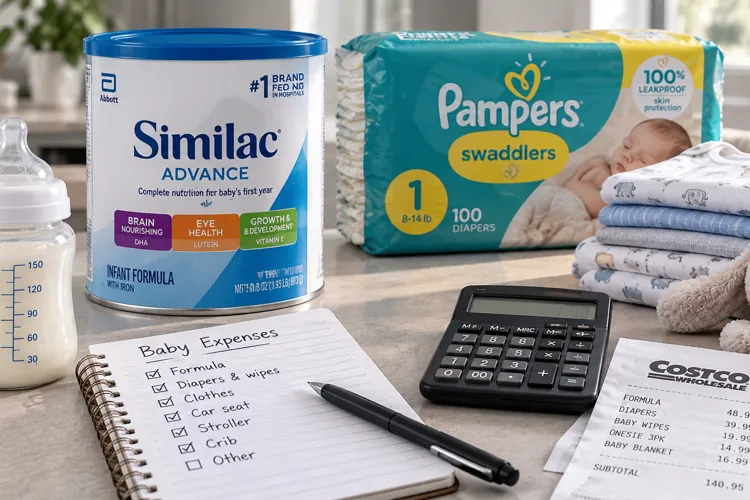

The basics add up fast: A new analysis estimates 14 common baby essentials could cost U.S. parents about $5,150 during the first year.
Formula is potentially the biggest expense: A full year of formula feeding was estimated at $2,740, while diapers, wipes, and rash cream totaled another $1,228.
Don't automatically buy the biggest box: Comparing unit prices, avoiding overstocking, and being selective about what you buy new can potentially save hundreds.
Babies are tiny. Their expenses aren't.
A new analysis from Remitly estimates that U.S. parents could spend about $5,150 on just 14 basic baby essentials during their child's first year.
And that doesn't include some of the really expensive stuff, like childcare, healthcare, or housing.
The biggest potential budget-buster? Formula.
Remitly estimates a full year of formula feeding could cost about $2,740 in the U.S., accounting for more than half of its first-year essentials budget. Diapers, wipes, and rash cream add another $1,228 to your annual total, while baby clothes were estimated at $548.
These numbers provide a good reminder that the seemingly small purchases you make over and over again can become some of the biggest baby expenses.
Here are six smart ways to fight back.
1. Compare formula by prepared ounce
When buying formula, don't automatically assume the biggest container, or most familiar brand, is the best deal.
The American Academy of Pediatrics recommends comparing formula based on the cost per prepared ounce. That matters because container sizes, powder concentrations, and preparation instructions can make two similarly priced formulas very different in terms of value.
Also, it’s worth asking your pediatrician whether a less expensive formula is appropriate before assuming you need a premium version.
2. Check whether you qualify for WIC
This could potentially dwarf every other savings trick on the list.
The Special Supplemental Nutrition Program for Women, Infants and Children, better known as WIC, provides eligible families with specific foods and can include infant formula.
Eligibility is based on factors including income and nutritional risk, and families who assume they make too much shouldn't automatically rule themselves out. In other words, it’s worth applying just to see where you stand.
Check your state's WIC eligibility requirements before paying for a year's worth of formula entirely out of pocket.
3. Don't stockpile formula too early
Finding formula for 25% off doesn't save you money if your baby can't use it or you surpass the Use-By date.
Babies can have different nutritional needs, and parents sometimes need to change formulas. So resist the temptation to fill a closet with six months of formula before you know a particular type works for your child.
Once you've settled into a feeding routine, then start watching sales and comparing prices.
Pro tip: Make a “don’t open two” rule. This works for formula, diapers, wipes, and even baby toiletries. Don't open the backup until the first one is nearly gone. An unopened product is much easier to return, donate, or pass along if your baby suddenly needs a different formula, diaper size, or skin-care product. Once you rip open the package you may be stuck with it.
4. Do the math before buying the giant diaper box
Warehouse-size packages from Costco and Sam’s Club feel like they should be cheaper. Sometimes they are. Sometimes they're not.
Calculate the price per diaper before buying, especially when comparing a giant box against a smaller package that's on sale or has a coupon.
How quickly babies grow is another reason not to go overboard when stocking-up. Buying 400 diapers in one size isn't much of a bargain if your baby outgrows them with 150 still sitting in the closet.
Pro tip: Create what I call a “growth-size exchange bin.” When you find a great diaper sale, keep the receipt and leave any boxes beyond your baby's current size unopened. Then, if/when your baby suddenly moves from size two to size three, you can return or exchange the unopened box, rather than getting stuck with a bunch of diapers you can't use.
5. Buy baby clothes used — and don't buy too many
Remitly estimates parents often spend $548 on baby clothing during the first year. This is one of the easiest categories to attack.
Babies can outgrow clothing before they've had a chance to wear it more than a handful of times, which means thrift stores, consignment shops, and hand-me-downs can be loaded with barely used baby clothes.
Also, avoid buying an entire wardrobe in newborn sizes before the baby arrives.
6. Know what you shouldn't automatically buy used
Secondhand can be fantastic for clothing and plenty of other baby gear, but be very careful when buying used safety products.
Before buying things like a used crib, stroller, or other baby product, check for recalls and make sure it meets current safety standards and hasn't been damaged or had important pieces removed.
Be particularly cautious with used car seats. Their crash history can be difficult to verify, and seats also have expiration dates.
The biggest takeaway for new parents is that preparing for a baby doesn't require you to buy every little product marketed towards you.
A $10 purchase doesn't seem particularly important when you're making it. But make enough of those purchases and suddenly you're talking about thousands of dollars.
When it comes to your baby's first-year budget, sweating the small stuff can actually pay off dramatically.