


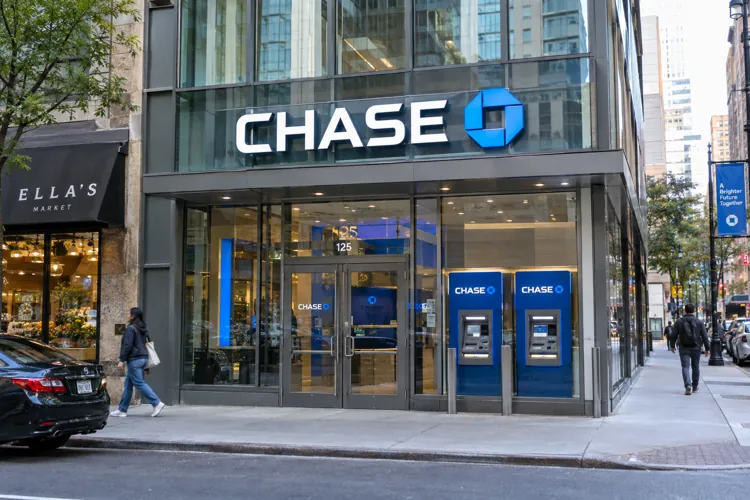

Thousands of JPMorgan Chase customers may have had personal information exposed after hackers targeted outside companies that provide services to the nation's largest bank.
The stolen information reportedly includes names, email addresses and some phone numbers, but Chase says there is no evidence that credit card numbers or other highly sensitive financial information were compromised.
Chase says it will contact affected customers and may offer free credit monitoring. Cybersecurity experts warn that the stolen information could be used in convincing phishing emails and text messages.
JPMorgan Chase has confirmed that hackers breached third-party service providers and accessed information belonging to some of its customers, adding another cybersecurity concern to a week already marked by widespread technology outages.
The bank said its preliminary investigation indicates the attackers obtained marketing data maintained by outside vendors. That information may include customer names and email addresses, along with some telephone numbers.
According to Reuters, a cybercriminal group calling itself n0n claimed to have stolen customer engagement records. Reuters examined data appearing to contain more than 16,000 customer email addresses and 124 bank employee email addresses, although the news organization could not independently verify the data's authenticity.
The breach appears to involve only a small fraction of Chase's tens of millions of customers.
"We have learned that third parties who provide services to the firm were the target of a cyber attack," the bank said in a statement.
Chase said there was no disruption to its banking services as a result of the attack and that it would contact affected customers directly when appropriate.
Visa and Mastercard also affected
The incident was not limited to JPMorgan Chase.
Visa and Mastercard also acknowledged cybersecurity incidents involving outside service providers.
Visa said the attack involved a third-party company in the Asia-Pacific region. The payment network emphasized that its own systems were not compromised and that payment information, including card numbers, was not exposed.
Mastercard said a limited number of email addresses belonging to customers enrolled in a particular benefits program were exposed. The company said the incident had been contained and its payment network continued to operate normally.
It remains unclear whether all three incidents involved the same compromised vendor or separate service providers.
What the breach means for consumers
Although the apparent theft of names and email addresses is less serious than the exposure of Social Security numbers, passwords or bank account credentials, cybersecurity experts say the information can still be valuable to criminals.
The greatest immediate danger is phishing — fraudulent emails or text messages designed to trick recipients into revealing additional information.
A criminal who knows that someone has a relationship with Chase could send a convincing message appearing to come from the bank.
For example, a fraudulent email might warn that the customer's account has been compromised and instruct the recipient to click a link to verify their identity.
The link could lead to a counterfeit Chase website designed to capture usernames, passwords and security codes.
Another possibility is a telephone scam in which someone claiming to represent Chase's fraud department tells the customer that suspicious transactions have been detected.
Because the caller may already know the customer's name, email address or telephone number, the message could appear more credible.
Cybersecurity experts warn that this type of targeted impersonation is among the most immediate risks following the breach.
What Chase customers should do now
Consumers do not necessarily need to close accounts or replace credit cards because of this incident. However, security experts recommend several precautions.
1. Be suspicious of unexpected messages from Chase. Criminals may use news of the breach to send fake security alerts. Don't click links or call numbers provided in unsolicited messages.
2. Contact the bank directly. If a message claims there is a problem with an account, open the Chase app or type the bank's website address directly into a browser. Customers can also call the number printed on the back of their card.
3. Enable multifactor authentication. Additional account security can help prevent unauthorized access if criminals obtain login credentials through a phishing attack. Never share a one-time security code with an unexpected caller.
4. Monitor bank and credit card transactions. Review accounts regularly for unauthorized activity and enable transaction alerts when available.
5. Consider a credit freeze. A freeze with Equifax, Experian and TransUnion can help prevent criminals from opening new credit accounts. However, a freeze may not be necessary solely because an email address was exposed.
6. Watch for official notification. Chase says it will contact affected customers and provide assistance, potentially including complimentary credit monitoring. Customers should verify any such offer through official Chase channels.
Importantly, a legitimate bank representative should not ask a customer to disclose an online banking password or transfer money to a supposedly safe account.
Is the breach connected to this week's banking outage?
The disclosure comes just days after a separate technology problem disrupted banking services at JPMorgan Chase and other financial institutions.
Earlier this week, some customers experienced delays accessing accounts and processing transactions.
The bank attributed those problems to a software bug involving its computer systems.
Chase emphasized Thursday that the cybersecurity incident involving outside vendors was unrelated to the earlier outage.
The distinction is important because a service interruption does not necessarily indicate that hackers have infiltrated a company's systems.
The incidents follow several other high-profile technology disruptions, including problems affecting Microsoft services and a nationwide aviation ground stop.
There is no established connection between those outages and the Chase data breach.
A growing problem involving outside vendors
The Chase incident illustrates a vulnerability facing financial institutions and other large companies: Even when their own computer systems remain secure, customer information can be exposed through contractors and business partners.
Banks routinely share limited customer information with outside firms that provide marketing, customer service, technology and other services.
Those relationships can create additional opportunities for cybercriminals. The latest incident raises questions about how much customer information companies should share with vendors, how long those vendors should retain it and what security measures should be required.
Carissa Robb, a consultant with SolomonEdwards, told Reuters that customers generally do not distinguish between a bank and its outside vendors when their information is compromised. She said companies should more closely examine how much customer data they share and whether that sharing is necessary.
The bottom line for Chase customers
For now, there is no indication that the breach has given criminals direct access to Chase customer accounts or payment card numbers.
But the exposure of contact information creates an opportunity for fraudsters to impersonate the bank and persuade customers to surrender more sensitive information.
Chase has not publicly identified the compromised vendors or established a definitive total of affected customers.
Consumers should be particularly alert to emails, text messages or telephone calls referencing the breach and offering to help secure their accounts.
The safest response to an unexpected security warning is to contact Chase independently rather than follow instructions in the message.