


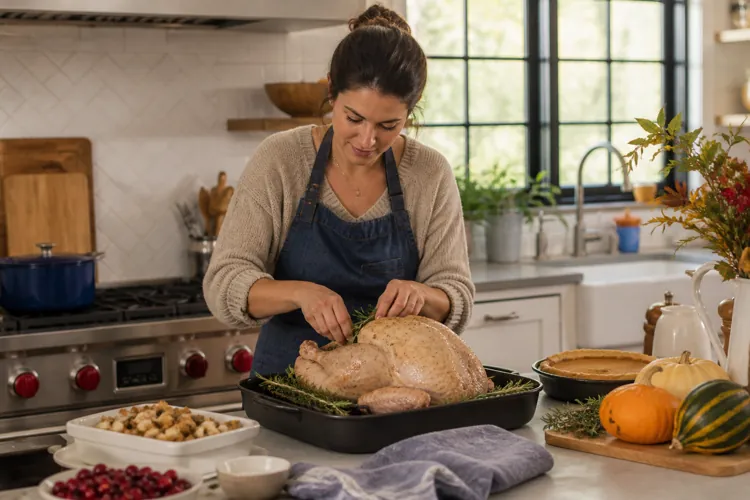

Rutgers experts say consumers should check food recalls before shopping for or preparing Thanksgiving dinner.
Proper turkey thawing, food temperatures, and leftover storage are important steps in preventing foodborne illness.
Holiday guests can also bring potential hazards for children and pets, including medications, cannabis products, and certain foods.
Thanksgiving dinner involves plenty of planning, from picking up ingredients to preparing a turkey and coordinating all the side dishes. But before consumers get started in the kitchen, there's another important step to add to their holiday checklist: food safety.
According to Rutgers University, specialists at the New Jersey Poison Control Center responded to more than 200 food-related calls during last year's holiday season. Those calls involved concerns about spoiled food, leftovers, food preparation, and potential foodborne illnesses.
Now, as families prepare for another Thanksgiving, experts are reminding consumers that preventing food-related problems starts before the meal even reaches the table.
“Most people don't think to check food recalls before they start shopping or cooking for Thanksgiving, but it's one of the easiest ways to protect family and friends,” Diane Calello, executive and medical director of the New Jersey Poison Control Center, said in a news release. “A recalled ingredient can affect an entire meal and potentially dozens of guests gathered around the same table.”
What consumers should know about food preparation and storage
One of Rutgers' biggest recommendations is to check for food recalls before shopping or cooking. Consumers can look at the websites of the U.S. Food and Drug Administration (FDA) and the U.S. Department of Agriculture (USDA) to see whether any ingredients or products have been recalled.
Once it's time to start cooking, a few basic precautions can make a difference. Experts recommend washing hands, utensils, and food preparation surfaces regularly, keeping raw meat and poultry away from ready-to-eat foods, and using a food thermometer to make sure everything reaches a safe internal temperature.
Turkey preparation deserves some extra attention, too. One common mistake is leaving a turkey out on the kitchen counter to thaw. Instead, Rutgers experts recommend thawing it in the refrigerator, where it can stay at a safe temperature. Depending on the size of the bird, this process can take several days, so it's important to plan ahead.
Food safety doesn't stop when dinner is over. Leftovers should be refrigerated within two hours, and consumers shouldn't rely on their senses to determine whether food is still safe. Harmful bacteria aren't always visible, noticeable by smell, or detectable by taste. When in doubt, throw it out.
Don't forget about children and pets during the holidays
Food isn't the only potential safety concern during Thanksgiving gatherings. Rutgers experts also encourage families to be mindful of items guests might bring into the home, including medications, cannabis edibles, nicotine products, and vapes. These products should be kept out of children's reach, especially since some can resemble everyday foods or treats.
Pet owners should also watch out for common holiday foods that can be toxic to animals, including chocolate, grapes, raisins, fatty foods, and products containing xylitol.
If someone has a potential poisoning concern, the New Jersey Poison Control Center offers free, confidential guidance around the clock at 1-800-222-1222. For life-threatening emergencies, call 911.