

Wood is one of the most popular flooring materials in modern homes, and even nonwood flooring materials typically try to emulate the look of real wood. If you do go with actual wood, you have two options: solid hardwood and engineered wood. Each differs in its upfront cost, longevity, refinishing options, water resistance and more.
Understanding the differences between these two materials and how they’ll stand up to varying demands can help you figure out which is right for your home.
Why trust ConsumerAffairs?
Our editors, fact-checkers and moderators work to uphold standards for accuracy, transparency and trust.
Our editorial standards
- Our editorial team reviews and fact-checks all content before it’s published.
- We rely on expert input and trusted sources to verify our articles.
- All articles published must meet our editorial standards and independence policy.
Our review standards
- Our moderation team evaluates reviews to make sure they meet our guidelines.
- We require contact information to verify reviews come from real customers.
- Financial relationships do not influence whether we publish a consumer review.
Key insights
Solid wood floors are made from solid wood and can last up to 100 years or more, whereas engineered wood floors have a solid wood veneer over a plywood base and last about 50 years.
Jump to insightThe species of your wood floor can have a dramatic effect on your installation cost, but prioritize a species with a high Janka hardness rating for maximum durability.
Jump to insightA floating floor is the fastest and cheapest installation method for engineered wood, but nail-down and glue-down installations are suitable for both solid and engineered wood.
Jump to insightTypes of hardwood floors explained
There are two different types of wood flooring: solid wood flooring and engineered wood flooring. Laminate flooring is technically made of wood products, including wood fibers that make up the medium-density fiberboard (MDF) or high-density fiberboard (HDF) core, but most people don’t categorize it with solid wood and engineered wood.
Solid wood flooring is made of solid wood, as the name suggests. Manufacturers cut planks from trees and may route the edges for easier installation, but the material is just hardwood.
Engineered wood has a solid wood top layer, called a veneer, that the manufacturer adheres to a plywood base. This reduces production costs and increases dimensional stability, especially when exposed to moisture, but it reduces how many times you can sand and refinish your floors before needing to replace them.
Solid hardwood flooring
Solid hardwood flooring costs between $8 and $20 per square foot, making it the third-most expensive flooring material after natural stone and some tile. While it’s expensive upfront, solid wood flooring can last 100 years or more.
Solid hardwood flooring is highly reactive to water and moisture, so it’s usually not a good fit in kitchens, bathrooms or basements. However, it’s very popular in dry living areas, including high-traffic living rooms and hallways, because it resists wear extremely well.
Engineered hardwood flooring
Engineered wood flooring costs between $6 and $15 per square foot, so it’s more affordable than solid wood flooring. It’s also more resistant to moisture since the plywood helps with dimensional stability and reduces expansion across the wood grain.
However, engineered wood flooring has a much thinner solid wood veneer on top, which reduces the number of times you can sand and refinish the floor before needing to replace it. As a result, you’ll usually only get around 50 or more years of life from your engineered wood flooring.
» COMPARE: The best flooring companies
Comparing solid wood and engineered wood floors
Here’s a quick look at how these two types of flooring compare across some of the most important metrics to consider when choosing a flooring material.
| Solid wood | Engineered wood | |
|---|---|---|
| Cost (per sq. ft.) | $8 to $20 | $6 to $15 |
| Average lifespan (years) | 100 or more | 50 or more |
| Average cost per year of ownership | $0.08 to $0.20 | $0.12 to $0.30 |
| Best for | Dry living areas, like living rooms and bedrooms | Dry living areas, like living rooms and bedrooms |
| Water resistance | Very low | Low |
| Avoid in | Bathrooms, kitchens and laundry rooms | Bathrooms, kitchens and laundry rooms |
Types of hardwood flooring species
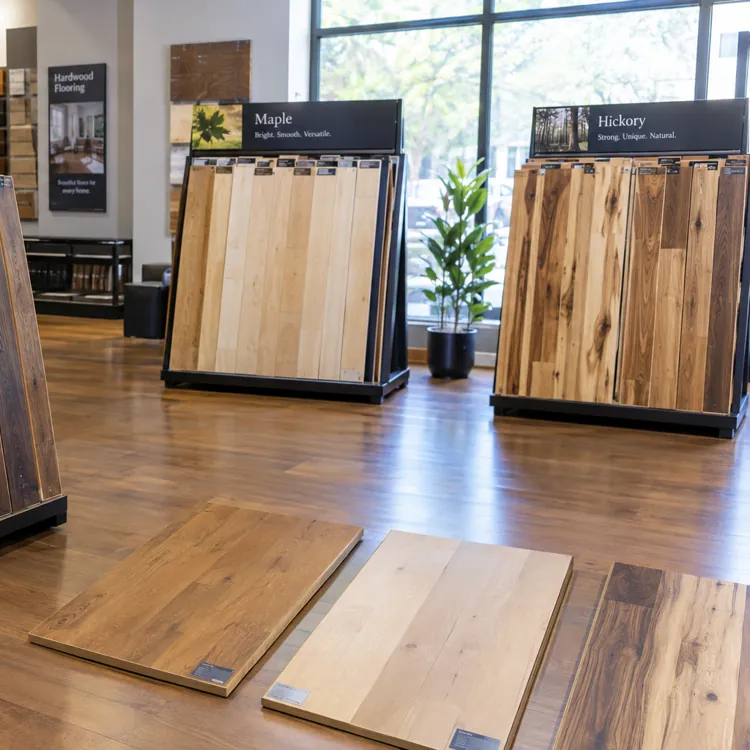
Whether you choose solid hardwood floors or engineered wood floors, you’ll usually have a variety of wood species to choose from, which has an effect on your floor’s appearance, water resistance, wear resistance and cost. Here are some of the most popular wood species you’ll find for flooring in the U.S.:
- Pine
- Oak
- Maple
- Walnut
- Hickory
- Cherry
The Janka hardness scale measures how well wood resists denting, wear, and marring. The higher the number, the stronger the wood is.
It’s a good idea to consider the color of the wood species you’re thinking about, as well as the Janka hardness, which gives you an idea of how resistant your floor will be. The higher the Janka hardness rating, the better your wood floor will stand up to physical wear. Unfortunately, harder species like oak, maple and walnut are usually much more expensive.
Hardness of hardwood floor species
Here’s a quick look at how the Janka hardness rating varies across different species of wood. The higher the number, the more resilient your floor will be to denting and scuffing.
| Wood species | Janka hardness rating |
|---|---|
| Pine | 690 to 1225 |
| Cherry | 950 |
| Walnut | 1,010 |
| Oak | 1,290 to 1,360 |
| Maple | 1,450 |
| Hickory | 1,820 |
Appearance of wood floor species
The look of your wood floors will depend largely on the species, so make sure you understand what you’re buying before committing:
- Pine: Pine usually has a loose grain, as it’s a softwood, and the grain itself is significantly darker, creating a dramatic appearance. Pine flooring very often includes purposeful imperfections, which makes it feel rustic.
- Cherry: Cherry is a hardwood, so it typically has a tighter grain pattern than pine. It also has a reddish hue that can lend itself to a more traditional appearance.
- Walnut: Walnut has a dark brown coloration and a tight grain pattern that can match both traditional and modern decor.
- Oak: Oak is a hardwood with a very tight grain pattern. It can be light brown (in the case of white oak) or light red (in the case of red oak).
- Maple: Maple is a very light-colored wood, making it ideal for matching both traditional and modern interior design. The grain pattern is very tight, usually with minimal variation.
- Hickory: Hickory has a somewhat tight grain pattern, and it stands out because of the dramatic color variation from plank to plank.
Hardwood floor installation methods
There are three installation methods you can choose from: a floating floor, nailed-down floor or glue-down floor. The option you pick will affect your wood floor installation cost, your installation timeline and the feel of your flooring underfoot.
Floating floor
A floating floor is really only possible with engineered wood flooring. The engineered edges slot together to keep your floor in place with no fasteners or adhesives. Instead, your flooring sits on top of your underlayment.
This is the least secure installation method and the most likely to shift underfoot as you walk. However, it’s a good option if you want an underlayment for comfort and moisture protection.
This is the most cost-effective wood floor installation method, and it’s the most DIY-friendly option.
Nailed-down floor
A nailed-down floor is an option for both solid and engineered wood floors. It uses mechanical fasteners to keep your planks in place, and your installer will use a special flooring nailer to nail each plank down to the subfloor. This installation method demands a plywood subfloor.
You can get some movement from your planks as they age and expand and contract, which can result in some creaking, but you’ll feel less shifting from your flooring planks than you would with a floating floor.
A nail-down installation will cost more than a floating floor, and it’s harder to DIY.
Glue-down floor
A glue-down floor is possible with both engineered wood and solid wood. Your pro will use a flooring adhesive to glue the planks directly to your subfloor. This is possible when installing over a plywood subfloor that doesn’t require an underlayment.
When installing over a concrete subfloor, you’ll need an underlayment for moisture protection, which means you can’t use this installation method.
This method results in the most secure and solid floor underfoot, but it comes with the highest flooring installation costs, and it’s the hardest to DIY.
Best type of hardwood floors for each room
Wood floors aren’t ideal in every room, but if you’re set on making them work throughout your living space, you should choose your flooring to optimize for water resistance, wear resistance and long-term performance. Here’s a look at what types of wood floors are ideal for different rooms throughout your home.
| Room or space | Best option | Ideal installation method | Considerations |
|---|---|---|---|
| Basement | Engineered wood | Floating floor | Vapor barrier to limit moisture issues |
| Bathroom | Neither | N/A | Choose tile or wood-look vinyl |
| Bedroom | Solid wood or engineered wood | Floating or nail-down | Area rugs to reduce room noise |
| Dining room | Solid wood or engineered wood | Nail-down or glue-down | Engineered wood for spills, solid wood for wear |
| Hallway | Solid wood | Glue-down | Optimize hardness for foot traffic |
| Kitchen | Neither | N/A | Choose tile or wood-look vinyl |
| Living room | Solid wood | Nail-down or glue-down | Optimize hardness for foot traffic |
| Stairs | Solid wood | Glue-down | Hardness for foot traffic, glue-down for safety |
For rooms where wood floors aren’t the best fit, including basements, bathrooms and kitchens, you should consider the following materials:
- Ceramic or porcelain tile: Completely waterproof flooring that’s ideal for kitchens and bathrooms.
- Vinyl: Completely waterproof flooring that’s ideal for kitchens, bathrooms and basements, as well as living areas and bedrooms.
- Laminate: Not ideal for wet spaces, but more resistant to water and moisture than wood flooring.
» LEARN MORE: Best flooring material for living rooms
FAQ
Is engineered hardwood as durable as solid hardwood?
Engineered wood is not as durable as solid hardwood because it has a much thinner veneer layer that will wear down faster, which would require a total flooring replacement. On average, engineered hardwood floors will last for 50-plus years, while solid hardwood can easily last for 100 or more years with good care.
What is the most durable type of hardwood flooring?
The most durable type of hardwood flooring is solid hardwood flooring made of oak, maple or hickory. These wood species have an above-average hardness that will help them stand up better to physical wear. With a solid wood floor, you can sand and refinish it numerous times to restore the look of your floor without paying for a total flooring replacement.
Are hardwood floors a good choice for kitchens and bathrooms?
Hardwood floors are not ideal for kitchens or bathrooms. Both solid wood and engineered wood floors are reactive to water and moisture, so they can warp, cup and buckle if they see leaks or humidity changes from cooking or bathing. A wood-look vinyl floor is a much better option for kitchens and bathrooms if you want the appearance of wood with better stability.
What is better: hardwood or luxury vinyl flooring?
Neither material is universally better, so the answer depends on your budget and expectations. You can’t beat hardwood flooring when it comes to aesthetics or the warmth and natural feel it adds to living spaces. However, vinyl flooring can closely resemble wood flooring while offering far better performance when exposed to water and moisture. Real wood and its longer lifespan are usually better in dry living areas and bedrooms, while vinyl is best for kitchens and bathrooms.
Article sources
ConsumerAffairs writers primarily rely on government data, industry experts and original research from other reputable publications to inform their work. Specific sources for this guide include:
- International Association of Certified Home Inspectors, "InterNACHI's Standard Estimated Life Expectancy Chart for Homes." Accessed Oct. 26, 2026.
- Missouri University of Science and Technology, "Janka Hardness." Accessed Oct. 26, 2026.