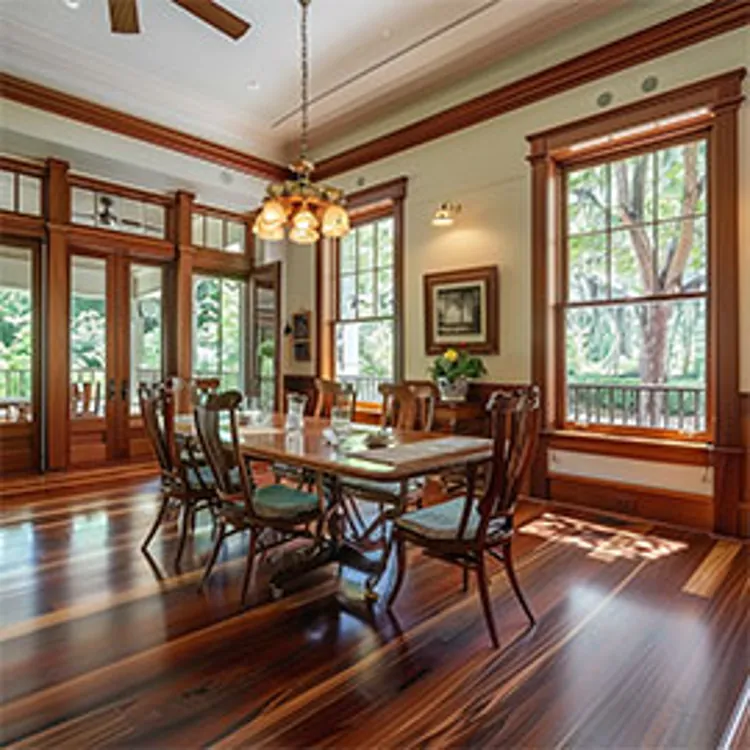



Key differences between engineered and solid hardwood
Solid wood floors are made entirely from real hardwood. Manufacturers cut lumber into planks, often with shaped edges that allow the planks to slot together with some room for movement from expansion and contraction.
“Engineered hardwood has a real wood veneer attached to a plywood or composite core,” said Manny Kavouklis, president of CMK Construction, a home remodeling company based in the Tampa Bay area. “This allows for the same look on the surface but enhances performance where solid hardwood falls short.”
These flooring materials can look identical because the top layer that’s visible in your living space is made from real, solid wood. Engineered wood's core construction makes it more affordable and more moisture-resistant, but it also reduces lifespan and the number of times you can sand and refinish your floors.
Appearance
Engineered wood and solid hardwood floors can look exactly alike, as engineered wood has a real wood veneer on top. Engineered wood is more affordable, which is a big reason more and more homeowners are choosing this flooring.
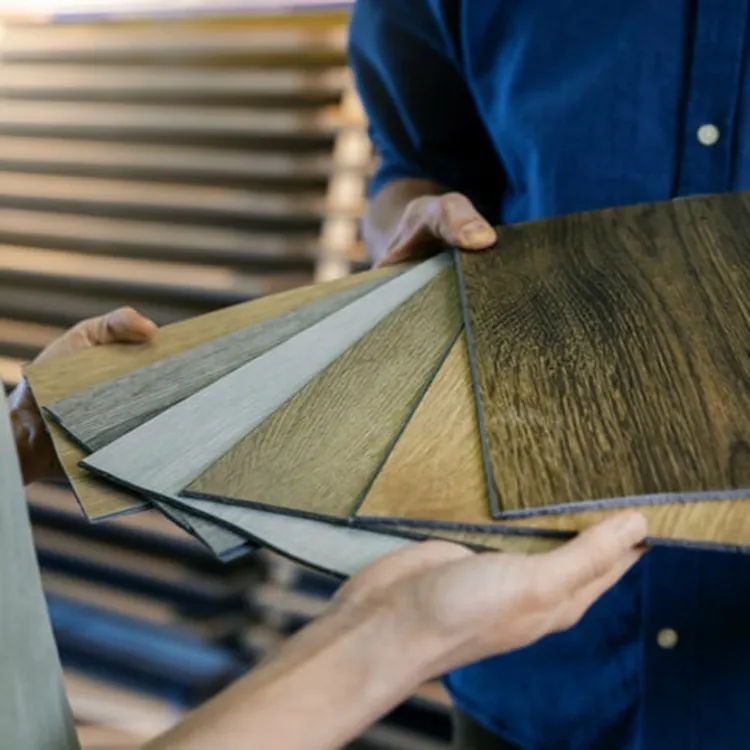
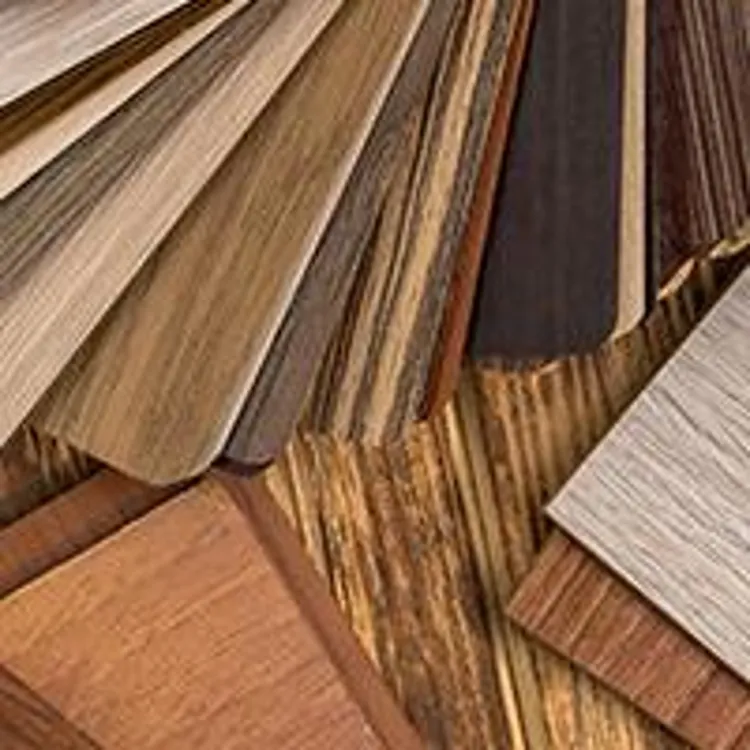
Both options are available in different colors, wood species and plank thicknesses, so customization options are more or less equal.
While you can get a wide plank with either material, engineered wood generally comes with more width options because you only need a wide veneer and not a wide piece of thick lumber that’s dimensionally stable.
Moisture resistance
Neither hardwood nor engineered wood floors are ideal in rooms where leaks and moisture are likely. The solid wood that makes up hardwood floors and the veneer and core materials that make up engineered wood floors can and will expand and warp when exposed to standing water or spills, and they can expand and contract with changes in moisture.
The layered or composite core of engineered wood is significantly more stable than solid hardwood. Engineered wood resists warping and shifting much better than solid wood floors, making it a slightly better option in rooms that could see exposure to water or moisture.
“(Neither) is 100% waterproof, but an engineered core can stand up to humidity better than a solid wood core,” said Kavouklis.
“(Neither) is 100% waterproof, but an engineered core can stand up to humidity better than a solid wood core.”
Longevity
Hardwood floors last for 100 years or more, while engineered wood floors last for 50-plus years. Solid wood has a longer lifespan mostly because you can sand and refinish it more times without having to worry about exposing the core layer. You can also sand and refinish engineered wood, but once you reach the core layer, you’ll have to replace your floors.
According to Kavouklis, you can sand and refinish solid hardwood floors between five and seven times, while you’ll only be able to sand and refinish engineered wood floors one to three times before needing to replace them.
Check the veneer thickness
Thicker veneers generally allow more refinishing cycles, so consider the wear-layer thickness if you expect to refinish your floors later.
“Better quality engineered hardwood has thicker veneers allowing more sanding cycles,” Kavouklis told us. “A 4 to 6 millimeter [veneer] would be considered a thicker veneer, while 2 millimeters would be on the thinner side.”
Installation options
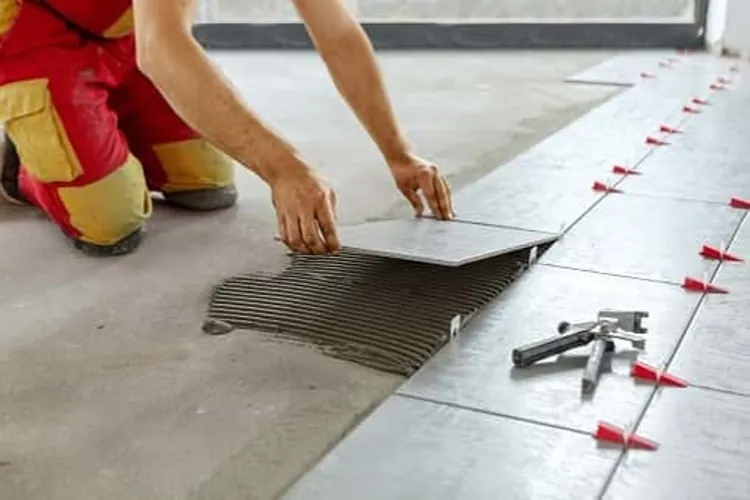
Solid wood floors and engineered wood floors offer two primary installation options: glue-down and nail-down. With a glue-down installation, installation professionals use an adhesive to attach each plank to the subfloor below. With the nail-down method, installers fasten the planks to the subfloor with nails.
A glue-down installation is more labor-intensive and expensive, but you get less floor movement and less noise as you walk through the space. It’s best to hire a local flooring company to handle glue-down installations. Nail-down installations are faster, more affordable and DIY-able for handy homeowners, but you’re more likely to hear creaking underfoot.
» MORE: How to choose a contractor
Subfloor compatibility
Solid wood is only really compatible with a plywood subfloor in modern construction. In older homes, installing hardwood planks directly over joists with no subfloor was common, and while it’s still technically possible, it’s not ideal. Installing solid wood over concrete is never a good idea, as moisture can wick through the concrete and warp your flooring.
Engineered wood also works best when it’s installed over a plywood subfloor. This material is safer over concrete subfloors with a moisture barrier, as engineered wood is less reactive to changes in humidity or moisture, but it can still be problematic.
The same is true for homes with radiant heat. Introducing heat directly under either material can present issues, but it’s more problematic with solid hardwood floors, which are more reactive to temperature fluctuations.
Engineered hardwood pros and cons
Engineered wood flooring has clear advantages over hardwood, especially in rooms that may be exposed to moisture and water. However, you should also know the material’s limitations before installing it in your home.
Pros
- Better dimensional stability: Engineered wood resists expansion and contraction with changes in moisture and temperature because its core construction offers more stability than solid wood. It’s not ideal in bathrooms and kitchens, but it’s more reliable in these spaces than solid hardwood.
- Lower cost: Installing engineered hardwood costs less, largely because its core materials are less expensive.
- Better radiant heat compatibility: Engineered wood isn’t ideal over radiant flooring and can still expand and contract with temperature changes, but it’s more stable than hardwood.
- Greater sustainability: The core construction of engineered wood means you need fewer trees to manufacture flooring, and the selection process for planks is less restrictive. Ultimately, engineered wood flooring is more sustainable.
Cons
- Shorter lifespan: Engineered wood flooring lasts for 50 years or longer, while hardwood floors can last for 100 years or more under the right conditions.
- Fewer refinishing options: You can sand and refinish engineered wood floors just like you can with hardwood, but eventually, you’ll reach the core layer and need to replace rather than refinish. This limited refinishing potential can be a drawback when choosing flooring for living rooms and other high-traffic spaces.
- Risk of delamination: Solid wood floors are made from a single material, while engineered wood floors contain multiple materials bonded together. These layers can separate as a result of manufacturing defects or changes in moisture and temperature.
Solid hardwood pros and cons
Solid hardwood is among the most popular flooring materials because it’s a traditional material that stands up well to foot traffic without compromising on appearance. Still, you should consider the pros and cons of solid wood flooring before committing.
Pros
- Long lifespan: Real hardwood floors can last for 100 years or longer, largely because you can sand and refinish them many times without worrying about exposing a separate core layer. They last roughly twice as long as engineered wood floors.
- Natural beauty and long-term value: Real hardwood floors bring natural warmth and visual appeal into your space. They may also add more value to a home because buyers often view solid hardwood as a premium material due to its durability, refinishing potential and long lifespan.
- Multiple refinishing options: Solid hardwood can be sanded and refinished many times, though the exact number depends on the floor and the refinishing process.
Cons
- Limited moisture resistance: Solid wood isn’t nearly as dimensionally stable as cross-layered sections of plywood, making it more likely to warp, cup and bow with exposure to water, leaks and dramatic humidity changes.
- Higher cost: Solid hardwood floor installation costs more than engineered wood.
- Limited subfloor compatibility: Solid hardwood generally requires a wood subfloor. It’s not recommended for bathrooms and can be risky in kitchens, where leaks and spills may cause it to warp, cup or bow. Installing it directly over concrete can also be a disaster because moisture can pass through the concrete and damage the wood.
Engineered hardwood vs. hardwood cost
On average, installing engineered wood flooring costs between $6 and $15 per square foot, while the average cost to install solid wood is between $8 and $20 per square foot. Materials account for most of the pricing difference, but the following factors also play a role:
- Installation labor: Engineered wood is more affordable to install than solid hardwood because a floating floor, which requires the least amount of labor, is more common with engineered wood flooring.
- Underlayment: Underlayment requirements can affect your total flooring costs. Although engineered wood is more dimensionally stable than solid hardwood, it may still require a moisture barrier, especially when installed over concrete.
- Old flooring material: Tile and stone generally cost more to remove because they’re harder to pull up and heavier to dispose of. If you’re installing engineered wood in a moisture-prone room, you may be replacing one of these materials and should budget for higher removal costs.
- Subfloor preparation: Both engineered wood and hardwood benefit from a perfectly level subfloor with no damage, so you may need to budget more if your subfloor has water damage, mold growth or isn’t perfectly level. Expect to add $2 to $8 per square foot if you need to level your subfloor for a safe installation.
Plan for the full cost
- Engineered wood installation averages $6 to $15 per square foot
- Solid hardwood installation averages $8 to $20 per square foot
- Subfloor leveling adds $2 to $8 per square foot
- Underlayment, old-floor removal and subfloor repairs may increase the total
- Wood species, plank width and grade also affect pricing
Pricing for hardwood flooring is more likely to be influenced by the following factors:
- Wood species: If you want an exotic wood species for your flooring, you’ll see much higher costs for solid hardwood floors because the entire plank needs to come from the uncommon tree species. For engineered wood, you need a much thinner section of hardwood veneer over plywood, which helps drive down the cost.
- Plank width: Wide planks generally cost less in engineered wood than in solid hardwood because they require only a thin, wide veneer rather than a full-thickness piece of wide lumber.
FAQ
What is the main disadvantage of engineered hardwood?
The primary disadvantage of engineered wood floors is that you can only sand and refinish them a few times before you get down to the core layer and need a full flooring replacement. You can sand and refinish solid hardwood floors more times, which means they last much longer.
Can you mop an engineered floor?
You can mop an engineered wood floor, but you need to limit the amount of water you use. Engineered wood is more stable than hardwood and will resist water and moisture better than solid wood floors, but you should still be careful and wring out your mop thoroughly before cleaning.
What flooring do high-end homes use?
High-end homes usually feature natural materials, like hardwood, stone or tile. Some high-end homes opt for engineered wood or LVP flooring over hardwood and luxury vinyl tile (LVT) over ceramic, porcelain or stone. But in most cases, you’ll see natural materials that introduce traditional beauty over synthetic materials.
Can engineered hardwood be installed over concrete?
Yes, you can install engineered hardwood over concrete, but you’ll need a moisture-resistant underlayment to reduce the risk of water vapor warping the material. If you’re installing directly over concrete, LVP flooring that resembles real wood is usually a better option because it’s far more water-resistant while offering a similar look.
Bottom line
Engineered wood floors are more affordable than solid hardwood floors, and they resist moisture and humidity changes better. That makes engineered wood a better option for homeowners on a tight budget and in areas that may see moisture exposure.
Solid hardwood is more expensive but lasts much longer, making it a better value for rooms where moisture isn’t an issue.
Article sources
ConsumerAffairs writers primarily rely on government data, industry experts and original research from other reputable publications to inform their work. Specific sources for this article include:
- International Association of Certified Home Inspectors, "InterNACHI's Standard Estimated Life Expectancy Chart for Homes." Accessed Aug. 20, 2026.
- Kimminau Wood Floors, "Understanding Wood Floor Grades: What NOFMA Standards Really Mean." Accessed Aug. 20, 2026.
- AHF Products, "Hardwood Floor Grades." Accessed Aug. 20, 2026.