


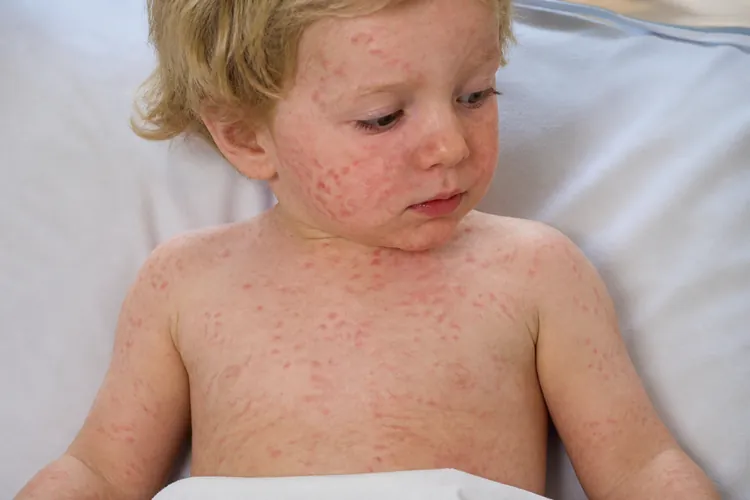

The U.S. has lost its measles elimination status, prompting renewed efforts to control outbreaks and prevent further spread.
CDC data shows childhood MMR vaccination rates have fallen, leaving more communities with gaps in protection.
Health officials are encouraging vaccination, expanding access to care, and working with local communities to regain elimination status.
The U.S. has reached an unwelcome milestone in its fight against measles. After previously achieving measles elimination status, the country has now lost that designation, raising new concerns about the spread of a disease that health officials have worked to control.
In a joint statement, the Centers for Disease Control and Prevention (CDC) and its public health partners said they remain committed to stopping measles outbreaks and restoring the country's elimination status. Officials emphasized that vaccination remains the most effective way to protect Americans, regardless of the country's official designation.
“The measles elimination designation is not what protects Americans,” CDC Director Dr. Erica Schwartz said in a news release. “Vaccination does. We know where transmission is occurring and we've invested $100 million in state and local health departments to reach those communities. Losing a designation doesn't mean we abandon an evidence-based approach. It means we remain focused on stopping outbreaks.”
What's behind the change?
One factor health officials highlighted is declining childhood vaccination coverage. According to CDC data, the percentage of U.S. kindergartners receiving the measles, mumps, and rubella (MMR) vaccine fell from 95.2% during the 2019-2020 school year to 92.7% in 2023-2024.
The agency also pointed to disruptions in routine childhood vaccinations during the COVID-19 pandemic, which contributed to gaps in protection. A 2025 study led by Johns Hopkins researchers found that vaccination coverage declined in 78% of the 2,066 counties examined across 33 states.
Measles is also circulating in more than 100 countries, creating additional opportunities for the disease to spread across borders.
To address the situation, the CDC has provided approximately $100 million in additional funding since August to help strengthen measles prevention and outbreak response efforts through most of 2027. This funding supports local health departments, laboratory testing, community partnerships, and efforts to identify and respond to outbreaks.
What this means for consumers
For consumers, the biggest takeaway is to pay attention to vaccination status, particularly when it comes to children. The CDC continues to recommend MMR vaccination as the most effective way to prevent measles.
The agency also acknowledged that some people cannot receive certain vaccines for medical reasons. It says it will continue working with healthcare providers and local partners to improve access to vaccination and ensure patients receive timely, evidence-based care.
Ultimately, regaining elimination status will require sustained efforts from public health agencies, healthcare providers, laboratories, and communities. In the meantime, keeping vaccination rates high and addressing gaps in protection will remain important parts of preventing future outbreaks.
"We cannot accept measles as an endemic disease again in this country and must commit now to a robust, sustained campaign to re-eliminate,” Joseph Kanter, M.D., MPH, CEO of the Association of State and Territorial Health Officials, said in the release.
“Families across the U.S. deserve nothing less. We appreciate the partnership of the CDC and broader public health community. Expanded promotion of and access to vaccines, improved data systems, community partnerships, and empathy will be essential to this work. Health departments across this country remain committed to continuing their vital work protecting American families.”