



Cybersecurity firm Claroty found more than 65,000 consumer devices, including game consoles, streaming sticks, and connected vehicles, on networks that support critical operations.
In health care settings, 95% of the game consoles Claroty detected were connected to networks used for day-to-day operations, where they can be harder to isolate from sensitive equipment.
Public reports have identified no link between the devices Claroty studied and the recent disruptions at Chase, United Airlines, the FAA, or Microsoft.
In light of what has been going on in recent days, a new report from cybersecurity firm Claroty is focusing attention on the security of America’s interconnected technology infrastructure. The report found that more than 65,000 consumer devices are connected to networks that support critical tasks.
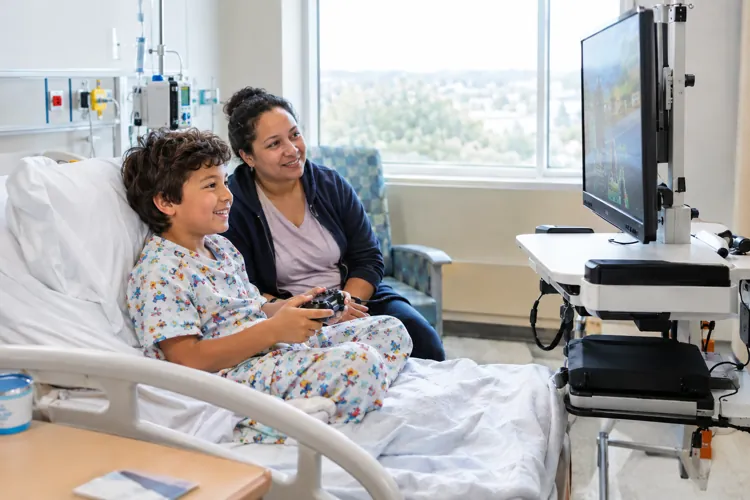
For example, a gaming console can give a child something to do during a hospital stay. But where the hospital connects that console is a security decision.
Claroty found that most of the consoles it detected in health care settings were on networks used for day-to-day operations, where access to sensitive systems can be harder to contain.
Claroty analyzed inventories covering more than 45 million devices across 30,000 critical infrastructure sites. It counted 16,745 game consoles on health care and operational networks, with most of the consoles located in hospitals. The company also identified 44,059 smart home and entertainment devices, including smartwatches and streaming sticks, and 4,915 connected vehicles.
Some of those devices lack current security updates or communicate with outside cloud services that the hospital or facility doesn’t control. Claroty recommends keeping guest and consumer devices on separate networks and maintaining an up-to-date inventory of what’s connected. That separation can help contain a security breach before it reaches equipment the facility relies on.
What caused the recent outages?
The report comes after several days of disruptions that delayed bank transactions, grounded flights, and knocked workplace email offline. The reported explanations point to different technical problems.
JPMorgan Chase traced Monday’s transaction delays to a software bug in an internal system. United Airlines said a separate technology issue delayed departures that day. A pilots’ union memo pointed to the system that supplies aircraft weight information before takeoff. Both companies said there was no indication of a cybersecurity incident.
The FAA said a surge in network traffic destabilized older equipment on Friday, Nov. 13, affecting aircraft communications and radar feeds and prompting a nationwide ground stop. The agency traced the disruption to traffic from two sites, one of which was getting a new router, and said it found no indication of a cyberattack. Microsoft attributed its outage, which disrupted Outlook and Teams, to a previously undetected software defect combined with increased traffic and reduced server capacity.
Where the cyber risk has already become real
Claroty pointed to recent attacks on refrigeration controls in European supermarkets and blood banks as examples of how a cyber incident can affect physical equipment. Some supermarkets had to discard spoiled food. In France, cold-room temperatures rose at three blood banks after a refrigeration equipment provider was compromised. French officials said no blood products were compromised.
The recent U.S. outages show how quickly a technical failure can interrupt services people depend on. Claroty’s findings show where hospitals and other operators can reduce one source of disruption they have direct control over: which devices can connect to the networks that keep their facilities running.