


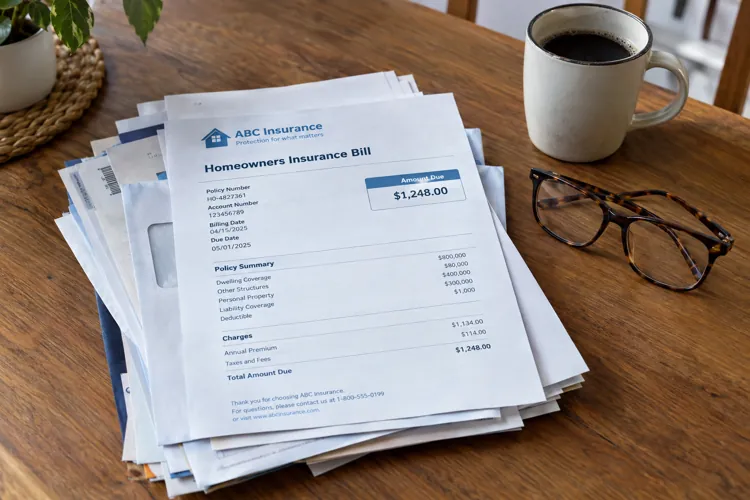

Homeowners insurance costs rose 22.3% over two years in AmeriSave’s analysis of escrowed mortgages, compared with a 0.8% increase in property taxes.
Insurance exceeded property taxes in 12 of the 26 states included in the analysis, with the biggest gap in Alabama.
Homeowners may be able to reduce costs by comparing insurance quotes, although the findings reflect different groups of borrowers rather than changes to the same households’ policies.
Homeowners worried about rising property taxes may want to take a closer look at another expense tucked into their monthly mortgage payment: insurance.
An AmeriSave analysis found that the median amount collected for homeowners insurance through mortgage escrow accounts increased 22.3% over two years. Property tax collections increased just 0.8% during the same period.
The findings illustrate how the cost of owning a home can keep climbing even when a borrower’s mortgage interest rate stays the same. A fixed-rate loan generally keeps principal and interest payments steady, but the taxes and insurance collected alongside those payments can change.
In AmeriSave’s data, insurance accounted for about 45% of the typical escrow payment, up from roughly 39% ten quarters earlier.
States where costs were highest
Insurance was the larger escrow expense in Alabama, Arkansas, Mississippi, South Carolina, Missouri, Kentucky, Tennessee, Georgia, Indiana, Arizona, Florida and North Carolina.
Alabama had the widest gap: Monthly insurance collections were $191, compared with $33 for property taxes. Florida borrowers paid $222 for insurance and $164 for taxes.
The relationship was reversed in higher-tax states. In New Jersey, for example, monthly property tax collections were $630, compared with $169 for insurance.
Across all loans AmeriSave funded this year, the median annual homeowners premium was $1,800. That figure is a benchmark within the lender’s borrower population, rather than a price every homeowner should expect to pay.
AmeriSave also found that insurance estimates on loan applications typically understated the cost of the policy ultimately purchased. Buyers should obtain a firm insurance quote early enough to use it in their housing budget.
Compare before renewing
For existing homeowners, the report recommends comparing policies before each annual renewal. Having a mortgage servicer pay the premium through escrow can make the insurance bill less visible, but homeowners can still review their coverage and seek competing offers.
A useful comparison requires matching coverage limits and deductibles. A cheaper policy may provide less protection or require a larger payment out of pocket after a claim.
As an illustration, reducing a $2,280 annual premium by 10% would save $228 a year, or $19 a month. Shopping does not guarantee that reduction, but it can establish whether a homeowner’s current insurer remains competitive.
Homeowners considering a switch should coordinate the change with their mortgage servicer and confirm when any savings would affect the escrow payment. They should also arrange for replacement coverage to begin before the existing policy ends.
A caveat
The study has an important limitation: It is based on AmeriSave’s own funded loans, rather than a nationally representative sample of homeowners.
Its two-year comparison uses first mortgages with escrow accounts and includes states with at least 30 qualifying loans in both comparison periods. Because each period contains different borrowers and properties, some of the change may reflect differences in the loans AmeriSave funded, rather than premium increases alone.
The report also does not measure how frequently homeowners shop for insurance. Its strongest finding is that insurance has become a substantially larger part of housing costs within the lender’s data — giving homeowners another reason to examine renewal notices closely.