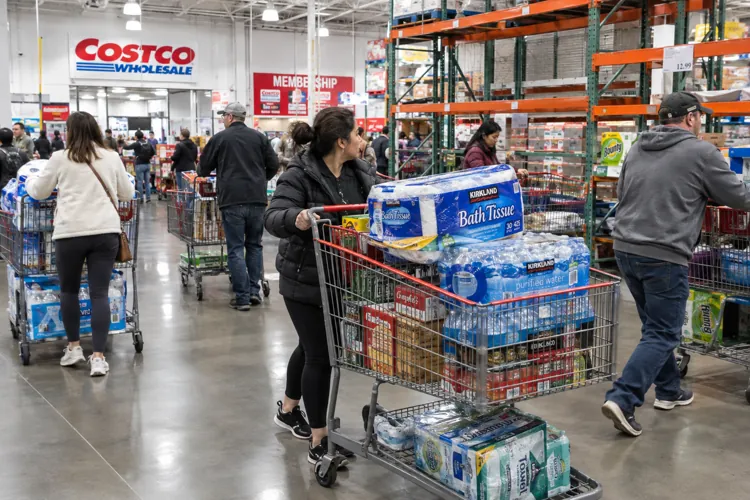

Emergency supplies are flying off the shelves: Costco is reporting increased purchases of food, water, batteries and generators as consumers react to a string of technology outages.
Generators are particularly popular: According to investment firm Mizuho Securities, 21 of the 26 higher-priced generator models offered on Costco's website were sold out as of Sunday.
Fear may be driving sales: Recent disruptions involving Microsoft, airlines and banking systems have fueled speculation about a larger cyberattack, although officials say there is no evidence the incidents are connected.
A string of major technology outages affecting airlines, banks and computer systems is producing an unexpected benefit for a major retailer: Americans are stocking up on emergency supplies, apparently worried that the disruptions could be signs of something much bigger.
Costco has experienced a surge in purchases of generators, canned goods, rice, bottled water, batteries and paper products, according to a new report from investment firm Mizuho Securities.
The buying spree, which analysts describe as panic buying, began in late October and has continued into November, fueled in part by alarming speculation circulating on social media.
According to CBS News, Mizuho analyst David Bellinger attributed the increased demand to consumer anxiety following the Microsoft Outlook outage, the nationwide airline ground stop and fears spreading online about possible widespread disruptions.
The report suggests that some Americans are preparing for a prolonged interruption of essential services, even though there is no confirmed evidence that such an event is imminent.
Generators selling out
One of the clearest signs of the buying spree is the demand for backup electricity. As of Sunday evening, November 15, 21 of the 26 higher-priced generators listed on Costco's website were sold out, according to Mizuho. The unavailable products included a Kohler generator priced at approximately $7,000.
Consumers are also purchasing larger quantities of nonperishable food and household necessities, a practice retailers call pantry loading.
Costco Chief Financial Officer Gary Millerchip acknowledged the increased demand in comments to Bloomberg, saying the retailer noticed stronger purchases of rice, canned goods, water, paper products, generators and batteries toward the end of October.
The purchases appeared to be influenced by concerns circulating on social media. The surge is showing up in Costco's sales figures.
According to Reuters, Costco's comparable U.S. sales, excluding gasoline, increased 8.1% in October. Mizuho estimated that sales growth accelerated to between 11% and 12% during the final week of the month, with that stronger pace continuing into early November.
Not all of the increase can necessarily be attributed to emergency purchases. Holiday shopping and consumers seeking lower prices on everyday necessities may also be contributing.
A troubling series of outages
The buying spree follows several major technology failures that disrupted everyday activities across the United States.
Microsoft experienced a widespread outage that prevented users from accessing Outlook and other business applications.
The Federal Aviation Administration ordered a nationwide ground stop that temporarily halted airline departures, creating delays and disruptions for travelers.
United Airlines also experienced a separate technology problem affecting flights, while JPMorgan Chase encountered software issues that interfered with some banking services.
The close timing of these incidents has raised questions about whether the nation's increasingly interconnected technology infrastructure could be vulnerable to a larger breakdown.
Social media speculation has amplified those concerns, with some posts suggesting the disruptions could be part of a coordinated cyberattack.
However, there is no verified evidence supporting that theory.
Secretary of State Marco Rubio said Wednesday that there was no evidence the recent outages were connected. He specifically rejected suggestions that the Microsoft, FAA and banking incidents were related.
The affected organizations have attributed the problems to technical failures, maintenance or software changes rather than coordinated malicious activity.
Why consumers are worried
Even without evidence of a coordinated attack, the outages illustrate how dependent Americans have become on digital systems.
Air travel, banking, communications, retail transactions and many other everyday activities rely on computer networks operating continuously.
When one of those systems fails, the effects can spread quickly. A prolonged disruption to payment networks, for example, could make it difficult for consumers to use credit cards or access cash. A major electricity outage could interfere with refrigeration, communications and access to essential services.
But the recent incidents have not established that a nationwide failure of those systems is approaching.
The distinction is important because social media rumors can transform legitimate concerns about preparedness into unnecessary panic buying.
Other retailers could benefit
Costco may not be the only retailer experiencing increased demand. Mizuho analysts believe Walmart and Sam's Club could benefit from consumers purchasing additional groceries and household necessities.
Home Depot and Lowe's could also see increased purchases of generators and other emergency equipment.
Mizuho raised its price target for Costco shares from $1,100 to $1,150, partly because of the stronger-than-expected demand.
How consumers can prepare without panic buying
Emergency preparedness experts generally recommend keeping a reasonable supply of necessities at home, regardless of whether a particular threat is making headlines.
The Federal Emergency Management Agency recommends that households maintain basic emergency supplies, including drinking water, nonperishable food, flashlights, batteries, medications and a battery-powered or hand-crank radio.
For water, the general recommendation is at least one gallon per person per day for several days.
Consumers concerned about technology disruptions can also take practical steps, such as keeping a modest amount of cash available, maintaining printed copies of important telephone numbers and ensuring mobile devices and backup power banks are charged.
Anyone purchasing a generator should understand the safety risks. Portable gasoline-powered generators must be operated outdoors, well away from doors, windows and vents, because they produce deadly carbon monoxide.
The recent outages provide a reminder that technology systems can fail unexpectedly. But preparing for an emergency is different from assuming that a catastrophe is imminent.
For consumers, maintaining a modest emergency supply is generally more practical — and less expensive — than rushing to purchase large quantities of products because of unverified warnings circulating online.