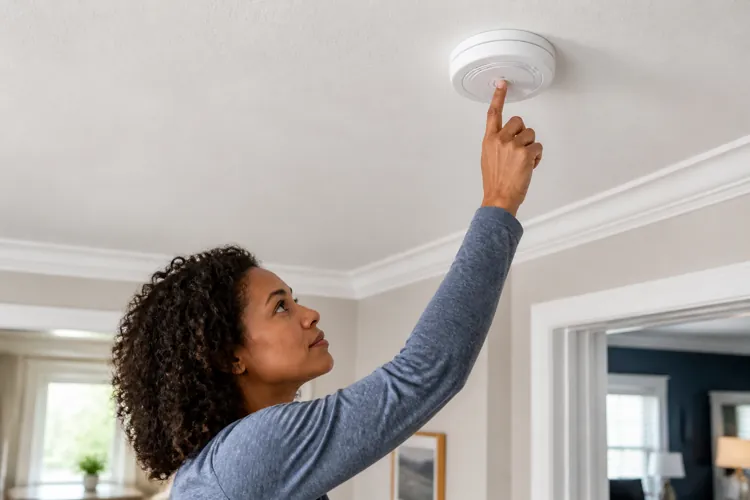

A five-minute annual walkthrough can help families identify overlooked hazards, clear emergency exit routes, and make sure essential safety equipment is ready.
Getting children involved in safety checks helps everyone understand emergency plans, know where to meet, and feel more prepared.
Regular tasks like testing alarms, checking emergency kits, and inspecting heating equipment help keep your home safe year-round.
When it comes to keeping your family safe at home, it's easy to focus on everyday maintenance and forget about the bigger picture. But taking a few minutes once a year to walk through your home and review basic safety measures can help identify potential hazards before they become problems.
From checking that hallways and exits are clear to making sure emergency supplies are easy to find, a simple household safety review doesn't have to be complicated or time-consuming. Marcus Clarke, founder of The Prepared Household, says breaking emergency preparedness into a few manageable steps can make it easier for families to stay on top of.
His five-minute walkthrough focuses on five key areas every household should review, helping families feel more confident that they're prepared if an unexpected emergency occurs.
The five-minute walkthrough
Here are the five key areas that Clarke recommends all households should check:
Clear key exit routes: Check hallways, stairs, and doorways for trip hazards or clutter that could obstruct a quick exit in the dark.
Locate emergency supplies: Confirm that the household emergency kit and torches are in their designated place, fully stocked, and accessible to everyone.
Confirm the outdoor meeting point: Remind all family members of the designated safe assembly spot outside the property and clarify responsibilities, such as who assists younger children or pets.
Support monthly alarm testing: Local fire and rescue services strongly advise testing smoke and carbon monoxide alarms at least monthly. An annual review offers a regular moment to clean unit covers and ensure backup batteries are fresh.
Inspect emergency equipment: Check the expiration dates and pressure gauges on fire extinguishers, and inspect fire blankets to ensure they are stored correctly and accessible.
Overlooked hazards
Clarke explained that the household hazards consumers regularly miss are almost never dramatic.
“They are the ordinary things that have slowly become normal,” he explained. “Shoes, bags, and laundry baskets gathering at the bottom of the stairs or along the hallway. An extension lead that started with one plug in it and now has five, often tucked behind a sofa where it also gets warm. A key for the back door or the window lock that nobody can find in a hurry.
“Going into winter, I would add portable heaters that have crept too close to curtains, bedding or furniture, chimneys and wood burners that have not been swept since last season, and electric blankets that are a few years old and have never been looked at for scorch marks or frayed wires.”
Clarke noted that a walkthrough catches these because you are deliberately looking for them, rather than just passing through.
“Once you walk your own home as if you were a visitor, the clutter on the landing or the heater against the armchair stands out immediately,” he said.
Get children involved
For families with kids, getting them involved in these safety checks is of the utmost importance. It not only helps keep everyone in the family on the same page, but it also ensures that children are aware of safety measures in case of an emergency.
“Children take their cue from the adults,” Clarke said. “If you present it as a calm, routine job the household does, they tend to treat it the same way. If you present it as preparing for disaster, they will absorb that instead.”
His best advice: give children a job.
“Younger children can be the torch testers or the alarm button pressers. Older ones can walk the exit route and report back on anything in the way, or check the dates on the first aid kit. Framing the exit check as a treasure hunt, where they have to find the quickest way out of each room, works well and teaches them the layout without any sense of threat,” Clarke said.
Another tip: Keep the language practical rather than frightening. Saying something like, ‘This is where we would all meet if we ever had to leave the house quickly’ is enough.
“You do not need to describe the scenarios,” Clarke recommended. “And keep it short. Ten or fifteen minutes with a clear end point, ideally followed by something ordinary like dinner, keeps it in proportion. The goal is that if something does happen, the steps feel familiar rather than new.”
Regular safety checks are essential
Beyond the annual household checks, Clarke suggests engaging in routine tasks to ensure safety day-to-day, as these are what keep things working in between. Here are some of his suggestions:
Testing smoke and carbon monoxide alarms. Fire and rescue services advise at least monthly, and many now recommend weekly. It takes 30 seconds. If an alarm is more than ten years old, replace it regardless of whether it still beeps, because the sensor degrades.
Have a Gas Safe registered engineer service the boiler once a year. This would ideally be before the heating season rather than in the middle of it. If you have an open fire or stove, get the chimney swept annually. Before you plug in any electric blanket or portable heater for the first time each autumn, look it over properly.
Check the first aid kit and emergency kit twice a year. The clock changes in March and November are a convenient prompt, and the November one lands right as the risk season starts. Replace anything expired and recharge the power bank.
Talk about the plan. The meeting point and who helps whom only works if everyone remembers it, and children in particular forget quickly. A two-minute conversation every few months is worth more than a detailed plan nobody can recall.
The thing Clarke wants people to take away from all of this?
“Preparedness is not about fear and it is not about bunkers,” he said. “It is about removing the small frictions that turn a manageable problem into a bad night.
“Most of what I have described costs nothing and takes minutes. The households that cope best with a power cut or a burst pipe are rarely the ones with the most equipment. They are the ones who have thought about it once, calmly, in advance. Your local fire and rescue service will publish specific guidance for your area and many offer free home safety visits, which are well worth taking up.”