


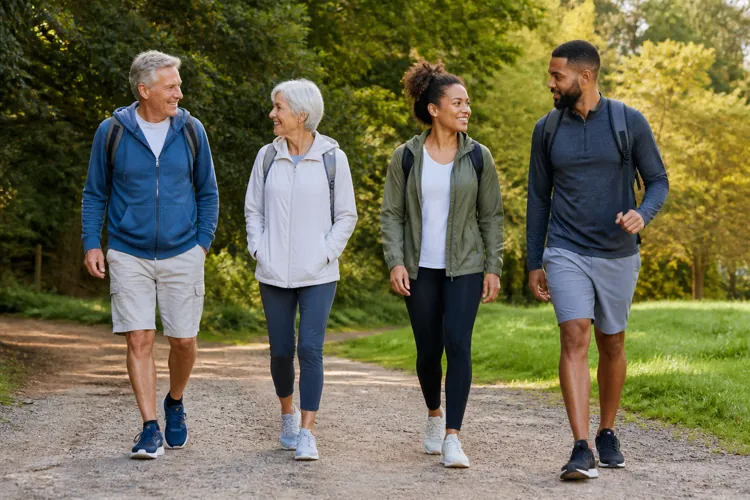

A new study found that nature-based activities helped reduce loneliness among older adults in six European, Latin American, and Australian cities.
Both individual outdoor activities and organized group programs showed benefits, but group activities were particularly helpful for participants with lower emotional well-being.
The improvements lasted for up to a year, suggesting that gardening, birdwatching, and other outdoor activities could offer a practical way to support social connections.
Spending time outdoors is often associated with relaxation and stress relief. But could activities like gardening, hiking, and birdwatching also help people feel less lonely?
A new study published in The Lancet Regional Health – Europe suggests they could. Researchers found that connecting with nature through organized activities or independent outdoor experiences helped reduce feelings of loneliness among adults who participated in the study.
The research is part of the RECETAS project, an international effort examining how nature-based activities can support people's health and well-being. Researchers are particularly interested in the idea of social prescribing, which involves healthcare professionals recommending activities outside traditional medical treatment to help address certain health concerns.
Loneliness isn't necessarily about being physically alone. Someone can have plenty of people around them and still feel disconnected from others. Researchers wanted to see whether spending time in nature, particularly alongside other people, could help address that feeling.
“There has been a lot of passion about nature-based prescriptions, but not a lot of evidence,” researcher Jill Litt said in a news release. “We now have randomized controlled trials showing this works and the impacts last.”
How researchers conducted the study
The study included 320 adults experiencing loneliness who lived in 12 lower-income neighborhoods in Barcelona, Spain. Participants were randomly divided into two groups to compare different approaches to nature-based activities.
One group participated in a program called Friends in Nature. Participants met in groups of eight to 10 people for two hours once a week over nine weeks. With help from trained facilitators, they participated in activities such as gardening, birdwatching, and nature-inspired art projects. Activities were selected from a list developed with input from the local community.
The second group received information about free, accessible nature-based activities they could pursue independently, rather than attending organized group sessions.
Researchers measured participants' loneliness and quality of life at the beginning of the study and again after three, six, and 12 months. This allowed them to see whether any improvements lasted beyond the initial program.
What the results mean for consumers
Both approaches showed encouraging results. On average, participants experienced a 10.5% reduction in loneliness after three months. Improvements continued over time, reaching approximately 17% after one year.
However, the organized group program appeared to make a bigger difference for people who started the study with particularly high levels of loneliness and lower emotional well-being.
There was one important distinction: While participants reported feeling less lonely, researchers did not find significant improvements in overall health-related quality of life.
For consumers, the findings suggest that spending time outdoors could be one way to build connections and address feelings of loneliness. Joining a gardening club, attending a community nature program, or finding a birdwatching group could provide opportunities to meet people while enjoying time outside.
The researchers hope this type of program will eventually become more widely available through healthcare systems. For now, the study offers encouraging evidence that connecting with nature and other people may be a useful addition to existing approaches to addressing loneliness.
“Being out in nature forms this kind of reservoir of calm that we can return to later in life during stressful times,” researcher Louise Chawla, an environmental psychologist and professor emerita at CU Boulder, said in the release. “It’s not just restorative when you are in a place but also when you go back to it in memory.
“We need to think in broader terms about how we can create group healing activities in places like parks and community gardens.”