


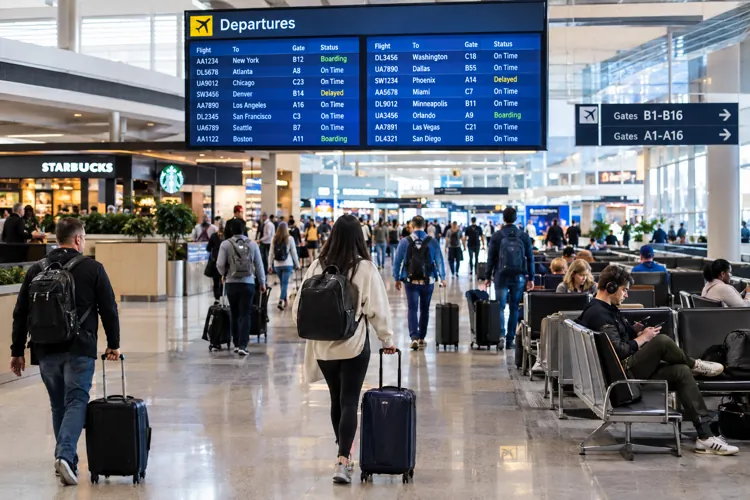

AAA projects 81.5 million Thanksgiving travelers, down 0.1% from last year.
Domestic round-trip airfares average $800, a 17% increase.
Drivers should expect heavy traffic before and after Thanksgiving, particularly during afternoons and evenings.
AAA expects 81.5 million Americans to travel at least 50 miles from home November 24–30, ending three consecutive years of record Thanksgiving travel. Higher costs partly explain the decrease.
Driving remains dominant: 72.9 million people will take road trips, down about 200,000. Domestic air travel will fall 0.2% to 5.96 million, while buses, trains and cruises will attract 2.6 million travelers, up 4.1%.
INRIX recommends leaving before 1 p.m. on Tuesday, November 24, or before noon on Wednesday, November 25, to avoid peak congestion before Thanksgiving. For the return trip, drivers should aim to depart before 11 a.m. on Sunday, November 29, or before 1 p.m. on Monday, November 30.
Thanksgiving Day should have minimal traffic. Some major metropolitan routes could take more than twice their usual travel time.
Orlando, Fort Lauderdale and Miami lead AAA’s domestic destination rankings. Drivers should check tires, batteries and fluids before leaving.
Know your rights if a flight changes
For travelers paying higher fares, understanding refund protections can help protect the holiday budget.
According to the U.S. Department of Transportation, passengers are entitled to a refund when an airline cancels their flight and they decline alternative transportation or compensation. That protection applies regardless of why the airline canceled.
Significant schedule changes can also qualify. Examples include a domestic itinerary arriving at least three hours later than originally scheduled, a change in the departure or destination airport, or additional connections. Passengers must choose not to take the changed flight or accept an alternative to qualify for the airfare refund.
For tickets purchased directly from an airline, qualifying refunds must be automatic. Travelers should monitor airline emails, texts and app notifications, particularly when a rebooking offer includes a response deadline.
Passengers who accept and take an alternative flight generally are not entitled to a ticket refund under those rules. Consumers who book through a travel agency should check which company appears on their payment statement, since that identifies the merchant responsible for an airfare refund.