



Banking problems on Monday delayed transactions at Chase and affected some payments involving other banks; Chase said transactions were posting normally again that evening.
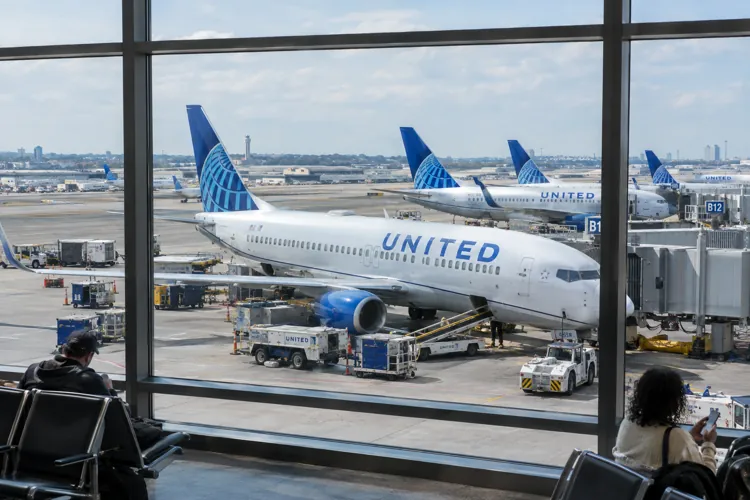
United Airlines also experienced a separate technology outage Monday that delayed departures but did not affect airborne flights or United Express.
The disruptions followed Friday’s nationwide FAA ground stop and a Microsoft outage that began Thursday and continued into Friday, with no established connection among the incidents.
Customers encountered delayed bank transactions and another round of airline disruptions Monday, extending a series of technology failures that have interfered with everyday services across the United States.
JPMorgan Chase and United Airlines both reported resolving their problems Monday evening. Their outages followed Friday’s nationwide halt to flight departures and a Microsoft service disruption that continued into Friday after beginning a day earlier. There is no evidence that the incidents were connected.
Banking delays spread beyond Chase customers
Monday’s banking problems originated with a software bug in Chase’s internal hardware systems, according to the bank. Some transactions took longer than usual, creating delays that could also affect customers at other banks when Chase was involved in a payment. Chase said it had found no evidence of a cybersecurity incident.
Customers reported problems involving Chase, Bank of America and Wells Fargo, including trouble accessing account information and completing transactions. However, customer complaints did not establish that each institution had suffered a separate system failure.
U.S. Bank said its systems were not directly affected, although customers sending or receiving Zelle payments involving another institution could encounter delays. Zelle likewise said its network was operating normally. Capital One, PNC and Truist reported no direct or broad service disruptions.
Chase maintained that customers retained access to their accounts and funds despite slower processing. By about 6:30 p.m. Monday, a spokesperson said transactions were posting normally again. The number of affected accounts was not immediately clear.
United departures delayed by another technology failure
United experienced its own disruption Monday afternoon, when a technology problem prevented some departing aircraft from receiving information needed before takeoff. The airline said it resolved the issue around 6 p.m. ET.
According to reporting on a pilots’ union memo, several applications became unavailable, including crew communications and information used to provide final aircraft weights. Pilots need aircraft weight, runway and weather information to calculate safe takeoff performance.
The disruption lasted roughly an hour and 40 minutes from the first pilot reports to its resolution, according to The Associated Press. United said flights already airborne and its United Express regional operations were unaffected, and there was no indication of a cybersecurity issue.
United’s failure was separate from the FAA communications problem that had disrupted travel three days earlier. Transportation Secretary Sean Duffy said Monday night that the United incident was not an FAA systemwide problem.
Friday’s FAA failure disrupted travel through the weekend
The most sweeping transportation disruption began Friday, November 13, at approximately 3:30 p.m. Eastern time, when instability in the FAA’s telecommunications network prompted a nationwide ground stop. The agency said the system stabilized and air traffic resumed at 8:15 p.m.
The FAA’s preliminary investigation found that excessive data traffic destabilized older equipment, affecting aircraft communications and radar feeds. Investigators identified potential sources at a radar facility in Amarillo, Texas, and a radio communications site in El Dorado, Arkansas, where network provider L3Harris had been installing a router. Blocking the two sites stabilized the network.
Instability reached 17 of the agency’s 22 regional air traffic control centers. Some radio frequencies and radar feeds remained available, and approximately 3,500 aircraft already airborne landed safely. The FAA said it found no indication of a cyberattack and continued investigating the root cause.
Although departures resumed Friday night, the disruption continued to affect airline schedules over the weekend.
Microsoft disruption overlapped with Friday’s travel crisis
The sequence also included a Microsoft outage that began Thursday, November 12, and stretched into Friday. Users reported interruptions involving Outlook, Teams and Copilot, affecting communications at businesses, government agencies, courts and healthcare organizations. Microsoft said Saturday that services were fully restored.
In an explanation released Monday, Microsoft attributed the failure to a combination of a previously undetected software defect, increased traffic and reduced server capacity. Those conditions overwhelmed servers and triggered a cascading disruption.
For consumers, the immediate consequences ranged from unavailable email and delayed payments to missed flights. The reported causes differ, but the incidents illustrate how failures in the computer and communications systems behind routine services can quickly interrupt daily life.