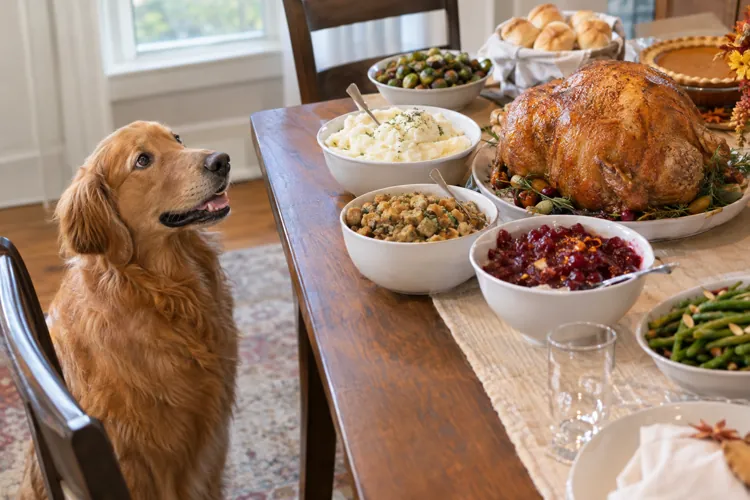

Turkey bones can splinter or cause choking, while fatty scraps such as turkey skin, gravy and drippings can trigger pancreatitis.
Stuffing, casseroles and desserts can hide ingredients that are toxic to pets. Onions and garlic can harm dogs and cats, while raisins and the sweetener xylitol are especially dangerous to dogs.
If your pet eats something potentially toxic, call your veterinarian or ASPCA Poison Control at 888-426-4435 right away, even if your pet seems fine.
An unattended plate of stuffing or a turkey carcass in an open trash can can turn Thanksgiving into an emergency for pet owners. Ahead of the holiday, Kansas State University veterinarian Susan Nelson warned that familiar ingredients such as onions and garlic can damage pets’ red blood cells, while bones and corn cobs can get lodged in the digestive tract.
Cooked turkey bones can splinter, injure the mouth or digestive tract, or cause a blockage. Corn cobs can also block the intestines if swallowed. Secure the carcass, bones and cobs in a covered trash container pets can’t open. Throw away cooking twine and foil with them, since both can also cause a blockage.
Turkey skin, pan drippings, gravy and other fatty scraps can upset a pet’s stomach and may trigger pancreatitis, a painful inflammation of the pancreas. Warning signs can include vomiting, belly pain and loss of appetite. A small bite of plain, fully cooked, boneless and skinless turkey is generally safe for pets.
Stuffing, casseroles and fruit dishes
Onions, garlic, leeks and chives can damage red blood cells in dogs and cats, leading to anemia. Cooking doesn’t remove the risk, so keep pets away from stuffing, gravy and casseroles made with those ingredients. Grapes and raisins can cause kidney injury in dogs and may turn up in stuffing, salads, breads and fruitcake.
Desserts, raw dough and holiday drinks
Keep chocolate pies, brownies and other chocolate desserts out of reach. Check sugar-free baked goods and candy for xylitol, sometimes labeled “birch sugar.” In dogs, it can cause a dangerous drop in blood sugar and liver damage. A small spoonful of plain pumpkin can be a safer treat than a bite of pumpkin pie.
Raw yeast dough can keep rising after a pet swallows it, causing dangerous bloating. As it ferments, it also produces alcohol. Cocktails and alcohol-soaked desserts pose a risk of alcohol poisoning, too.
What to do if your pet eats something dangerous
Call your veterinarian or ASPCA Poison Control at 888-426-4435 as soon as you suspect poisoning. Have the package or ingredient list handy, along with your pet’s weight and an estimate of how much they ate and when.
Avoid home remedies or inducing vomiting unless a veterinary professional directs you to do so. If your pet is struggling to breathe, is unconscious or is having seizures, go directly to an emergency veterinary clinic.