


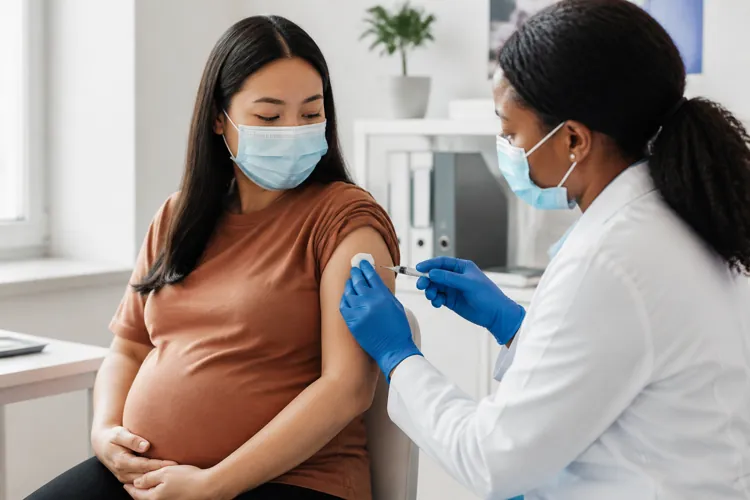

Researchers examined three routine pregnancy vaccines: influenza, whooping cough, and COVID-19.
The study found no evidence that these vaccines increased the risk of several major pregnancy complications.
Vaccination was associated with lower rates of preterm birth and other positive outcomes for mothers and babies.
Vaccinations during pregnancy are often discussed in terms of protecting newborns from potentially serious infections. But new research from Australia suggests they may offer additional benefits, including a lower likelihood of certain pregnancy complications and preterm births.
Researchers from Adelaide University and the Women's and Children's Health Network studied nearly 19,000 pregnancies to better understand the safety and potential benefits of three routine vaccines: influenza, pertussis (whooping cough), and COVID-19.
The findings, published in the journal Vaccine, offer further evidence supporting vaccination during pregnancy. In particular, researchers found no indication that receiving these vaccines increased the risk of several complications that can affect mothers or babies.
“Receiving routine vaccinations such as the flu, pertussis, and COVID-19 during pregnancy were in fact associated with more favourable birth outcomes,” researcher Dr. Hassen Mohammed said in a news release.
“Both the flu and whooping cough vaccine were linked to a lower likelihood of obstetric complications, reducing the risk of preterm birth by 13% and 17% respectively, with similar benefits also experienced with the COVID-19 vaccine.In addition to this, the whooping cough vaccine was associated with a nearly 50% lower risk of stillbirth, echoing findings from other large cohort studies.”
How researchers examined nearly 19,000 pregnancies
The research team reviewed birth records from Adelaide's Women's and Children's Hospital covering 2020 through 2023. They compared pregnancy and newborn outcomes based on whether mothers received the flu, whooping cough, or COVID-19 vaccine.
During the study period, 64% of pregnant women received the influenza vaccine, while 74% received the whooping cough vaccine. COVID-19 vaccination was less common, with 29.5% of women receiving it.
Researchers looked at several potential complications, including pregnancy-related high blood pressure disorders, infections involving the membranes surrounding the baby, early rupture of the membranes, bleeding, and babies being smaller than expected for their gestational age.
They also examined newborn health measures, including birthweight, timing of delivery, the need for resuscitation, and early-onset sepsis, a serious infection that develops shortly after birth.
What the findings could mean for expectant parents
The researchers found no evidence that any of the three vaccines increased the risk of the pregnancy complications they examined. Instead, vaccination was associated with several more favorable outcomes.
Both the flu and whooping cough vaccines were associated with lower rates of preterm birth. Researchers reported a 13% reduction associated with flu vaccination and a 17% reduction associated with the whooping cough vaccine. COVID-19 vaccination was also associated with similar benefits.
Babies born to vaccinated mothers also tended to have better newborn outcomes. On average, their birthweights were 90 to 180 grams higher, and they were delivered several days later. Researchers also observed lower rates of newborn resuscitation and early-onset sepsis.
These findings are encouraging for expectant parents, particularly those weighing the benefits of routine vaccinations during pregnancy. However, the study identified associations rather than proving that vaccination directly caused these improvements.
The researchers say the results reinforce the importance of maternal immunization as a way to protect both pregnant women and their babies.
“This clear safety and efficacy evidence, supports maternal immunization as one of the most effective ways to prevent the potentially devastating outcomes of whooping cough, influenza, and now also RSV, including death in newborn infants,” Professor Helen Marshall AM, said in the release.