How ConsumerAffairs uses cookies

This website utilizes technologies such as cookies to enable essential site functionality, as well as for analytics, personalization, and targeted advertising. To learn more, view the following link:

Sustainability

This living topic covers a wide array of sustainability issues, focusing on consumer choices and corporate actions that impact the environment. It includes articles on the benefits of reduced consumption over just buying eco-friendly products, corporate commitments to reducing plastic use and carbon emissions, and the environmental impact of different energy sources. Other topics include the role of natural gas pipelines, the benefits and challenges of green buildings, and the importance of sustainable seafood and agricultural practices. The overall theme underscores the importance of individual and collective actions in fostering a more sustainable future.

Latest

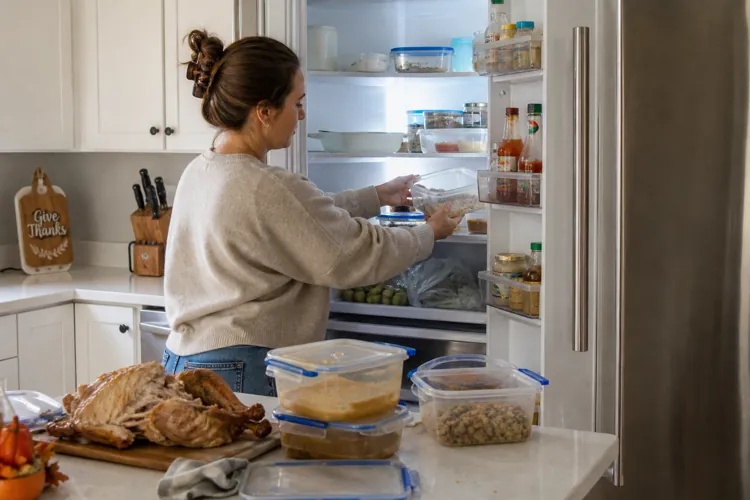
Thanksgiving food waste adds up: A little planning could make a big difference

New research finds holiday meal preparations lead to more wasted food, but a few simple changes could help families save money

Featured Political News photo

Nearly 75% of people preparing Thanksgiving meals in a 2025 survey said they made more food than they needed.

Researchers estimate Americans wasted about 166,000 metric tons of food during Thanksgiving week last year.

Planning meals ahead of time, using up refrigerator ingredients, and sending guests home with leftovers could help reduce waste.

Thanksgiving is all about the food, but preparing a big holiday meal can come with an unexpected downside: a lot of perfectly edibl...

Read Article
Featured Political News photo
2025
Article Image

Brake pad dust can be worst than car exhaust

A new British study suggests that microscopic particles from brake pads could be more toxic than emissions from diesel engines. This finding raises concerns about vehicle pollution, even as the world shifts to electric cars.

Researchers discovered that certain brake pad materials—especially those containing high amounts of copper—can cause significant harm when inhaled into the lungs. These tiny particles, released when brakes wear down, can trigger inflammation and other health issues.

While past efforts to reduce vehicle pollution have focused mainly on exhaust emissions, this study highlights a growing concern: "non-exhaust" emissions, which come from brakes, tires, and road wear. These sources are now the largest contributors to vehicle-related air pollution in the UK and parts of Europe.

Key findings

Dr. James Parkin from the University of Southampton, the study’s lead author, emphasized that most people assume car pollution comes from exhaust pipes, while electric vehicles are considered “zero-emission.” However, electric cars still create pollution through friction from tires, roads, and brakes.

The study analyzed four types of brake pads, testing their effects on human lung cells:

  1. Non-asbestos organic (NAO) brake pads – The most toxic, causing the highest level of inflammation and lung damage.
  2. Ceramic brake pads – Also harmful, but slightly less than NAO pads.
  3. Low-metallic brake pads – Moderately toxic.
  4. Semi-metallic brake pads – Had the lowest toxicity levels.

Surprisingly, NAO brake pads were found to be more harmful than diesel exhaust particles in their effect on lung cells.

Experts weigh in

Dr. Ian Mudway from Imperial College London acknowledged the study’s value but warned against jumping to conclusions. He noted that many factors—such as different brake disc types and diesel exhaust particle variations—were not accounted for in the research. He also pointed out that tire wear and road dust should be considered as other major sources of vehicle pollution.

Professor Matthew Loxham, a project supervisor, agreed with this criticism but defended the study, explaining that the brake particles were tested under standardized conditions, making them a realistic representation of real-world pollution.

Policy implications

This research suggests that policies focusing only on reducing exhaust emissions will not be enough to solve the problem of vehicle-related pollution. As more people switch to electric cars, addressing non-exhaust sources of pollution—such as brake and tire wear—will become even more important for public health.

2024
Article Image

California limits sales of diesel and gasoline-powered recreational vehicles

Newly adopted clean air regulations could limit the sale of large motor homes or recreational vehicles (RV) in California. Late last month the California Air Resources Board amended the Advanced Clean Truck regulations, placing new requirements on this class of vehicles.

Specifically, the regulations say the share of vehicles weighing over 8,500 pounds that have diesel engines must decline while the percentage of vehicles that produce no emissions must increase.

While most of the RVs in this class are powered by diesel, it’s likely the new regulations will affect some RVs that use gasoline. The clock may be ticking on these vehicles anyway since California has the goal of phasing out all internal combustion engines by 2035.

The new state regulations require all vehicles weighing over 8,500 pounds to have zero-emission powertrains but allow for a credit system. Vehicles with an internal combustion engine may continue to be sold as long as there is an offset by electric RVs.

“Two major diesel chassis builders, Spartan and Freightliner, have told Nemar RV that they can’t meet that requirement,” RV Travel, an industry publication, recently reported. “In a letter to dealers, Newmar says that effective [Nov. 4], they will no longer be able to provide any diesel-fueled motorhomes on those platforms.”

California is not the only state to take this step. Oregon, New York, Washington, New Jersey and Massachusetts are adopting rules to limit internal combustion RVs. Needless to say, the rules are expected to severely limit RV sales in those states.

Article Image

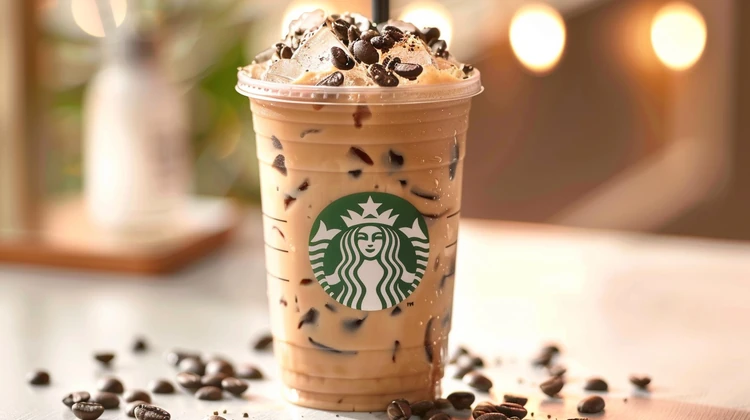
Starbucks' new cold cups will use 20% less plastic

Starbucks is taking steps towards being more sustainable with a new line of cold cups that use less plastic. 

With the coffee chain’s plans to cut carbon, water, and waste footprints by 2030, these remodeled cups are another step in that direction. The cups use 10%-20% less plastic compared to the original designs, and will now all use the same size lids. 

A team of researchers led by Kyle Walker has been testing different methods to cut back on plastic use while keeping the integrity of the cups at Starbucks’ testing lab the Tryer Center. Over the last four years, Walker’s team has created a new cup that doesn’t compromise on sturdiness or keeping drinks cold. 

“We invented new ways to test the cup that we didn’t have before,” Walker said. “Like, what if we take this feature and we move it up or down? Or what if we change the shape or the radius in this very small way? We were making all these micro-adjustments, and when we found the optimal combination, it was a real Eureka moment!” 

Sustainability benefits

In taking a look at the cups from the outside, regular Starbucks-goers aren’t likely to notice much of a difference. Each of the cold cups – tall, grande, venti, and trenta – will still all be the same size. The major difference is in how they’re going to be made. 

Starbucks has projected some of the key sustainability benefits over one year, which include: 

  • Save emissions equivalent to taking 5,200 cars off the road

  • Conserve about 2,800 Olympic-sized swimming pools of water

  • Keep more than 13.5 million pounds of plastic from landfills 

Accessibility benefits

The new cups will also include accessibility features that will make it easier for baristas in the midst of a busy rush. 

There will be two ways of identifying which cup is which: the new cups will be embossed with the letter indicating the size, and there will also be raised dots on each cup that will correspond to the different sizes. 

Starbucks cups also feature different measurement and fill lines. With these new cups, those lines will be black and white, so regardless of the drink customers order, baristas will be able to see the lines and accurately make the drink. 

Additionally, Starbucks has created one lid for all of the newly designed cold cups. This will make storage easier, as well as make things easier for baristas. 

The new cups are being rolled out at Starbucks stores across the country this month.  
2023
2022