



The meat case isn't the whole story: Costco may have bulk cuts and packaging options that aren't obvious to shoppers.
A little DIY can mean big savings: Cutting your own steaks, portioning ground beef, and skipping pre-marinated meat can lower your cost per meal.
Don't assume Costco has the lowest price: Grocery store sales can beat warehouse prices, especially on chicken and beef.
Costco's meat department can be a dangerous place for your grocery budget. One minute you're picking up chicken breasts for dinner. The next, you're staring at a $90 package of ribeyes and convincing yourself it's practically an investment.
But here's something many Costco shoppers don't realize: Some of the best meat deals require knowing what to ask for, not just what to grab from the refrigerated display.
And with beef prices putting pressure on grocery budgets, learning a few tricks can make a noticeable difference.
Here are six ways to get more meat for your money without sacrificing quality.
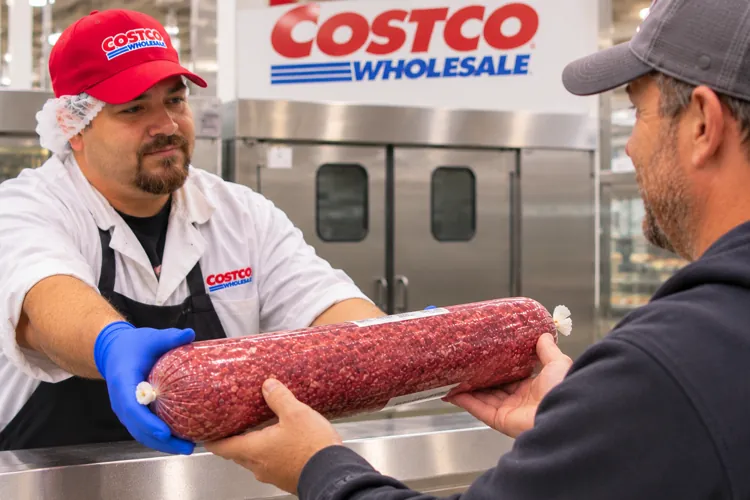
1. Ask about the 10-pound ground beef chub
Here's a Costco term worth remembering: chub.
It's a long, tube-shaped package of ground beef, often weighing around 10 pounds and typically comes in a 90/10 blend.
Many Costco warehouses sell these larger packages at a lower per-pound price than the smaller trays in the meat case. But you have to ask a butcher working in the meat department to get you one.
What to do: Ask whether your warehouse sells ground beef chubs and how their price and lean-to-fat ratio compare with the regular packages. If the chub is 50 cents cheaper per pound, buying 10 pounds saves $5. At $1 less per pound, you're saving $10.
Just don't buy 10 pounds unless you're prepared to divide it into usable portions. A smart approach is to freeze one-pound packages for tacos, spaghetti, chili, and burgers. Flattening the packages also helps them stack neatly and thaw more quickly.
2. Try the viral $9.99 steak trick — but watch out for the fat
One of the smartest Costco meat hacks making the rounds online involves buying an entire New York strip loin or boneless ribeye instead of individual steaks. The idea is to buy a large, vacuum-sealed piece of beef, take it home, and cut your own steaks.
When whole untrimmed New York strip loins drop to around $9.99 per pound (which it often does several times per year), the savings can be really impressive, especially if the individually cut steaks are selling for $14.99 or $15.99 per pound.
On a 15-pound purchase, that could mean $60–$75 in savings before accounting for trimming.
But here's the catch that viral videos often leave out. Whole cuts can have thick exterior fat caps, tough connective tissue, and uneven ends that you'll want to trim before portioning. Some ribeyes also have more fat than shoppers expect.
For example, a 15-pound loin at $9.99 per pound costs about $150. If you trim away two pounds of fat and other connective tissue, you're left with 13 pounds of steaks.
That pushes your actual cost to about $11.53 per pound. Still potentially a terrific deal, but not quite the $9.99 bargain you thought you were getting.
Pro tip: Before buying, compare the whole-loin price with Costco's already-cut steaks of the same USDA grade. I like to look for a piece without a thick exterior fat cap, and then I’ll put the entire thing on-end and take a close look at the fat marbling on the end cut — the more the better.
At home, use a sharp knife to cut steaks about one to 1½ inches thick. And be sure to vacuum-seal or tightly wrap individual portions for freezing.
3. Stop paying extra for someone else's marinade
Costco's seasoned meats are convenient, especially when you're trying to get dinner on the table quickly.
But convenience can come with a higher price per pound. Before grabbing pre-marinated chicken, seasoned tri-tip, or prepared carne asada, compare it with the plain version of the same cut.
What to do: If plain chicken costs $3.49 per pound, and the marinated version costs $5.49, that's a $10 difference on five pounds.
A bottle of marinade or a homemade combination of oil, citrus, and spices could cost considerably less. Of course, if buying the prepared version keeps you from ordering takeout, it might still be worth it.
4. Don't buy steaks until you've checked the grocery ads
This might sound strange in an article about saving money at Costco, but hear me out. Costco's everyday meat prices can be competitive. That doesn't mean they're always the cheapest.
Traditional grocery stores frequently run loss-leader promotions on chicken breasts, ground beef, pork, and holiday roasts to get shoppers through the door. Those advertised specials can beat Costco's regular prices.
What to do: Before a big meat-shopping trip, check the weekly ads for two nearby supermarkets. Compare the same cuts, grades, and package sizes.
If Costco has chicken breasts for $2.99 per pound, but your supermarket has a special at $1.99, buying 10 pounds at the supermarket saves you an easy $10. Don't forget to check purchase limits and digital-coupon requirements. The goal isn't to be loyal to Costco. It's to be loyal to your grocery budget.
5. Turn the $4.99 rotisserie chicken into three meals
Costco's famous $4.99 rotisserie chicken is one of the easiest ways to stretch your meat budget. But the real trick isn't just buying it. It's getting more than one dinner out of it.
Start with chicken and vegetables the first night. Use the leftover meat for tacos, enchiladas, chicken salad, or quesadillas. Then use the carcass to make stock for soup.
One caution: Compare the amount of usable cooked meat with the price of raw chicken before assuming the rotisserie bird is always the better per-pound deal. Its biggest advantage is that it's already cooked, which can save both time and the temptation to order takeout.
6. Buy Kirkland chicken breasts instead of the name brand
Many Costco shoppers don't realize that Kirkland Signature chicken isn't necessarily produced by Costco. A ProPublica investigation found that some Kirkland chicken has been processed by major poultry companies, including Foster Farms.
That doesn't mean Kirkland and Foster Farms chicken breasts are identical. But it should make you wonder why you'd pay more for the name brand if the Kirkland version meets your needs.
Before buying, compare the price per pound, whether the chicken is fresh or frozen, and whether either product contains added solution. For example, if Kirkland chicken breasts cost $2.99 per pound and a comparable name brand costs $3.99, buying 10 pounds of Kirkland saves you $10.
Also, Costco's fresh chicken breasts often come in individually sealed sections, making it easy to separate and freeze portions without opening the entire package.
My tip: Cut apart the sealed sections without puncturing them, then place the portions you're not using into freezer bags for extra protection against freezer burn. Label them with the date. For best quality, the USDA recommends using frozen chicken pieces within nine months.
One final warning: Watch out for blade-tenderized steaks
Before tossing those Costco steaks in your cart, there's one important food safety detail worth knowing. Some Costco steaks are mechanically tenderized, also called blade tenderized. This means tiny blades pierce the meat to make it more tender.
The problem? Those blades can push bacteria from the surface into the center of the steak, where a quick sear might not kill them.
As I explained in my previous article on blade-tenderized Costco steaks, the USDA recommends cooking mechanically tenderized beef to an internal temperature of 145°F.
That's important if you prefer your steaks rare or medium-rare as Costco might not be the meat market for you.
My tip: Check the package label for the words "mechanically tenderized" or "blade tenderized." If you prefer a rarer steak, look for a cut that hasn't been mechanically tenderized, and always follow safe cooking practices.
Saving money on steak is great. But knowing exactly what you're buying is just as important.