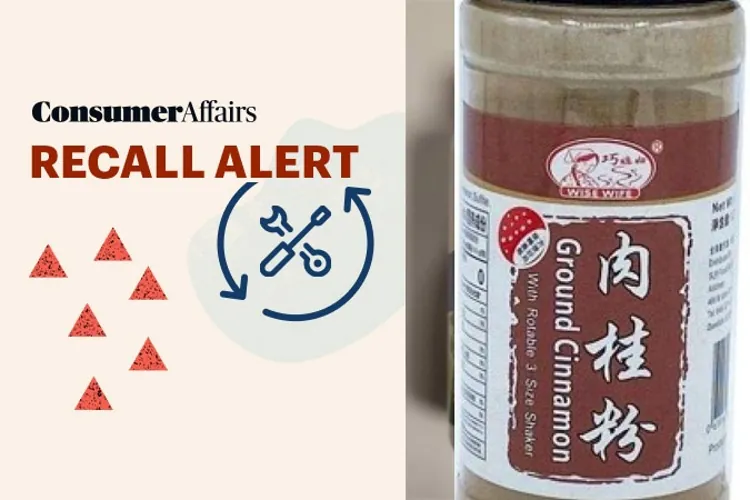

SLR Food Distribution Inc. has recalled Wise Wife brand ground cinnamon after testing revealed elevated levels of lead.
The recalled cinnamon was distributed to grocery stores in 14 states, and consumers are urged to stop using it immediately.
Cinnamon can become contaminated through polluted soil, environmental exposure during harvesting and processing, or the deliberate addition of lead-containing substances.
A New York food distributor is recalling ground cinnamon sold in 14 states after laboratory testing detected elevated levels of lead, adding to a growing list of cinnamon products flagged by federal food safety regulators.
SLR Food Distribution Inc., based in Hicksville, New York, announced the voluntary recall of Wise Wife brand ground cinnamon on October 29. The recall was posted by the U.S. Food and Drug Administration (FDA).
According to the company's announcement, the contamination was discovered after the Connecticut Agricultural Experiment Station collected and analyzed a sample of the product.
No illnesses have been reported in connection with the recalled cinnamon.
How to identify the recalled cinnamon
Wise Wife brand ground cinnamon
Size: 110 grams (3.88 ounces)
Packaging: Clear plastic container with a black screw-top cap
UPC: 0688474302754
Best before: April 25, 2027
The cinnamon was distributed between September 8, 2025, and June 28, 2026, to retailers in Connecticut, Indiana, Kansas, Massachusetts, Michigan, Minnesota, Nebraska, New York, North Carolina, Ohio, Pennsylvania, Texas, Virginia and Wisconsin.
Consumers who purchased the affected product should discard it or return it to the place of purchase for a full refund.
Why does cinnamon keep showing up in lead recalls?
Cinnamon has become a recurring concern for food safety regulators, partly because of how the spice is grown, harvested and processed.
Unlike many spices made from seeds or leaves, cinnamon comes from the bark of trees. The bark is harvested, dried and often ground into a fine powder. There are several ways lead can enter the finished product.
Environmental contamination: Lead occurs naturally in the environment, but industrial pollution, contaminated soil and dust can increase its concentration. Cinnamon trees may absorb some lead from their growing environment, while harvested bark can also be exposed to contaminated dust.
Processing and handling: Cinnamon typically passes through several stages of drying, grinding, storage and transportation. Contaminated equipment, dust or other materials can introduce lead during these processes.
Deliberate adulteration: In some cases, lead-containing compounds may be added to spices to change their appearance or increase their weight. Federal investigators have previously examined evidence of economically motivated adulteration involving cinnamon products.
These risks do not mean all cinnamon is unsafe. They do, however, help explain why regulators have increased their scrutiny of the spice.
The FDA has issued multiple public health alerts involving ground cinnamon since 2024, identifying products containing elevated lead concentrations. In September 2026, the agency added another cinnamon product to its list of affected brands.
The agency has also urged cinnamon manufacturers, processors and distributors to strengthen controls designed to prevent chemical contamination.
Why lead exposure is especially dangerous for children
Lead is a toxic metal that can affect nearly every system in the body. There is no known safe level of lead exposure for children.
The danger is particularly significant for young children because their developing brains and nervous systems are more vulnerable to its effects.
Prolonged exposure can contribute to learning difficulties, developmental delays, behavioral problems and permanent neurological damage.
Adults can also experience health problems from lead exposure, including high blood pressure, kidney damage and neurological effects.
One of the challenges is that lead poisoning may not produce obvious symptoms, particularly when exposure occurs gradually over time.
The FDA says elevated blood lead levels may be the only indication that someone has been exposed.
The risk depends on the amount of lead consumed, how frequently contaminated food is eaten and the person's age and body weight.
What consumers should do
Consumers should check their spice cabinets for the recalled Wise Wife cinnamon, especially because the product has a long shelf life and may have been purchased months ago.
Anyone who has consumed the recalled cinnamon, particularly families with young children, should consider contacting a healthcare provider to discuss whether blood lead testing is appropriate.
Consumers should also avoid assuming that cinnamon is safe simply because it looks, smells or tastes normal. Lead contamination cannot reliably be detected through ordinary inspection.
The FDA continues to monitor cinnamon products and recommends that consumers check its public health alert for affected cinnamon brands.
For questions about the latest recall, consumers can contact SLR Food Distribution at 516-437-3782, Monday through Friday, from 9 a.m. to 5 p.m. Eastern time.
The recall is another reminder that even commonly used pantry ingredients can pose unexpected health risks when contaminants enter the food supply.