


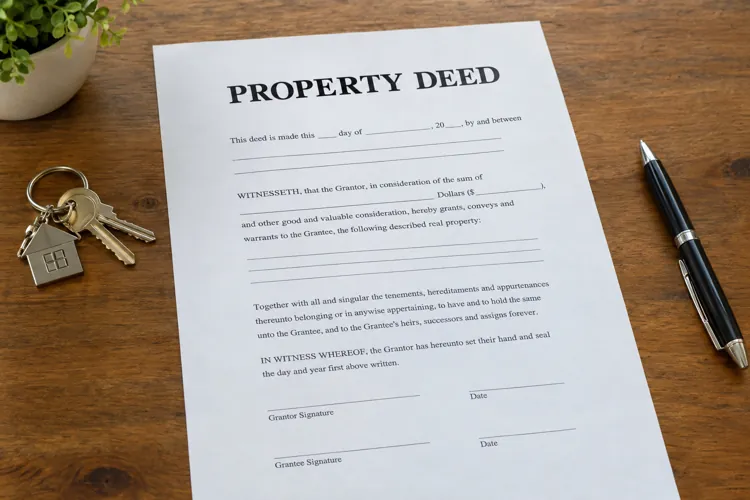

Criminals can use forged deeds to create the appearance that they own someone else’s property, then attempt to sell it or borrow against it.
Paid-off properties can attract scammers, but there is no reliable national statistic showing how often homeowners fall victim to deed theft.
Free property-record alerts, periodic checks of land records and a review of title insurance coverage can help homeowners detect fraud and respond quickly.
Paying off a mortgage is a major financial milestone. But owning a home free and clear does not shield it from criminals who use forged documents to impersonate property owners.
Known as deed fraud or home title theft, the scheme involves creating a false record of ownership. Criminals may then attempt to sell the property, take out a mortgage against it or rent it to unsuspecting tenants.
The FBI’s Boston Division has warned that it was receiving increasing reports of the crime. Among the targets: properties without mortgages or other liens, which scammers identify by searching public records.
However, the available evidence does not establish how frequently an individual homeowner faces this threat. The FBI does not maintain a separate national count of quitclaim deed fraud.
Its broader real estate fraud figures include other schemes and cannot be used to determine how many homes have been fraudulently transferred.
Vacant properties are particular targets
A 2025 National Association of Realtors survey found that reported deed and title fraud more frequently involved vacant land than owner-occupied properties. The association cautioned that its sample was small, making the findings useful as general indicators rather than a precise measure of risk.
Owners who rarely check their property records or monitor mail at a vacant property may be slower to discover suspicious activity. Older homeowners can also face attempts by relatives or close associates to persuade them to transfer ownership for someone else’s financial benefit.
A recorded forgery does not automatically create legitimate ownership
The document sometimes called a “quick claim deed” is actually a quitclaim deed. But the central issue in these scams is the use of forged signatures, false identities or other fraudulent paperwork.
Recording a forged deed can create an apparent ownership change without establishing a valid legal transfer. For example, New York courts have held that a forged deed conveys no title and that recording it does not make it valid. Nevertheless, victims may need legal proceedings to clear the records and resolve competing claims, with the process depending on state law and the circumstances.
That distinction matters: A homeowner may retain legal ownership while still facing substantial difficulty correcting the public record.
Start with free property alerts
One practical step is to ask the local recorder, register of deeds or circuit court clerk whether free property-record notifications are available.
These systems send alerts when documents matching a registered name or parcel number are recorded. Virginia’s VADeed Alert is one example. Richmond’s circuit court clerk describes the service as a way to receive early notice of potentially unauthorized filings.
Homeowners should also check their land records periodically for unfamiliar deeds or mortgages. Missing property-tax bills, unexpected loan notices or other unexplained changes deserve prompt attention. New York’s attorney general recommends checking property records yearly.
Understand what paid protection provides
Commercial “title lock” and deed-monitoring services should be evaluated carefully.
The Maryland Insurance Administration warns that monitoring cannot stop someone from recording a fraudulent document. It alerts customers after a change occurs, and monitoring itself is not insurance. An owner may still need legal help to correct the records.
Homeowners should also review any owner’s title insurance policy and ask the insurer whether it covers forgery occurring after the home purchase, including legal defense costs. Standard title insurance generally addresses defects originating before the policy was issued, and coverage varies. A lender’s policy protects the lender’s interest rather than the homeowner’s.
If an unfamiliar filing appears, homeowners should promptly obtain a copy from the recording office, contact local law enforcement, notify their owner’s title insurer and consult a real estate attorney. Internet-related fraud can also be reported to the FBI at IC3.gov. Reporting the crime is an important step, but correcting the property records may require additional legal action.