


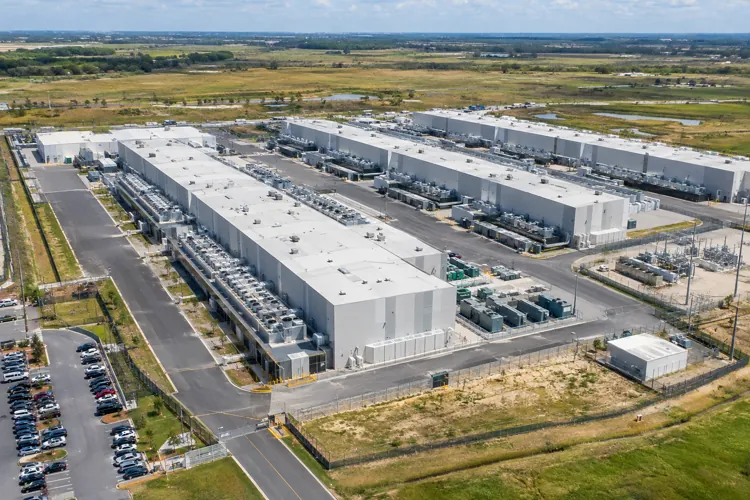

403 large data centers used an estimated 1.8% of U.S. electricity in the year ending April 2025, according to a Harvard-led study.
Fossil fuels supplied about 54% of their power. The researchers linked the facilities’ electricity use to an estimated 25.7 million metric tons of carbon dioxide emissions.
Four states accounted for more than half of the electricity used by the facilities in the study — Virginia, Oregon, Ohio and Iowa.
Opposition to AI data centers is widespread among people across a range of different political affiliations. A new Harvard-led study may fuel that opposition,
More than 400 of the country’s largest data centers consumed an estimated 82 terawatt-hours of electricity from May 2024 through April 2025, according to research published in Nature Sustainability.
Eighty-two terawatt-hours is roughly the amount of electricity 7.8 million average U.S. homes use in a year. Depending on how heavily the facilities were running, researchers put the figure between 68 and 99 terawatt-hours.
The study focused on hyperscale data centers, the sprawling facilities that support cloud computing and are used to train and run artificial intelligence systems. Researchers used satellite imagery to help identify the sites, then drew on Environmental Protection Agency data to estimate the emissions associated with the power generated on their regional grids.
The local power supply shapes emissions
Natural gas supplied about 38% of the electricity attributed to the data centers, and coal supplied about 15%. The mix varied widely by location. About a quarter of the electricity was used in grid regions that produced more carbon dioxide per unit of electricity than the national average.
That geographic difference matters for communities near the plants that supply the electricity.
Study co-author Francesca Dominici said fossil fuel plants also release pollutants such as fine particles and nitrogen oxides. People living near or downwind of those plants may be exposed even if the data center itself is far away. The researchers plan to examine those potential health effects in future work.
The figures capture a fast-growing industry
The estimates cover the 403 sites the researchers could assess. The available data also left open how much electricity each site used for AI versus other computing tasks.
Lead author Gianluca Guidi said new construction, campus expansions and growing demand for AI computing since April 2025 mean the industry’s electricity use and carbon footprint could already be substantially larger.