

Home security system cost comparison
To compare systems, consider both upfront equipment costs and ongoing monthly fees. Often, a home security company will sell you equipment at low or no upfront cost, and then you pay it off over the length of your contract.
In this case, the monthly fee combines costs for monitoring service and equipment financing. If you don’t want to get into a contract, you’re better off buying a home security system outright.
Below, we compare three popular home security companies on upfront costs, monthly monitoring fees, financing options, cancellation fees, contract terms and money-back guarantees.
| Company | Upfront starting costs* | Monthly fee* | Contract required* | Self-monitor option* | |
|---|---|---|---|---|---|
 Brinks Home Security™ | Get a Quote | $436 to $803 | $39.99 to $49.99 | 36 months | No |
 Frontpoint | Get a Quote | $69 to $349 | - | 36 months (if financing) | No |
 Ring | Learn More | $179.99 to $359.99 | $4.99 to $99 | No | Yes |
 Link Interactive | Learn More | Varies | $30.99 to $47.99 | One to three years | Yes |
 ADT Blu | Learn More | $199 | $9.99 to $34.99 | No | Yes |
 SimpliSafe | Get Started | $150.56 to $440.30 | $9.99 to $79.99 | No | Yes |
 Cove | Learn More | $129 | $32.99 | No | No |
 Abode | Learn More | $14.99 to $450 | $6.24 to $20.50 | No | Yes |
Factors that affect the cost of a home security system
What you’ll pay for a new home security system depends on a few variables, such as equipment costs, included services and the company's pricing model.
Costs to consider
There are a few upfront and ongoing costs you can expect when purchasing a home security system.
- Professional monitoring: Professional monitoring includes 24/7 access to a live call center that monitors your system. If an alarm is triggered, someone in the monitoring system calls to check on you and can request emergency services on your behalf. A monitored system typically runs between $5 to $80 per month, or around $35, on average.
- Security equipment: Depending on the provider, you might be able to buy the equipment upfront, finance it with a monthly payment or rent it. If you pay upfront, you’ll likely save in the long run. Rolling equipment costs into a monthly payment remains a popular option because it makes home security more affordable for most people. If you finance your equipment, expect to pay a little more for each month’s service.
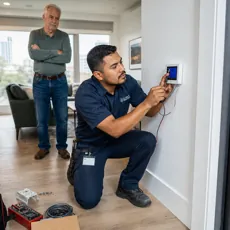
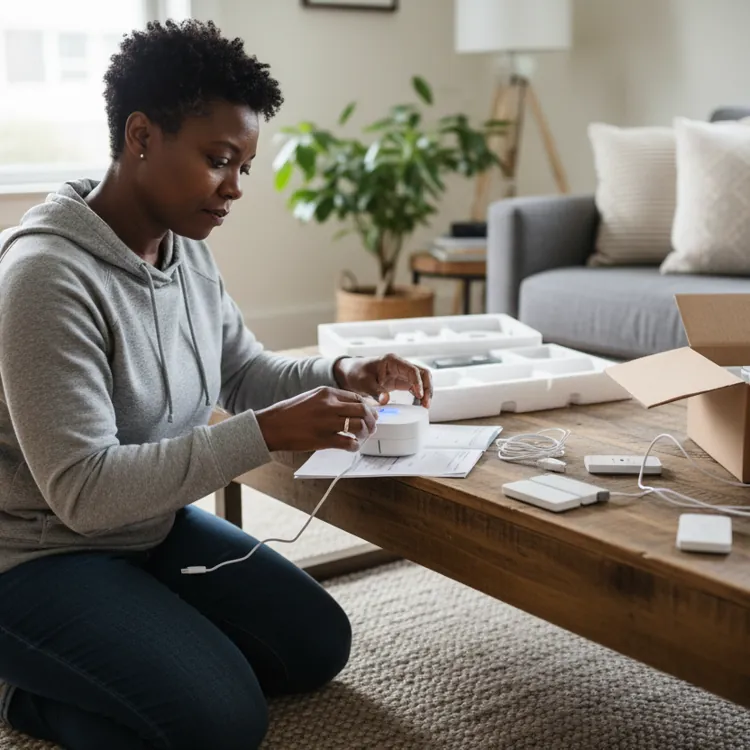
- Installation: Some companies charge a one-time installation fee to set up your system. You can cut this cost altogether if you choose a DIY wireless system instead.
- Alarm permits: Depending on your location and the type of device, you may need to apply for an alarm permit with your local government. Paying annually for an alarm permit ensures emergency services show up at your property when necessary. It can also help protect you against fines for false alarms.
- Maintenance: Don’t forget to factor in the annual cost of system maintenance and upkeep, such as replacing batteries or ordering new equipment (like additional cameras or key fobs).
» COMPARE: Security system installation: DIY versus professional
Security equipment cost
When buying home security equipment, you’ll have the option to select from packages that include the company’s most popular devices or build a customized system for your needs and budget.
Starter packages typically include intrusion detection devices (door and window sensors, motion detectors, etc.) and a central control panel or keypad.
More advanced security systems add in equipment like indoor and outdoor cameras, video doorbells, environmental sensors, smart lights, smart locks and other home automation features.
So, should you go with an equipment package or a build-your-own system?
“It really depends on how comfortable you feel deciding what security devices you need to protect your home,” according to Rebecca Edwards, lead safety reporter at SafeWise.com.
“You can find savings both ways, and nearly all security system offerings give you the chance to customize to some degree, whether it’s taking the basics and adding a security camera or picking up extra motion sensors for each floor of your home. For simplicity’s sake, it may be easier to start with a preselected package, especially if it’s your first home security system.”
Smart-home costs
Syncing your security system with smart-home automation is becoming more and more popular. In addition to lights and locks, you can add smart garage door controls and smart thermostats to a home security system and integrate them with voice-activated devices like Google Home and Amazon Alexa for a fully connected experience.
Many major home security companies offer their own smart-home equipment. Others make their systems compatible with external home automation devices and Z-Wave technology so all your devices can communicate with each other.
Are home security systems worth it?
According to the FBI, a break-in in 2019 cost homeowners $2,661, on average. Home security systems can deter burglars, call emergency services with the press of a button and help you monitor your property while you're away. While some advanced systems can be pricey if you want to purchase all equipment upfront, most are relatively affordable with financing plans.
“The best way to save is to know exactly what you want to protect and not get sucked into all the recommendations from the pro assessment that usually comes with a high-end security system,” Edwards said.
“If your top goal is keeping someone out of your house, you should put sensors on all main-level entrances — both doors and windows. But you can skip upper-level windows if there’s no way for someone to get up there without a ladder or scaling the sides of your house. If you care more about watching over your yard and outbuildings, then outdoor security cams are going to be most important, and you can skip some other extras.”
If you’re on the fence about whether one of these systems is right for your home, consider if the upfront and monthly costs of a system fit into your budget, and evaluate the crime rate and trends in your area. Even in areas where crime is low, the presence of a security system provides a real sense of comfort to homeowners.
FAQ
How much does an alarm system save on homeowners insurance?
A home security system can reduce your insurance premium. The amount you can save depends on your home insurance provider and the type of alarm system you have. Systems that include monitoring services with smoke detectors and carbon monoxide detectors will offer the most significant savings.
Do home security companies offer warranties or repair support plans?
Yes, most top home security companies offer warranties and repair coverage. In many cases, this applies only to systems professionally installed by the provider. There are exclusions to these warranties, with plans not covering battery replacement or damage to touch screens.
Do home security companies charge early termination fees?
If you cancel before the term of your home security agreement is up, you will likely pay an early termination fee ranging from 75% to 100% of the remaining contract. If you only need home security for a short time, consider providers that offer month-to-month services — just keep in mind that you might have to spend more on upfront equipment costs.
Where can I find a cheap home security system?
You can find the cheapest home security systems online. They typically have low or no upfront costs and DIY monitoring. Some plans let you self-monitor for free, while others charge a small monthly fee. Beware of cheaper systems, though.
“One of the biggest things to watch out for if you’re looking for a cheaper home security system is a lack of monitoring options,” Edwards of SafeWise.com said.
“Even if you don’t want to pay for professional monitoring, you should at least be able to keep an eye on your system using a mobile app on your phone. If you can’t get alerts if a door is opened or the alarm is triggered, you’re really just buying a siren for your house. It’s a lot like a car alarm, and we all know how much people just ignore those.”