Best Flooring Companies in Denver, CO of 2026
 Empire Today
 Denver Carpet & Flooring
 5280 Floors

+1 more

Best Flooring Companies in Denver, CO of 2026
Denver's dry winter air and its mix of 1920s bungalows and newer builds make flooring choices trickier than they look. We researched the top independently owned Denver flooring companies, comparing services, warranties and scheduling so you can pick an installer who fits your home and budget.
Why trust ConsumerAffairs?
Our editors, fact-checkers and moderators work to uphold standards for accuracy, transparency and trust.
Our editorial standards
- Our editorial team reviews and fact-checks all content before it’s published.
- We rely on expert input and trusted sources to verify our articles.
- All articles published must meet our editorial standards and independence policy.
Our review standards
- Our moderation team evaluates reviews to make sure they meet our guidelines.
- We require contact information to verify reviews come from real customers.
- Financial relationships do not influence whether we publish a consumer review.
To find the best flooring companies in Denver, we analyzed aggregate rating data across major review platforms, giving more weight to ConsumerAffairs reviews than third-party reviews. Read our full methodology below.
Compare the best Denver flooring companies
| Company | Customer rating | ConsumerAffairs Score | Free in-home estimate? | Time to installation* | Year founded | Location | |
|---|---|---|---|---|---|---|---|
 Empire Today | Get Pricing | 4.5
10,648 reviews
10,648 reviews
| 9.0/10 |  | Usually in 2 days or fewer | 1959 | Nationwide |
 Denver Carpet & Flooring | Write a Review | No rating | 9.5/10 | | 1 to 2 weeks | 2013 | 11809 E. 51st Ave., Denver, CO 80239 |
 5280 Floors | Write a Review | No rating | 9.5/10 | | Call to confirm | 2011 | 1025 Zuni St., Denver, CO 80204 |
 Tongue & Groove Wood Flooring | Write a Review | No rating | 9.4/10 | | Call to confirm | 2007 | 590 Quivas St., Denver, CO 80204 |
 Affordable Flooring & Remodeling | Write a Review | No rating | 9.1/10 | | Call to confirm | 2007 | 4140 S. Parker Road, Aurora, CO 80014 |

Flooring in Denver, CO Buyers Guide
Jump into our guides and start learning
In this guide

Denver's furnace season can drop indoor humidity below 20%, opening gaps in solid hardwood, while spring snowmelt tests every basement floor in the metro. Add expansive clay and 300 days of sun and installation quality matters even more. We'll cover everything you need to know about costs, materials, permits and timing for flooring installation in Denver.
Key insights
The store sells the floor, but the installer decides whether it lasts, so ask who will actually be in your home.
Jump to insightMost Denver flooring projects usually run $4 to $16 per square foot installed, with carpet at the low end and tile or solid hardwood at the top.
Jump to insightDenver's winter indoor humidity can shrink solid hardwood and open gaps between boards.
Jump to insightLuxury vinyl plank handles Denver's basements, dry air and de-icer grit better than most options at a mid-range price.
Jump to insightHow to choose a flooring company in Denver
To choose a flooring company in Denver, start by identifying the type of company that suits your project. Then confirm who will do the work and compare itemized quotes from multiple installers.
1. Decide what kind of flooring company you need
The flooring industry is organized into three distinct business models, each with different trade-offs:
- Showroom retailers: Operate a physical store where you browse and select materials, then schedule installation — often through crews that the retailer contracts out. This works well if you want to compare dozens of samples side by side before committing.
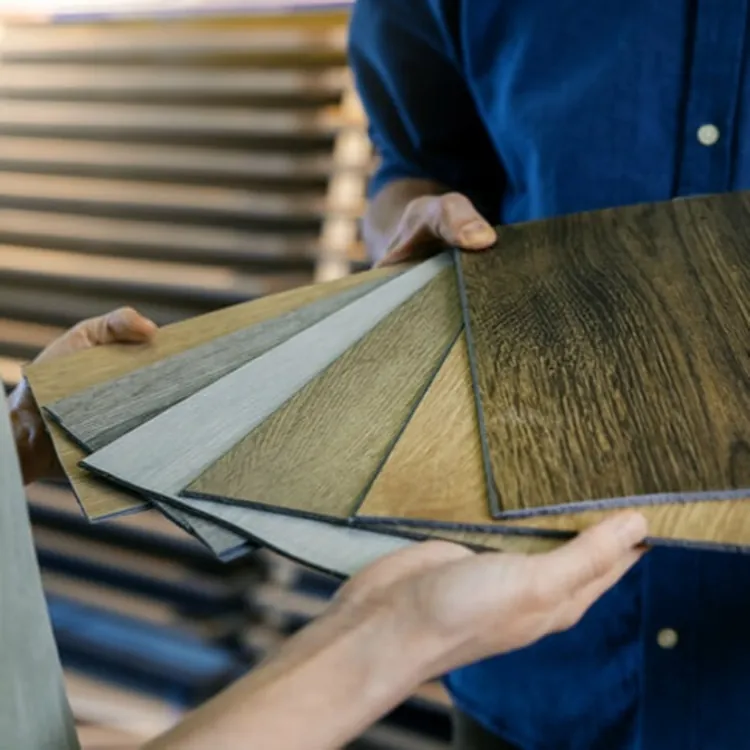
- Shop-at-home companies: Send a representative to your home with samples, measure your space on the spot and typically schedule installation quickly using products they keep in stock. The convenience is real, though your material choices are narrower.
- Independent installers: Focus on labor. You either supply the flooring yourself or they source it, but the product warranty and the labor warranty come from separate parties — something to understand before you sign.
Denver's climate and mixture of older homes add another layer of complexity. Homes in neighborhoods like Capitol Hill or Park Hill often have original hardwood that needs matching or careful restoration, so experience with those conditions matters when you're comparing companies.
2. Check online reviews from locals
Reviews from Denver homeowners give you a ground-level view of how a company actually performs, from the first sales visit through any warranty work that follows months later. On ConsumerAffairs, the complaints we see most often about flooring companies fall into these categories:
- Warranty claims that go nowhere: Look for homeowners who report problems surfacing well after installation, such as lifting planks, separating seams or buckling carpet. Especially if the claims get denied, blamed on the homeowner or come with an unexpected service fee rather than a genuine fix.
- Rushed or sloppy installation: Watch for customers who describe visible seams in high-traffic areas, gaps along baseboards and planks that start separating within weeks. This can be tied to a crew that seemed in a hurry to wrap up and move on.
- Sales promises that don't make it into the contract: Watch for buyers who say in-home reps verbally promised discounts, extra work or coverage that the company later refused to honor, or if the final invoices didn't match what was quoted.
- No-shows and last-minute cancellations: Look for reviewers who describe taking time off work, moving all their furniture and waiting for a crew that never arrived because materials were delayed or the schedule was overbooked.
- Damage to walls, trim and belongings: Pay attention to customers who report scuffed paint, gouged door jambs and damaged cabinetry after installation, who then had to push hard to get any repairs done.
One Aurora resident, Alicia, said the installers left adhesive on the banisters and damaged walls while removing trim. "There are liquid nails that I haven't been able to get off of my banisters and walls. They damaged my walls in several places, taking off the kickboards."
Pay close attention to how a company responds publicly when something goes wrong. A business that resolves problems quickly and transparently often proves more dependable than one with a polished but thin track record.
3. Find out who will actually install your floors
Many flooring retailers and shop-at-home companies rely on subcontracted crews rather than direct employees. That arrangement isn't inherently a problem, but it's worth asking a few questions: Who will be in my home? How long has the crew worked with your company? Who should I contact if something needs to be fixed afterward?
Flooring contractors in CO aren't licensed at the state level, since Colorado has no statewide general contractor license, but Denver requires a city contractor license for permitted work such as subfloor or joist repairs, so check the Denver contractor license search before you sign anything.
4. Look for experience with your material
Hardwood, tile and floating vinyl each require a different skill set, so ask directly how often the company installs the material you've selected and request photos from recent comparable jobs. Professional certifications can be a meaningful signal:
- The National Wood Flooring Association (NWFA) certifies hardwood installers and refinishers.
- The International Certified Flooring Installers Association (CFI) certifies carpet and resilient flooring installers.
- The Ceramic Tile Education Foundation (CTEF) runs the Certified Tile Installer (CTI) program.
For referrals, ask neighbors who've had work done recently, search the member directory of the Home Builders Association of Metro Denver or ask a local real estate agent which installers they've seen deliver consistent results.
5. Insist on an in-home measurement and subfloor check
Any quote worth trusting starts with an in-person visit where someone measures your actual rooms and looks at the subfloor. The estimator should check for levelness, soft spots and moisture, particularly important over concrete slabs and in basements where Denver's spring snowmelt can push water through foundation walls.
Moisture problems are behind a large share of flooring failures, including cupped hardwood and adhesive that releases over time.
Ask every company how long the materials need to acclimate in your home before installation begins. Solid hardwood often requires several days, and many laminate and vinyl products need at least 48 hours. Any company willing to quote a whole-home project based on a phone call alone is a red flag.
6. Compare itemized quotes and warranties
Collect at least three written quotes, and make sure each one breaks down the same line items so you're comparing apples to apples:
- Square footage
- The exact product
- Underlayment or padding
- Removal and disposal of old flooring
- Subfloor preparation
- Furniture moving
- Stairs
- Transitions
- Trim
Most quotes add 5% to 10% extra material for cuts and waste, with more added for diagonal or herringbone layouts. Focus on the total installed price rather than advertised discounts, since promotions often shift costs between materials and labor without changing your final bill.
Check warranties separately for the product and the installation. Manufacturers cover material defects, while installers cover workmanship — and improper installation can void a manufacturer's warranty entirely, which is a strong argument for hiring someone with real experience in your specific material.
» COMPARE: Top national flooring companies
Average flooring costs in Denver
The cost of flooring installation in Denver typically runs $4 to $16 per square foot installed, though the final number shifts based on material choice, room size and how much subfloor prep your space requires.
Budget for slab grinding or self-leveler, since Denver's clay soil often leaves basements uneven.
Here’s a breakdown of estimated flooring and related service costs:
- In-home estimate: Free
- Carpet with pad (installed): $2.50 to $8.50 per square foot
- Luxury vinyl plank or tile (installed): $4.50 to $16 per square foot
- Laminate (installed): $4.50 to $14 per square foot
- Engineered hardwood (installed): $7.50 to $21 per square foot
- Solid hardwood (installed): $11.50 to $26 per square foot
- Ceramic or porcelain tile (installed): $10.50 to $50 per square foot
- Hardwood refinishing: $3.25 to $8.50 per square foot
- Old flooring removal: $0.75 to $1.75 per square foot for carpet; $2.25 to $7.50 per square foot for tile or glue-down floors
- Single room (about 250 square feet): $1,000 to $4,000
- Whole-home flooring (about 1,500 square feet): $6,000 to $24,000
Larger whole-home projects are usually quoted as a package that folds in old floor removal, underlayment, transitions and trim.
» MORE: Cost of each flooring type
How to save money when hiring a flooring company in Denver
New flooring is a significant investment, and quality installation isn't always cheap. You don't want to skimp on a budget company just to save a few bucks. That said, there are a few things you can do to lower your total costs:
- Handle basic prep on your own: Clearing furniture before the crew arrives or pulling up old carpet yourself can reduce labor charges — just confirm with the company first so you don't affect its warranty coverage.
- Combine multiple rooms into one project: Scheduling several rooms together lets you avoid per-job minimum fees and often earns a lower per-square-foot rate on materials and labor.
- Stick with in-stock products: Materials the company already has on hand cost less and get installed sooner than anything that needs to be ordered.
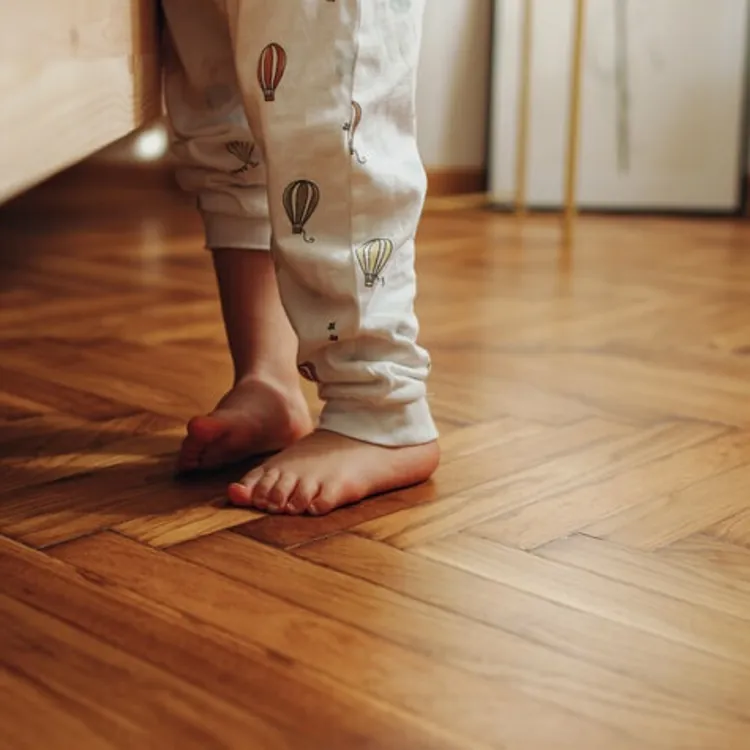
- Choose a straightforward layout: Standard straight-lay installation costs less than herringbone, diagonal or custom pattern work, which adds labor time and material waste.
- Refinish rather than replace: If your existing hardwood is structurally solid, refinishing runs a fraction of what new flooring costs and can look just as good.
- Read every line of the contract: Confirm that removal, disposal, transitions and trim are all included before you sign, so unexpected add-ons don't inflate the final bill.
- Watch for seasonal promotions: Many Denver flooring companies run discounted installation offers or clearance sales tied to holiday weekends and year-end inventory.
Best flooring types for Denver homes
For most Denver homes, luxury vinyl plank is the most practical all-around choice. It shrugs off Denver's dry winter air without gapping, stays waterproof in finished basements and holds up to the grit and deicer tracked in all winter. Here's how the most common flooring options stack up locally:
- Luxury vinyl plank (LVP): Waterproof, scratch-resistant and pet-friendly. Rigid-core LVP is the go-to for finished basements in Aurora and Lakewood splits and ranches, where a floating floor rides over cracked concrete.
- Laminate: A budget-friendly wood look that resists scratches, though most products handle standing water worse than LVP. Laminate works in upstairs bedrooms and dry main floors of rentals near the University of Denver, but it's a poor pick for basements prone to seepage.
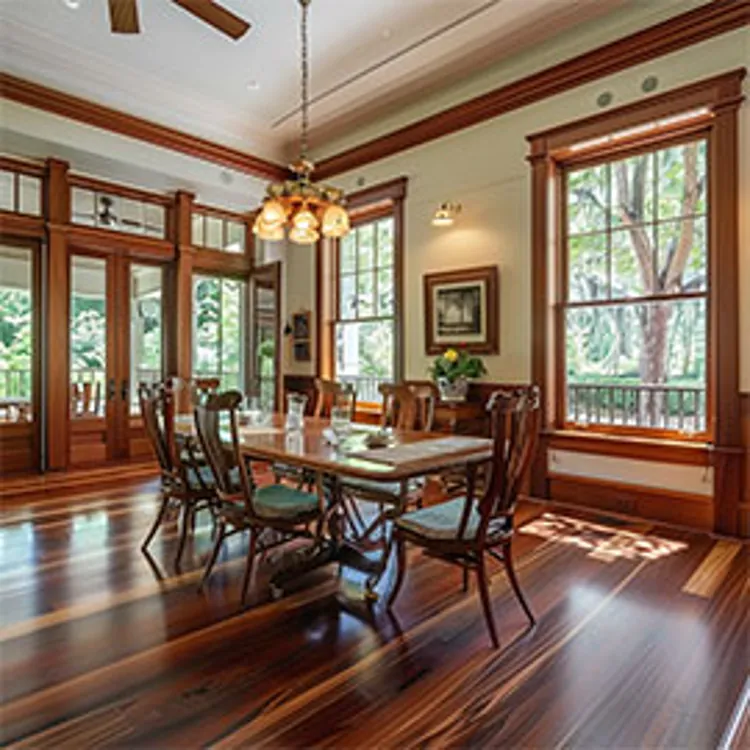
- Solid hardwood: The priciest of the common options, but it can be refinished many times and tends to add the most resale value. Original oak strip floors in Capitol Hill and Park Hill bungalows can usually be sanded and refinished, and buyers in those neighborhoods expect to see them.
- Engineered hardwood: A real wood top layer over a stable core that handles humidity swings and concrete better than solid hardwood. Engineered hardwood's layered core handles Denver's low winter humidity better than solid planks, making it a smart choice for new wood floors in Highland or Sloan's Lake builds.
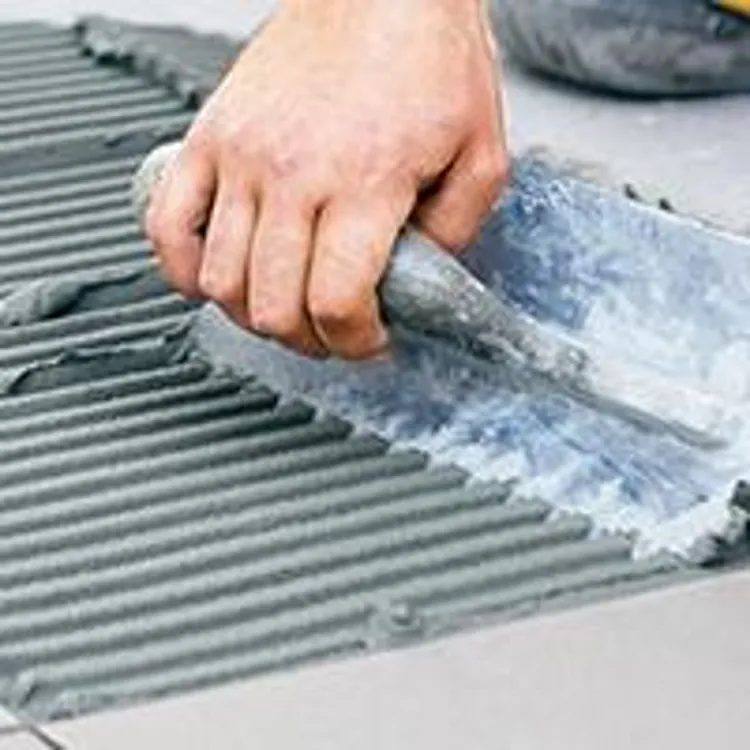
- Tile: Extremely durable and water-resistant, but it has the highest labor cost and feels hard and cold underfoot. Porcelain tile is popular in mudrooms and entries because it stands up to mag-chloride slush, though it needs a crack-isolation membrane over shifting slabs.
- Carpet: The least expensive option per square foot and the most comfortable underfoot. Carpet still dominates bedrooms and basement family rooms in suburban Denver homes, where it adds warmth over cold concrete during long winters.
Flooring material and climate challenges in Colorado
Denver's combination of dry high-altitude air, expansive clay soil and intense sun can shorten the life of the wrong material or cause damage that shows up months after installation:
- Dry air and hardwood gaps: Denver's indoor humidity often drops below 20% in winter once the furnace runs. Solid hardwood shrinks and opens gaps between boards, so engineered hardwood or a whole-house humidifier helps.
- Seasonal humidity swings: Summer monsoon storms and swamp coolers push indoor moisture back up after bone-dry winters. That swing makes wood expand and contract each year, which is why a long acclimation period matters here.
- Basement moisture and seepage: Some older Denver homes sit on full basements, and spring snowmelt and heavy storms can push water through foundation walls. Waterproof LVP or tile beats carpet or solid wood below grade.
- Expansive clay soil: Bentonite clay under much of the metro swells when wet and shrinks when dry, shifting slabs and basement floors. Cracked concrete and heaving can break tile, so floating floors and crack isolation help.
- Intense UV fading: At 5,280 feet, the sun is stronger and Denver gets about 300 sunny days a year. UV fades hardwood stains and cheap vinyl near big glass panels, so UV-blocking shades or fade-resistant finishes pay off.
FAQ
Can I put hardwood floors in my Denver basement?
No, you usually shouldn't put solid hardwood floors in your Denver basement. Below-grade concrete can wick moisture during spring snowmelt. Engineered hardwood over a vapor barrier can work in dry basements, but waterproof LVP or tile is the safer choice.
What's the best flooring for Denver's climate?
The best flooring for Denver's climate is LVP because it doesn't shrink in dry winter air and stays waterproof in basements. Engineered hardwood is a good wood option for main floors, and porcelain tile works well in entries that see snow and deicer.
Should I refinish or replace my hardwood floors in Denver?
You should refinish your hardwood floors in Denver if the boards are solid and have enough wear layer left, which is common in older Capitol Hill and Park Hill homes. Replace them if boards are cupped, badly gapped, water-damaged or already sanded too thin.
Can I install flooring myself to save money?
Yes, you can install flooring yourself to save money, especially floating LVP or laminate in simple rooms. Tile, glue-down floors, stairs and hardwood are harder to get right, and DIY mistakes can void manufacturer warranties, so hire a pro for those.
Could my old floors in Denver contain asbestos?
Yes, your old floors in Denver could contain asbestos, especially 9-by-9-inch vinyl tiles, sheet vinyl or black mastic from before the 1980s. The Colorado Department of Public Health and Environment (CDPHE) regulates asbestos, and many removals require a certified inspection before any material is disturbed.
Methodology: How we chose the best flooring companies in Denver, CO
To rank the best flooring companies in Denver, we analyzed thousands of customer reviews across popular review platforms. Weightings were based on how much review data each platform had available, with additional weight given to ConsumerAffairs reviews. Companies were scored on a zero to 10 scale using a blend of their ratings from all review sites.
To keep things fair, a perfect score from 20 reviews carries less weight than a perfect score from 5,000. The more reviews a company has, the more its rating is taken at face value. Companies with very few reviews on one platform were assigned a neutral score for that platform rather than leaving it out entirely.
Thanks for subscribing.
You have successfully subscribed to our newsletter! Enjoy reading our tips and recommendations.
Guide sources
ConsumerAffairs writers primarily rely on government data, industry experts and original research from reputable publications to inform their work. Specific sources for this article include:
- Federal Trade Commission, “How To Avoid a Home Improvement Scam.” Accessed Nov. 9, 2026.
- National Wood Flooring Association, “Problem Prevention.” Accessed Nov. 9, 2026.
Learn more about flooring companies in Denver

24/7 customer service available. Offers free in-home consultations. Includes all-inclusive price estimates and next-day installation. Financing and referral programs. Low-price guarantee.

Connects homeowners and renters with home improvement specialists for free. Average home improvement job costs between $120 and $6,000. Includes damage protection guarantee up to $500,000. Online booking available.
Hardwood specialist for site-finished and prefinished installs, sanding, refinishing and repairs. Also lays luxury vinyl plank and laminate. Custom stairs and railings. Gallery showroom with 500-plus samples.
Carpet, tile, stone, luxury vinyl, laminate and prefinished hardwood installs. Dustless hardwood refinishing. Removes and hauls away old floors. Price matching and financing. One-year labor warranty in writing.
Shop-at-home service with samples brought to your door. Installs carpet, luxury vinyl plank (LVP), hardwood, laminate and tile. Handles stair installs, old floor removal and leveling. Lifetime installation warranty.

Solid, engineered, reclaimed and site-finished hardwood installs. Sanding, refinishing, screen-and-recoat upkeep and board repairs. Extends existing floors into new rooms. Designer showroom in the design district.

Looking for other services in Denver, CO?
From moving and renovations to homeownership and maintaining a car, the right company matters. Explore local guides and resources.
Find Local Companies