

Our 3 picks for walk-in tubs with jets
Our research pointed us to three jetted walk-in tub brands worth knowing about. Here’s a look at how they compare.
| Company | Customer rating | Our pick for | Step-in threshold | Drain time | Warranties | |
|---|---|---|---|---|---|---|
 American Standard Walk-in Baths | Get Started | 3.8 | Affordability | 3 inches | Within 2 minutes | Lifetime on tub, all parts, installation and labor |
 Independent Home | Get Started | 4.6 | Hydrotherapy | 4.5 inches | 60 to 90 seconds | Lifetime on workmanship and key components |
 Boca Walk-In Tubs | Learn More | 4.4 | Accessibility | 2 inches | 18 gallons per minute | Limited lifetime on defects, shell and other components |
American Standard Walk-in Baths

- Number of jets
- 44 total
- Step-in height
- 3 inches
- Capacity
- 45 to 80 gallons
- Financing
- Varies; subject to third-party credit approval
Independent Home

- Number of jets
- 30 air jets; 8 hydrojets
- Step-in height
- 4.5 inches
- Capacity
- 50 gallons
- Financing
- Third-party financing plans
Boca Walk-In Tubs

- Number of jets
- 18 air jets; 10 hydrojets
- Step-in height
- 2 inches
- Capacity
- 40 to 80 gallons
- Financing
- Yes
Walk-in tubs with jets: The basics
“Soaking tubs are for simple immersion, while jetted tubs go a step further by offering therapeutic benefits, including improved circulation,” said John Salvatore Gelfusa, president and CEO of HomeWorks CGO Inc., a bathroom remodeling company in Chesterfield, Michigan.
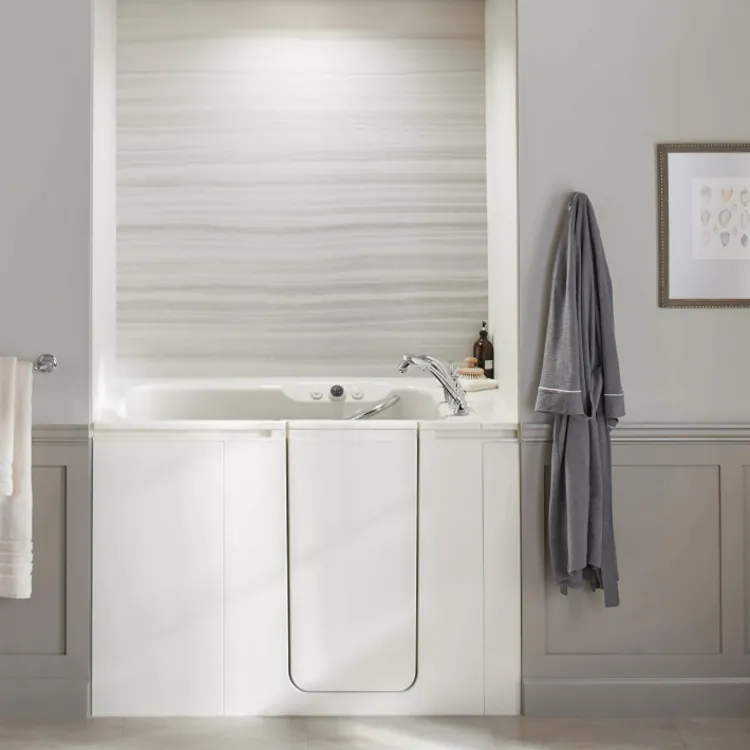
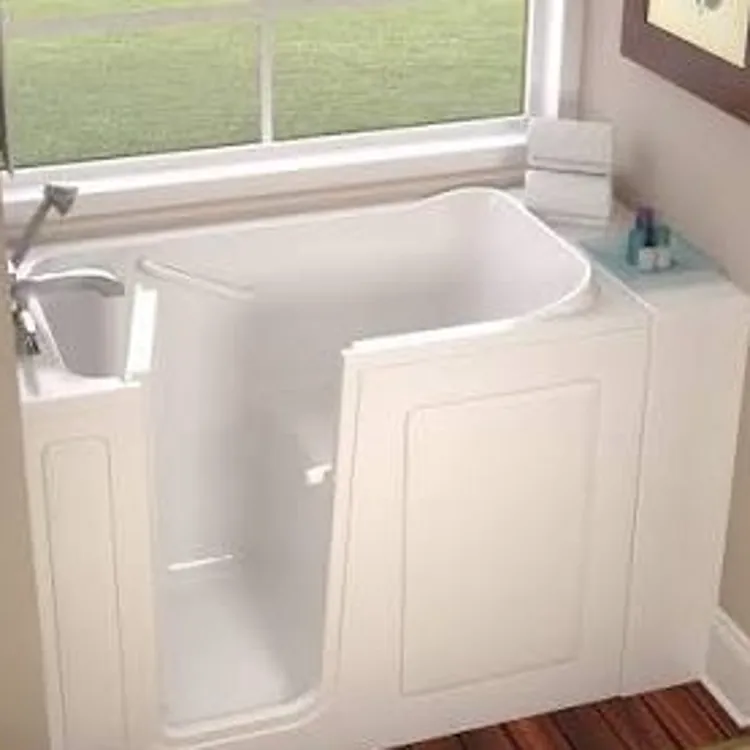
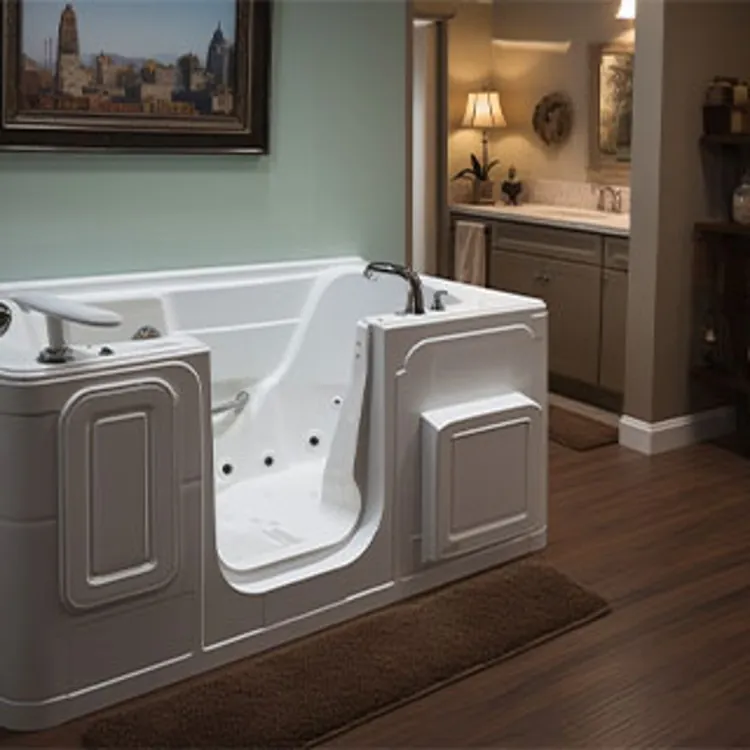
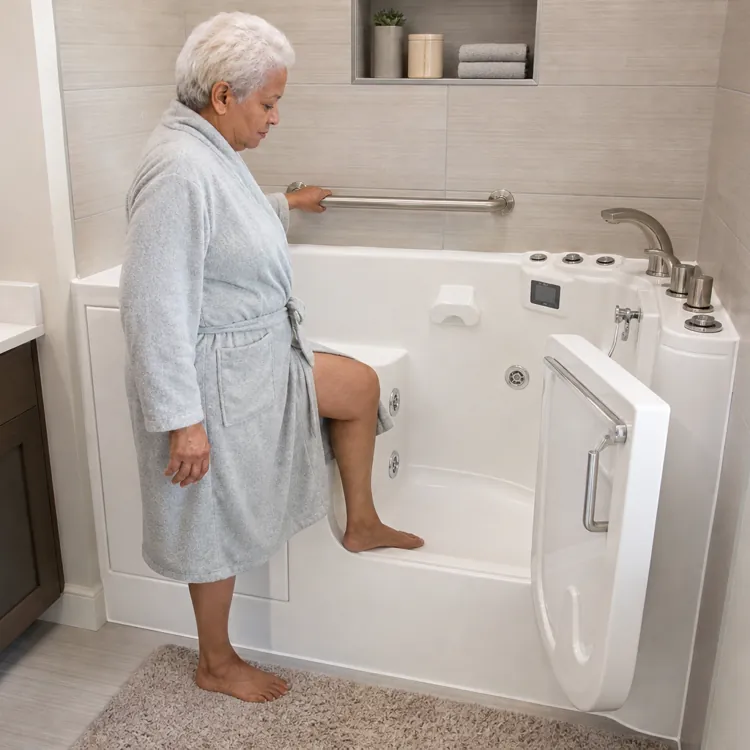
Both walk-in tub types feature a low-threshold door and a built-in seat for safe, accessible bathing. But a jetted model works on your body while you soak, not just around it.
How jetted walk-in tubs work
The jets themselves come in a few forms, each delivering a different kind of relief:
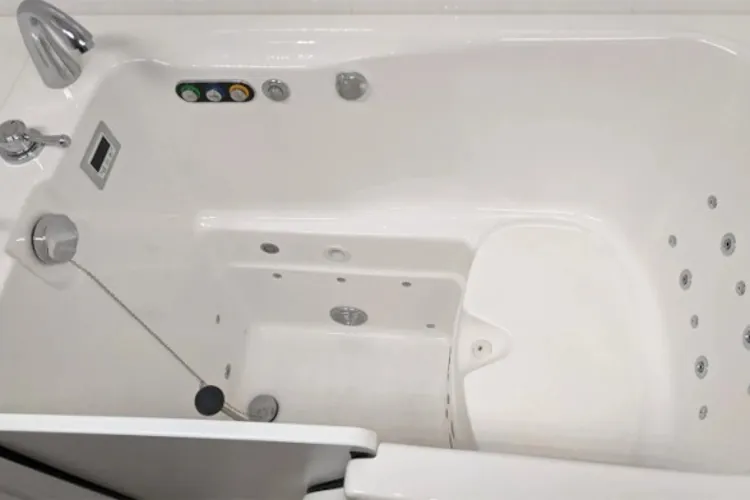
- Hydro jets push pressurized water through adjustable nozzles. They target specific areas, such as the lower back, hips and legs, with deep, focused pressure.
- Air jets push warm air through small openings along the tub’s surface, creating a gentler, full-body bubbling sensation that promotes circulation without intense pressure.
- Combination systems use both, giving you the option to switch between deep-tissue and light massage in the same session.
Many models also include inline heaters to maintain a steady water temperature throughout the soak. It’s a small but meaningful detail when you’re in the tub long enough to feel the benefits.
Who benefits most from jets?
Jetted walk-in tubs are often a good fit for seniors managing fall risk, people with arthritis, mobility limitations or chronic pain conditions. The combination of safe entry and active hydrotherapy means you don’t have to choose between independence and relief. You get both in one fixture.
Types of walk-in tubs with jets
Most jetted walk-in tubs offer water jets, air jets or both. But the technology has evolved beyond basic on/off controls. “Higher-end models may include advanced features like air jets that work in programmed patterns,” said Gelfusa. “A programmable system can transform your tub experience from simple bathing into true therapy — similar to a massage chair, but with a much gentler, lower-impact on the body.”
Compare jet types
| Jet type | Sensation | Best for | Maintenance | Noise level |
|---|---|---|---|---|
| Air jets | Soft, fizzy, full-body | Relaxation, circulation | Low | Higher (blower) |
| Hydro jets | Firm, targeted pressure | Muscle pain, deep tissue | Moderate | Lower |
| Combination systems | Both air-jet and hydro-jet sensations; independently controlled | Versatility | Moderate | Varies |
| Foot jets | Focused, reflexology-style | Feet, ankles, lower legs | Low to moderate | Low |
Expert jet advice
“One of the most talked-about features is the foot jets,” Gelfusa noted. “These jets are on a footrest, delivering a strong yet therapeutic massage.” The feet contain over 200,000 nerve endings, and the concentrated, reflexology-style pressure these jets deliver can ease tension that builds up from a full day on your feet. On some models, a dedicated pump powers them independently from the main jet system.
Jets in a tub offer a safe soak and therapeutic relief
As far as maintenance goes, air jets are easier to care for because they don’t circulate water through the pipes. Hydro jet systems need a full flush every three to four months with a specialized cleaner to remove soap residue, body oils and mineral buildup. A white vinegar soak works well for mineral deposits on the jet faces of either system.
Features of walk-in tubs with jets
Not everything on a spec sheet affects safety or therapeutic value equally, so it helps to know what to focus on before you choose a walk-in tub. Here are the features to prioritize.
- Low threshold entry (three to seven inches), so getting in and out doesn’t require much leg lifting
- Anti-slip flooring and seating to reduce fall risk during entry and exit
- Quick-drain system that clears the tub in 90 seconds or less
- Adjustable jet controls with zone settings, pressure dials and directional nozzles for targeted relief on the back, hips or feet
- Heated seat and backrest to keep you warm while the tub fills and drains
- Inline water heater to keep the water at a comfortable temperature from start to finish
- Chromotherapy lighting (color-changing LEDs) that can help with mood and relaxation
- Handheld shower wand so you can wash and rinse without standing up
- Grab bars for stability during entry, exit and the transition from sitting to standing
What to know about safety features
Grab bars warrant extra attention because “they’re only as good as their mounting,” J. Brewer, director of franchise development at Same Day Grab Bars in Melbourne Beach, Florida, said. He recommended professionally installed bars using fastening hardware over suction cup or clamp options, which don’t offer reliable support.
The Americans with Disabilities Act (ADA) guidelines offer a solid starting point for grab bar placement and sizing. But a good installer will also watch how you move through the space before deciding where bars go.
Pro tip
UL certification means the electrical components have passed safety testing. An International Association of Plumbing and Mechanical Officials (IAPMO) listing means the plumbing meets code. Both are worth confirming before signing anything.
Jetted walk-in tub costs and value
A jetted walk-in tub is a big investment, and the tub’s sticker price is just the starting point. According to the National Council on Aging, equipment costs range from $5,000 to $8,000 for a standard jetted model, while combination systems with air and water jets can cost $8,000 to $12,000 or more. Bariatric and luxury models can get up to $20,000 before installation begins.
Breakdown of what to budget for
| Cost item | Typical range | What affects price | Notes |
|---|---|---|---|
| Tub with jets | $4,000 to $12,000+ | Jet type, features, material, size | Acrylic over stainless steel holds up best |
| Installation | $700 to $1,500+ | Bathroom layout, labor rates | Complex projects can reach $10,000 |
| Plumbing and electrical | $250 to $2,000+ | Existing setup, scope of work | Jetted tubs require a dedicated 20- to 30-amp GFI circuit |
| Annual maintenance | $100 to $500 per year | Jet type, usage frequency | Covers pump, heater and seal upkeep |
Jetted walk-in tub cost factors
Installation costs often catch buyers off guard. Beyond basic labor, you may need plumbing modifications, electrical upgrades and floor reinforcement to handle the added weight of a full tub. Removing the old tub and delivering the new one adds another $250 to $1,000 to your walk-in tub costs.
A few financing and assistance options can help offset the cost:
- Medicare usually doesn’t cover walk-in tubs, though some Medicare Advantage (Part C) plans may offer partial coverage if a physician says it’s medically necessary
- Medicaid coverage differs by state and individual circumstances
- Manufacturer and contractor financing (many offer low- or no-interest payment plans)
Pro tip
For warranties, look for at least 10 years of coverage for the shell and one to five years for pumps, jets and electrical components. Mechanical parts are where most long-term costs often show up.
FAQ
What are the disadvantages of a jetted bathtub?
The main disadvantages of a jetted bathtub are high maintenance, added cost and noise. The internal pipes need regular flushing to prevent mold, the motors are loud and bath oils or bubble bath can damage the pump. Energy and water bills also run higher than with a standard tub.
Are air jets or water jets better in a walk-in tub?
Neither is universally “better” — it depends on what you need. Water jets deliver strong, targeted pressure good for muscle pain, while air jets produce a gentler, full-body sensation better suited for relaxation. Combination tubs give you both.
Do walk-in tubs with jets use more water?
Yes, walk-in tubs with jets do use more water — typically 40 to 80 gallons per fill compared to 30 to 50 gallons for a standard tub. Their deeper basins account for most of the difference.
» RELATED: What size water heater do you need for a walk-in tub?
How long does it take to fill a walk-in tub with jets?
Most walk-in tubs with jets take five to 10 minutes to fill, though rapid-fill faucets can cut that to three to four minutes. Your home’s water pressure and pipe size affect the final time.
Article sources
ConsumerAffairs writers primarily rely on government data, industry experts and original research from other reputable publications to inform their work. Specific sources for this article include:
- Centers for Disease Control and Prevention, "Nonfatal Bathroom Injuries Among Persons Aged ≥15 Years." Accessed April 25, 2026.
- National Council on Aging, Inc., "The Best Walk-In Tub Shower Combos of 2026: Reviewed." Accessed April 25, 2026.
- United States Access Board, "Chapter 6: Bathing Rooms." Accessed April 25, 2026.
- National Council on Aging, Inc., "Does Medicare Cover Walk-In Tubs?" Accessed April 25, 2026.