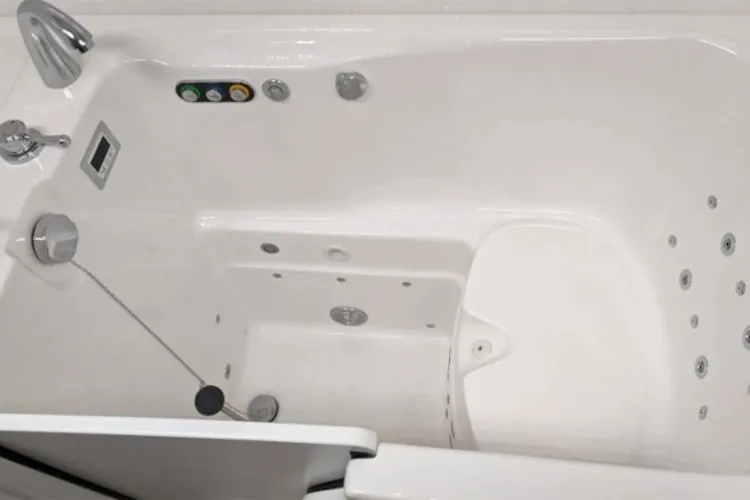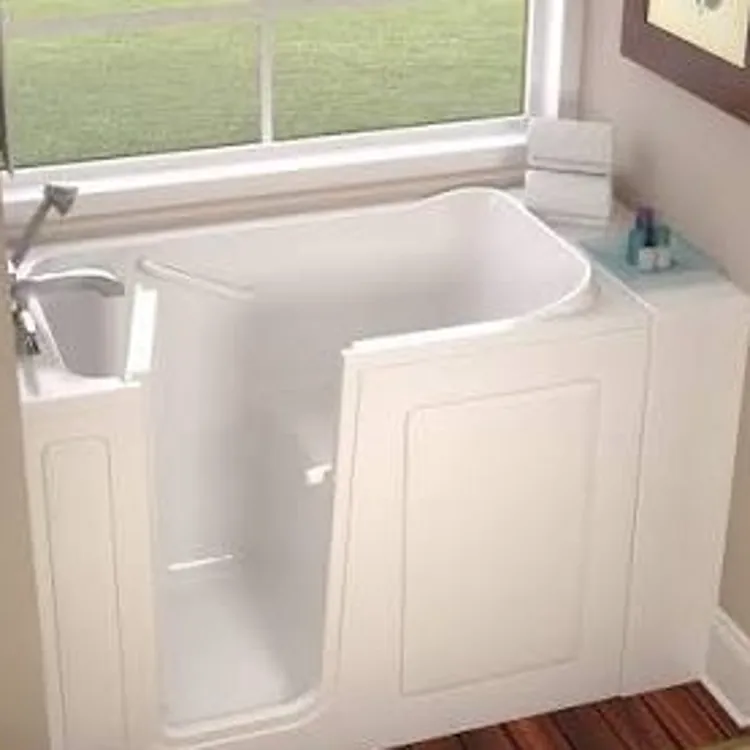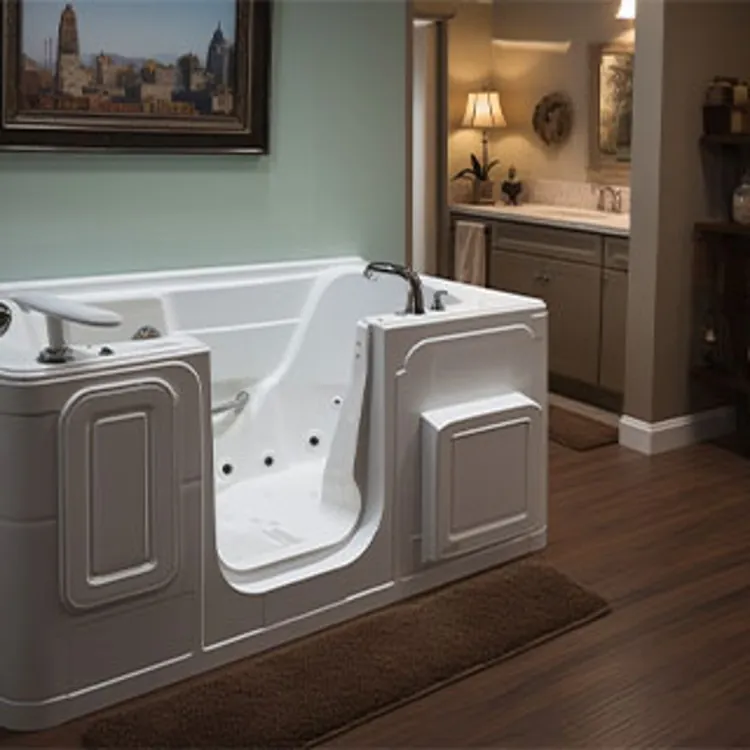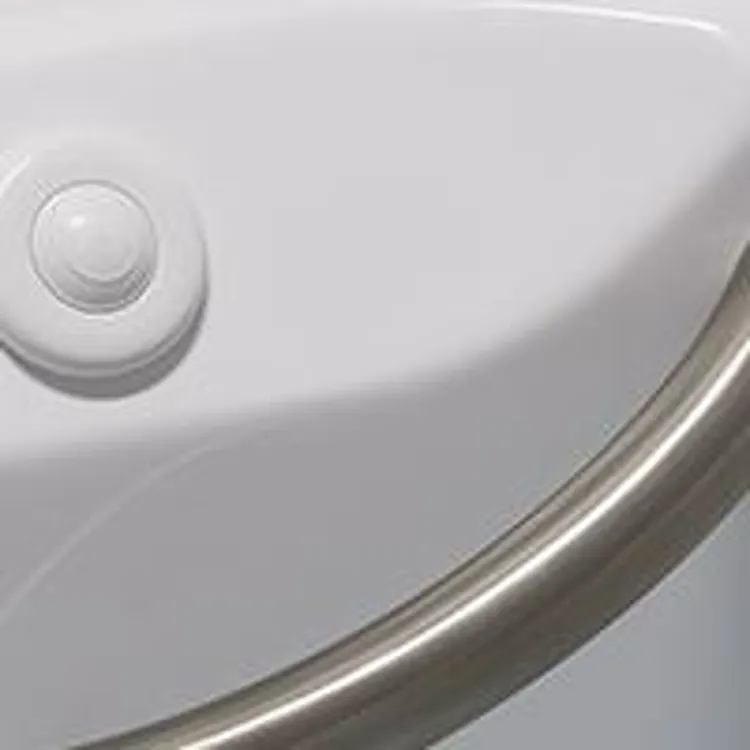


Compare our top picks for ADA-compliant walk-in tubs
| Company | Customer rating | Our pick for | Step-in height | Wheelchair accessibility | Financing offered | |
|---|---|---|---|---|---|---|
 Safe Step Walk-In Tub | Get Started | 4.8 | Best overall | 4 inches |  | |
 Boca Walk-In Tubs | Learn More | 4.3 | Low step-in height | 2 inches | | |
 Kohler Walk-In Bath | Get Started | 4.5 | Warranty coverage | 3 inches | | |
 American Standard Walk-in Baths | Get Started | 3.6 | Customer service | 3 inches | | |
Safe Step Walk-In Tub

- Grab bars included
- Yes
- Warranty
- Lifetime on tub, including defects; two years on caulking
- Starting price
- $3,000
- Water capacity
- 50 to 70 gallons
Boca Walk-In Tubs

- Grab bars included
- Yes
- Warranty
- Lifetime on all parts and components
- Starting price
- $7,000
- Water capacity
- 40 to 80 gallons
Kohler Walk-In Bath

- Grab bars included
- Yes
- Warranty
- Limited lifetime on tub and all components
- Starting price
- Varies
- Water capacity
- 50 gallons
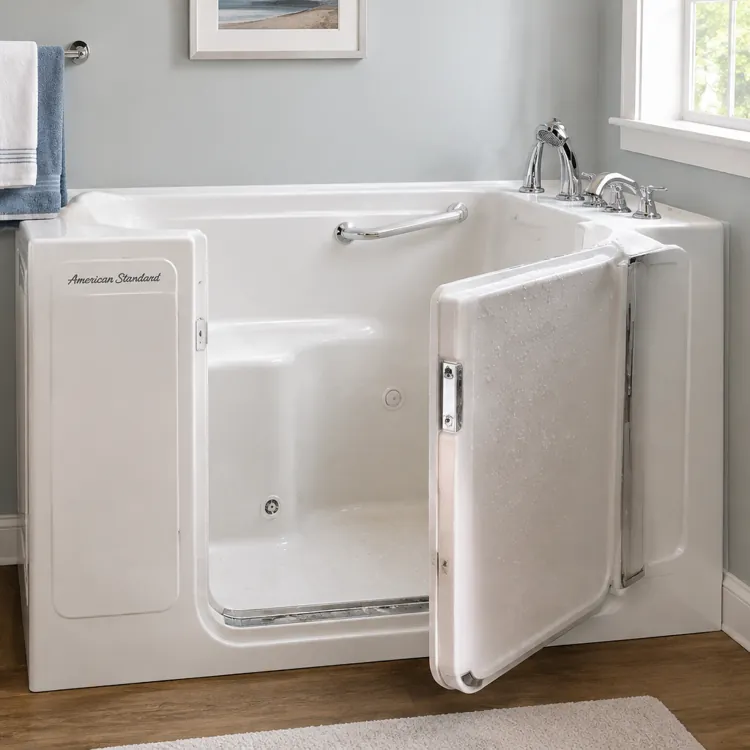
American Standard Walk-in Baths

- Grab bars included
- Yes
- Warranty
- 5 to 15 years; lifetime on door seal
- Starting price
- $4,462
- Water capacity
- 45 to 80 gallons
Methodology: How we chose the best ADA-compliant walk-in tubs
The ConsumerAffairs Research Team compared ADA-compliant walk-in tub companies using verified customer reviews, product details and company policies. To qualify, companies needed verified reviews submitted between Sept. 1, 2019, and Aug. 31, 2026. We scored each brand in three areas:
- Customer experience: Satisfaction with installation and setup, customer service and price
- Tub performance: Satisfaction with features and fill or drain time
- Accessibility and warranty: Step-in height and warranty coverage
Each company received a score from zero to 10 for all metrics. The top performer earned a 10, and the other companies were scored relative to it. We used different weightings for each award. For example, the customer service award focused more on customer service and installation ratings, while the low step-in height award emphasized step-in height.
ADA-Compliant Walk-In Tub Buyers Guide
Picking the best ADA-compliant walk-in tub isn’t as simple as checking off a list of features. Tubs marketed as ADA-compliant vary widely. It’s important to understand what ADA-compliant means in marketing and what features actually contribute to better accessibility and safety for you.
A focus on accessibility features and safety measures is more important than looking for an ADA label. Before buying a walk-in tub for yourself or a family member, consider the variety of accessibility features offered, tub performance and customer reviews to select the best model for your particular set of needs.
Key insights
ADA rules do not apply to private homes, but walk-in tub manufacturers often voluntarily comply.
Jump to insightADA-compliant tubs typically cost the same as walk-in tubs with fewer accessibility features.
Jump to insightThe term “ADA-compliant” is often a marketing term rather than a guaranteed list of features.
Jump to insightHow to choose an ADA-compliant walk-in tub
Since private homes aren’t covered by ADA rules, there’s no single standard for an ADA-compliant tub to use as a guideline. Manufacturers may include a few or many accessibility features under the banner of ADA compliance.
Instead, when shopping for an accessible walk-in tub, it’s important to look at safety and accessibility features with your specific needs in mind. Before choosing your walk-in tub, make a list of features important to you and note which are nonnegotiable, so you have an easy list to refer to when shopping.
For example, a senior aging in place may need different features than an amputee or a wheelchair user. Also, keep in mind that your bathroom size and layout play a part in accessibility. You’ll need space outside the tub for safe entry and exit, in addition to the accessible features inside the tub.
Accessibility features
Look for features that help you safely enter, bathe in and exit the walk-in tub.
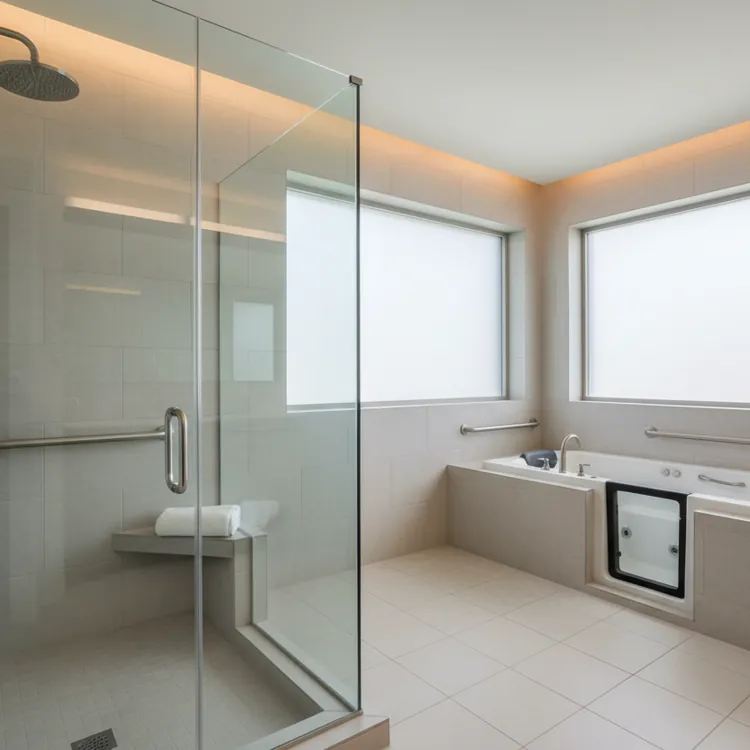
- Low step-in threshold: Some walk-in tubs have step-in thresholds of 6 inches; however, a 2- to 4-inch step-in, which most manufacturers offer, provides easier access. For roll-in access, a roll-in shower is typically recommended as an alternative.
- Nonslip floor: Nonslip floor surfaces may be molded textures into the bathtub itself, a coating on top of the flooring surface or a combination of the two.
- Contoured seat: For the built-in seat, height is typically where accessibility comes in. Most manufacturers follow ADA guidelines for public-use shower seating of 17 to 19 inches for easier transfer from wheelchairs.
- Entry door: Entry doors that are wider, L-shaped and swing outward are typically the most common accessible door options for walk-in tubs. Visiting a showroom where you can try out various door types is recommended to find the right doorway for your needs.
- Grab bar: For walk-in tubs, look for handrails integrated into the body of the tub. If you need additional bars placed in your bathroom, be sure they are securely attached to studs, not merely drywall.
- Handheld shower wands: Handheld shower wands add more bathing independence. However, these are typically best when paired with shower enclosures or other wall protection around the walk-in tub.
Limitations or risks
Even though walk-in tubs are a good option for reducing fall risks, safety equipment is not a guaranteed preventive measure. Seniors are considered at high risk of death from falls, and over 3 million are treated for fall injuries in ERs each year.
Some of the biggest limits of ADA-style accessible walk-in tubs are water usage, the cost of home renovations to install the tub and time spent waiting for it to fill or drain.
Most walk-in tubs, even extra-wide bariatric walk-in bathtubs, are designed to fit through standard home doorways. However, if your home is older, you may need to enlarge your exterior and interior doorways for a tub to be delivered.
Bathroom size may be an issue as well, with outward-swing doors on a tub taking extra space and inward-swing doors posing mobility challenges.
Always check the door direction and seat comfort in person before buying. An inward-swinging door can trap someone with mobility challenges inside, while an outward-swinging door requires sufficient floor space to open properly.”
Similarly, walk-in tubs take a lot of water, with some deep-soaking walk-in tubs using 90 gallons or more. Depending on the walk-in tub type and water capacity, you may need to reinforce your floors, upgrade plumbing to accommodate quick drain features or install a larger water heater.
Cost of ADA-compliant walk-in tubs
Accessible walk-in tubs can cost from $3,000 to $30,000 or more, depending on the style and extra features you choose. Most manufacturers offer at least some ADA-type features on every type of walk-in tub, and, in many cases, home renovation costs raise the total more than the tub or installation itself.
Most manufacturers include grab bars, anti-slip surfaces, ADA-height seats and low step-in thresholds as part of every unit. However, accessibility and independence features such as L-shaped doors and handheld shower wands often cost extra.
Comfort and therapeutic features such as hydrotherapy jets, heated seats and backrests, anti-scald faucets, built-in heaters with water recirculation and air bubblers typically add costs to walk-in tubs as well.
Because walk-in tubs are not considered durable medical equipment, they are not covered by Medicare. However, in some states, aging-in-place programs or Medicaid Home and Community Based (HCBS) Waivers may help with costs if the tub is deemed medically necessary or vital to keeping a senior in their own home instead of a group facility.
Pros and cons of ADA-compliant walk-in tubs
ADA-style safety and accessibility features in walk-in tubs typically offer extra fall protection, independence and comfort. However, because ADA rules don’t apply to private home items, features aren’t included uniformly. Some manufacturers include only a single ADA feature, such as a 17- to 19-inch seat height, and use ADA-compliant as a marketing term.
Because of that lack of standards, it’s important to carefully compare which ADA features are included from multiple manufacturers to find the right mix for your needs. That, along with weighing other walk-in tub pros and cons, is vital to choosing the best walk-in tub for your home.
Pros
- Reduces fall risk
- Better accessibility for those with limited mobility
- Improves feasibility of aging at home
- May increase home value
Cons
- No uniform ADA-compliant private-use walk-in tub standard
- High water usage
- Home renovations frequently required
- No insurance coverage to help with costs
FAQ
What makes a walk-in tub ADA compliant?
There is no legal standard for ADA compliance in a private home. Manufacturers often list a walk-in tub as ADA compliant if at least one commercial ADA feature is included.
Is a walk-in tub covered by Medicare or Medicaid?
No, walk-in tubs are not durable medical equipment (DME) and are typically not covered by Medicare or Medicaid. However, some state Medicaid programs for aging in place or Home and Community Based Services (HCBS) Waiver programs may fund walk-in tubs when medically necessary.
What are the negatives of a walk-in tub?
The biggest negatives of a walk-in tub are typically having to wait in the tub while it fills/drains, high water usage and home renovations needed to support the tub.
What are the ADA requirements for a walk-in shower?
ADA requirements only apply to publicly used walk-in showers. However, many manufacturers voluntarily comply with at least some ADA requirements, such as grab bars and minimum sizes (30” by 60”).
What seat height is required for an ADA-compliant walk-in tub?
ADA sets seat heights between 17 and 19 inches from the floor.
Article sources
ConsumerAffairs writers primarily rely on government data, industry experts and original research from other reputable publications to inform their work. Specific sources for this guide include:
- ADA.gov, “Introduction to the Americans with Disabilities Act.” Accessed Sept. 20, 2026.
- AccessibilityChecker.org, “ADA Requirements for Homes: Standards and Compliance.” Accessed Sept. 20, 2026.
- CDC, “Older Adults Fall Data.” Accessed Sept. 21, 2026.
- U.S. Access Board, “Guide to the ADA Accessibility Standards.” Accessed Sept. 20, 2026.
- National Library of Medicine, “Efficacy of Installation of Temporary Bathing Transfer Aids by Older Adults.” Accessed Sept. 23, 2026.
- Ready.gov, “Preventing Falls at Home.” Accessed Sept. 24, 2026.