

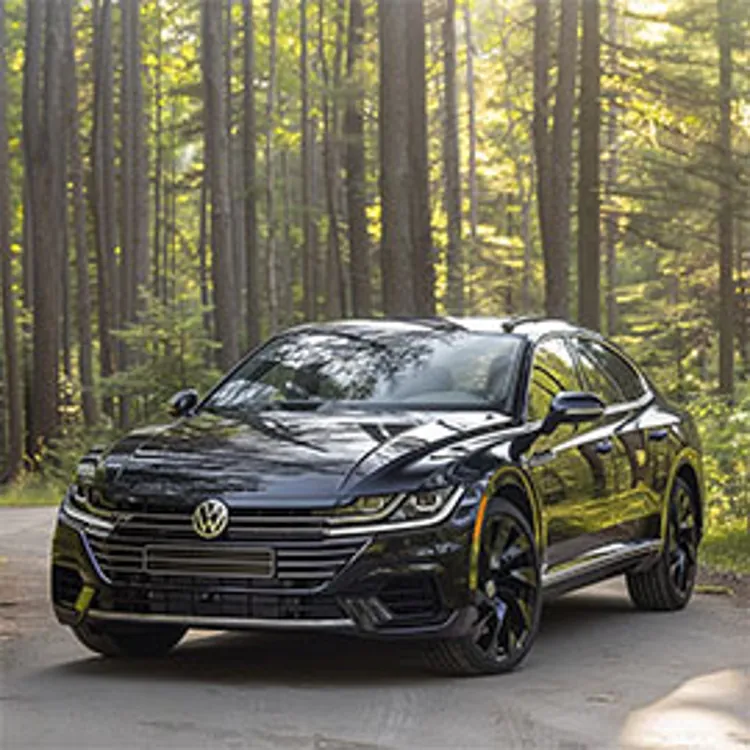
Volkswagen certified pre-owned program
In order to qualify as certified pre-owned, a used VW must be under six model years old, have fewer than 75,000 miles and pass a dealership inspection covering more than 100 points. At the time of publishing, model year 2020 and newer VWs can qualify.
Certified pre-owned VWs come with a 2-year/24,000-mile limited bumper-to-bumper warranty. The CPO warranty starts once the car’s new vehicle limited warranty expires or on the CPO sale date, whichever is later. For context, all new VWs come with a 4-year/50,000-mile bumper-to-bumper limited warranty, which covers virtually every part of the car except routine wear-and-tear items or maintenance.
CPO electric vehicles from VW also include an 8-year/100,000-mile high-voltage battery warranty, measured from the vehicle's original in-service date, which complies with federal regulations for EV battery warranties. This protects your car's battery against manufacturing defects and ensures capacity of at least 70%.
This coverage applies to CPO VWs purchased on or after April 1, 2026. Prior to that date, VW had a tiered CPO warranty system, with coverage ranging from 1 year/12,000 miles to 3 years/36,000 miles, depending on the model year and vehicle type.
CPO Volkswagen benefits
In addition to the warranty, CPO Volkswagens come with the following benefits:
- 24/7 roadside assistance: This includes two years of assistance, such as towing to the nearest VW dealership, flat-tire service and battery jump starts
- SiriusXM trial: All CPO vehicles qualify for a three-month subscription to SiriusXM
- Trip interruption coverage: Includes reimbursement for up to $500 worth of meals, lodging and alternate transportation if your VW breaks down over 100 miles from home
How good is Volkswagen’s CPO warranty?
CPO Volkswagens come with a 2-year/24,000-mile limited bumper-to-bumper warranty, which is pretty rare for a nonluxury brand. But VWs don’t come with a separate CPO powertrain warranty, which other automakers’ CPO vehicles come with.
The CPO limited warranty covers any problems with the vehicle that are due to material or workmanship issues. This means that it does not cover damage caused by any other factors, such as accidents, unauthorized repairs or parts, lack of maintenance, misuse or modification.
Accessories, wear-and-tear parts and other specified components are not covered, including tires, paint, glass, communication systems and alarm systems. The warranty also doesn’t cover maintenance costs; cosmetic damage; or vehicles that have been used commercially, driven in competitive events or had their odometers tampered with. These are all fairly standard exclusions.
» MORE: Manufacturer vs. extended warranty
Volkswagen’s CPO warranty vs. competitors
The table below shows how Volkswagen’s certified pre-owned warranties compare to other manufacturers’ CPO warranties.
| Make | Additional CPO warranty coverage |
|---|---|
| Volkswagen | 2-year/24,000-mile bumper-to-bumper warranty* |
| Ford | 1-year/12,000-mile bumper-to-bumper warranty*; 7-year/100,000-mile powertrain warranty** on Gold Certified vehicles |
| Chevrolet | 1-year/12,000-mile bumper-to-bumper warranty* on CarBravo vehicles |
| Hyundai | 10-year/10,000-mile powertrain warranty** |
| Kia | 1-year/12,000-mile bumper-to-bumper warranty*; 10-year/100,000-mile powertrain warranty** |
| Mazda | 12-month/12,000-mile bumper-to-bumper warranty*; 7-year/100,000-mile powertrain warranty** |
| Nissan | 7-year/100,000-mile limited warranty** |
» MORE:Best CPO warranties
How much does a certified pre-owned Volkswagen cost?
A certified pre-owned Volkswagen typically costs around $20,000 to $40,000, according to Volkswagen’s website, though you may see prices that are lower or higher than that depending on where you live. CPO VW costs generally depend on where the vehicle is located, along with the model, year and mileage.
Volkswagen dealers tend to charge a couple of thousand more for CPO VWs than non-certified vehicles of the same age and mileage, according to our research.
Is a CPO Volkswagen worth it?
A CPO VW might be worth it if the added cost is cheaper than getting a pre-purchase inspection and extended warranty coverage for a standard used model.
Generally, a CPO Volkswagen is more likely to be worth it if:
You place a lot of value on peace of mind
The vehicle you’re considering has below-average reliability
The extra warranty and benefits justify the upcharge
» MORE: When does an extended warranty make sense?
Reliability
In J.D. Power’s 2026 Vehicle Dependability Study, Volkswagen ranked last out of 28 brands for dependability. Volkswagen earned a score of 301 problems per 100 vehicles (PP100), which is much worse than the study average of 204 PP100.
In comparison, RepairPal gave Volkswagen a score of 3.5 out of 5 stars, which is an above-average rating. RepairPal reports that Volkswagens tend to have slightly higher than average annual repair and maintenance costs than the average vehicle, along with slightly more frequent repairs.
Do you need an extended warranty for your Volkswagen?
CPO Volkswagens don’t come with extended powertrain coverage, unlike some other automakers’ CPO vehicles, although the powertrain parts are covered under the limited bumper-to-bumper CPO warranty. If you’re looking for peace of mind or you’re worried about future repair costs, it might make sense to get an extended warranty for your CPO VW.
» MORE: Learn more about powertrain warranties
Volkswagen extended warranty
Volkswagen’s extended warranty, Volkswagen Drive Easy Vehicle Service Protection, offers extended warranty coverage for up to 10 years or up to 150,000 miles. It comes in three plan options:
Powertrain: Covers your vehicle’s engine, transmission, drive axles and a few other components
Gold: Includes Powertrain coverage plus front and rear suspension, climate control, fuel, electrical and some other components
Platinum: Covers nearly all parts of your vehicle
VW extended warranties also come with benefits like roadside assistance, towing reimbursement, rental car reimbursement and trip interruption coverage.
Third-party extended warranty
Alternatively, third-party extended warranty companies may offer cheaper plans than VW. Before buying a CPO VW, compare the costs of buying a CPO vehicle with buying a used VW and a separate extended warranty.
» RELATED: Certified pre-owned vs. extended warranty



FAQ
Can you transfer a CPO VW warranty?
Yes, you can transfer a CPO VW warranty to a new, private owner. There’s no transfer fee and the new owner must initiate the transfer request.
How much is the deductible for a Volkswagen CPO?
For each covered issue, you’ll pay $50 per visit to the Volkswagen dealership.
What are the disadvantages of a certified pre-owned vehicle?
The biggest downside to buying a CPO versus a non-certified used vehicle is generally the cost since CPO vehicles tend to be more expensive than used vehicles. Another downside is that just because a CPO vehicle is certified, that doesn’t mean that something won’t go wrong after you buy the vehicle.
How reliable are Volkswagens?
Volkswagens have mixed reliability, according to data from RepairPal and J.D. Power. RepairPal ranks Volkswagen No. 12 out of 32 car brands for reliability, while J.D. Power ranks VW last out of 30 car brands for dependability.
What’s the difference between a CPO warranty and an extended warranty?
A CPO warranty is for a certified pre-owned vehicle only, while new, used and CPO vehicles can typically all qualify for an extended warranty, though there might be age or mileage requirements. CPO and extended warranties may offer similar coverage levels, such as powertrain or bumper-to-bumper coverage. CPO warranties are typically much shorter than extended warranties, and they typically have more strict eligibility qualifications.
Article sources
ConsumerAffairs writers primarily rely on government data, industry experts and original research from other reputable publications to inform their work. Specific sources for this article include:
J.D. Power, “Vehicle Software Updates Become More Routine, but Fall Short on Perceived Benefit, JD Power Finds.” Accessed Sept. 12, 2026.
RepairPal, “Volkswagen Reliability Rating.” Accessed Sept. 12, 2026.
Volkswagen of America, "Certified Pre-Owned." Accessed Sept. 12, 2026.
Volkswagen of America, "Certified Pre-Owned Benefits." Accessed Sept. 12, 2026.
Volkswagen of America, "Protect Your Vehicle." Accessed Sept. 12, 2026.