

Scheduled car maintenance costs
Scheduled maintenance and repair costs vary by make, model and year. For instance, a Toyota Corolla will have cheaper maintenance costs than a Mercedes-Benz AMG S 63. Other factors that affect your car maintenance costs include:
Driving habits, such as how frequently or aggressively you drive
The climate where you live
Where you drive your car, such as city versus highway driving
The best way to keep repair costs down is to keep up with routine maintenance. The table below shows a list of general maintenance items, how often you should schedule them and how much they typically cost.
| Service | Typical maintenance schedule | Average cost* |
|---|---|---|
| Oil change | Every 7,500 to 10,000 miles or every year, whichever comes first | $160 to $188 |
| Tire balance and rotation | Every 7,500 to 10,000 miles or every year, whichever comes first | $109 to $160 |
| Windshield wiper replacement | Every year | $101 to $123 |
| Engine air filter change | Every year | $79 to $99 |
| Alignment | Every 5,000 to 10,000 miles or every year, whichever comes first | $186 to $273 |
| Cabin air filter change | Every 15,000 to 20,000 miles or every 2 years, whichever comes first | $91 to $114 |
| Brake pad replacement | Every 30,000 to 50,000 miles | $335 to $394 |
| Rotor replacement | Every 30,000 to 70,000 miles | $574 to $698 |
| Battery replacement | Every 4 to 5 years | $456 to $493 |
Keep in mind that this is a general list. Every vehicle will come with its own recommended maintenance schedule that you can find in your owner's manual.
New vs. used car annual maintenance costs
Annual maintenance for new cars typically costs less during the first several years of ownership, thanks to factory warranties and complimentary maintenance plans. Used cars often require more maintenance, but their lower purchase price helps to offset upkeep costs.
Example: Mazda CX-5 maintenance schedule
The table below shows selected items from the recommended maintenance schedule for a Mazda CX-5.
| Service | Standard schedule |
|---|---|
| Tire rotation | Every 7,500 miles |
| Change oil and filter | Every 7,500 miles |
| Replace cabin air filter | Every 2 years or 15,000 miles, whichever comes first |
| Inspect drive belts | Every 3 years or 22,500 miles, whichever comes first |
| Inspect fuel lines and hoses | Every 2 years or 15,000 miles, whichever comes first |
| Inspect front and rear suspension, ball joints and wheel bearing axial play | Every 2 years or 15,000 miles, whichever comes first |
| Replace engine coolant | Replace first at 10 years or 120,000 miles, whichever comes first, then every 5 years or 60,000 miles after that |
| Replace spark plugs | Every 40,000 or 75,000 miles, depending on the model |
Example: Tesla Model 3 maintenance schedule
Electric vehicles (EVs) tend to cost less to maintain than gas-powered vehicles because they don’t require oil changes, exhaust or timing belt replacements and have less brake pad wear due to regenerative braking.
The table below shows the recommended maintenance schedule for Tesla Model 3 vehicles.
| Service | Standard schedule |
|---|---|
| Replace wiper blades | Every year |
| Clean and lubricate brake calipers | Every year or every 12,500 miles, whichever comes first, if you live in an area where roads are salted in the winter |
| Rotate tires | Every 6,250 miles or when the tread depth is 1.5 millimeters or greater, whichever comes first |
| Cabin air filter replacement | Every 2 years |
| Check brake fluid, replace if necessary | Every 4 years |
Typical car repair costs
The main difference between maintenance and repairs is that maintenance items are routine, expected and predictable. In contrast, repairs are random and unpredictable. Understanding potential repair costs is crucial for effective budgeting, as it helps car owners prepare for both expected and unexpected expenses.
The table below shows how much certain repairs might cost you as your car ages.
| Service | Average cost* |
|---|---|
| Air bag control module replacement | $865 to $939 |
| Air conditioner compressor replacement | $1,081 to $1,463 |
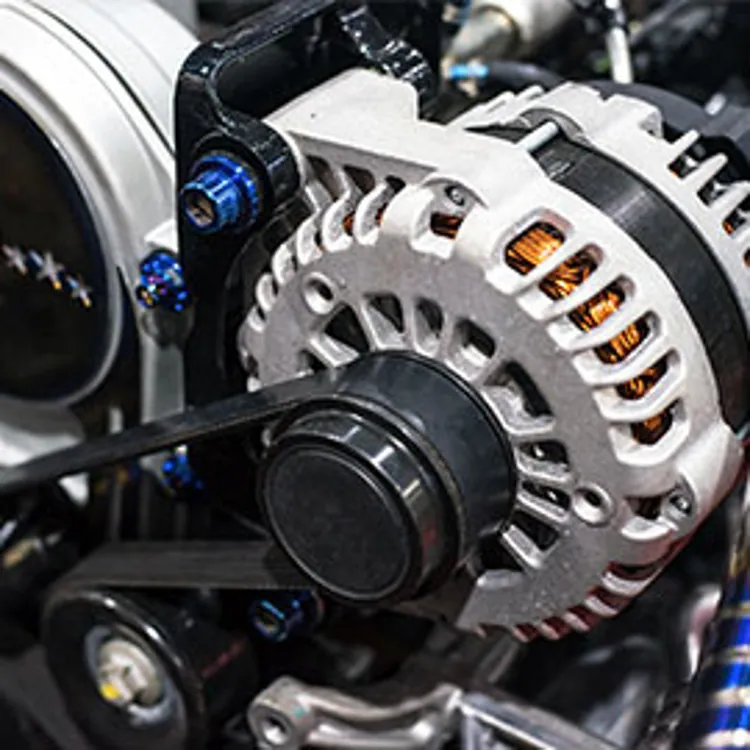
| Alternator replacement | $809 to $1,088 |
| Axle shaft replacement | $1,010 to $1,132 |
| Catalytic converter replacement | $2,280 to $2,480 |
| Engine mount replacement | $643 to $798 |
| Fuel pump replacement | $1,344 to $1,513 |
| Head gasket replacement | $2,572 to $3,386 |
| Ignition coil replacement | $238 to $320 |
| Oxygen sensor replacement | $440 to $523 |
| Radiator replacement | $1,368 to $1,550 |
| Transfer case replacement | $3,244 to $3,542 |
| Transmission replacement | $6,238 to $6,764 |
» MORE: Most expensive car repairs
Annual maintenance and repair costs by brand
Annual maintenance and repair costs vary by car brand, parts availability, labor rates and changes in vehicle reliability over time. The table below shows average annual repair and maintenance costs for a variety of car brands, according to RepairPal.
| Brand | Average maintenance and repair cost per year* |
|---|---|
| Acura | $501 |
| Audi | $987 |
| BMW | $968 |
| Buick | $608 |
| Cadillac | $783 |
| Chevrolet | $649 |
| Chrysler | $608 |
| Dodge | $634 |
| Ford | $775 |
| Genesis | $524 |
| Honda | $428 |
| Hyundai | $468 |
| Infiniti | $638 |
| Jaguar | $1,123 |
| Jeep | $634 |
| Kia | $474 |
| Land Rover | $1,174 |
| Lexus | $551 |
| Lincoln | $879 |
| Maserati | No data |
| Mazda | $462 |
| Mercedes-Benz | $908 |
| Mini | $854 |
| Mitsubishi | $535 |
| Nissan | $500 |
| Porsche | $1,192 |
| Ram | $858 |
| Subaru | $617 |
| Tesla | $832 |
| Toyota | $441 |
| Volkswagen | $676 |
| Volvo | $769 |
Car maintenance and repair costs over time
According to the U.S. Bureau of Labor Statistics, the average cost of car maintenance and repair has gone up about 60% from January 2019 to August 2026. The infographic below shows average vehicle maintenance and repair costs for urban consumers.
How to keep repair costs low
Here are some ways you can keep your out-of-pocket repair costs to a minimum, both before and after you buy the car.
Choose a reliable vehicle
Driving a vehicle that’s well known for its reliability can help keep ongoing repair costs to a minimum. For instance, in J.D. Power’s 2026 U.S. Vehicle Dependability Study, Lexus ranked the highest for dependability for the fourth year in a row. Buick, MINI, Cadillac and Chevrolet ranked second through fifth.
Get a pre-purchase inspection
If you’re buying a used vehicle, it’s best to have it inspected by a trained technician to ensure it doesn’t need repairs. This service is called a pre-purchase inspection (PPI), and it typically costs around $200. While paying for a PPI might cut into your overall budget, it’s cheaper than buying a car that urgently needs $11,000 in engine work.
Follow routine maintenance schedules
Every vehicle sold has a recommended maintenance schedule, which is typically listed in the owner’s manual. It’s best to follow this schedule if you want your vehicle to last long term, or if you don't want to void a factory or extended warranty.
“I once looked at a BMW with 34,000 miles on it and it already had a seized [broken] engine,” said Eric Hamilton, a pre-purchase inspection specialist. “The owner thought it had ‘lifetime fluids’ and had never changed the oil.”
Do small maintenance yourself
To keep costs down, it can help to do small maintenance tasks yourself, such as installing wiper blades, batteries or cabin air filters. With a little experience, you may eventually be able to repair small scratches or do an oil change.
Just be careful not to get in over your head with difficult repairs, or you may make your problems worse. Also, some do-it-yourself repairs or aftermarket modifications can void your warranty.
Get an extended car warranty
An extended auto warranty can help cover unexpected repair costs over time.
A bumper-to-bumper extended auto warranty typically costs around $1,000 per year of coverage, but one massive repair bill could make it worth the cost. For example, if your vehicle needs a transmission replacement — which averages $6,238 to $6,764 according to RepairPal — a three-year extended warranty at $1,000 per year would more than pay for itself in a single claim.
An extended warranty may not be necessary if you have a reliable car and enough savings to cover a large unexpected repair, but it may provide valuable assistance and peace of mind for drivers with unreliable vehicles or limited emergency funds.
FAQ
How much should I budget for car maintenance each year?
Budget around $400 to $2,000 for car maintenance each year, including unexpected repairs. The exact amount depends on your vehicle’s age, mileage, make and model, along with your driving habits.
How can I reduce car maintenance costs?
You can reduce car maintenance costs by choosing a reliable vehicle, following the recommended maintenance schedule by mileage, handling simple maintenance tasks yourself and performing regular inspections to catch potential issues early.
Does the climate I live in affect car maintenance costs?
Yes, the climate you live in will affect car maintenance costs since extreme temperatures can impact car components differently. For example, cold weather can affect a car’s battery, while hot weather can stress the cooling system. Rust is also more common in humid or snowy climates, which can increase maintenance needs.
How much does car maintenance cost per month?
Car maintenance costs about $34 to $167 a month, or about $400 to $2,000 per year. How much you’ll spend depends on factors like your car’s age, mileage, make and model.
Which car brands are the cheapest to maintain?
Honda, Hyundai and Kia are some of the cheapest car brands to maintain, according to RepairPal data. All three of these brands have annual average maintenance costs below $500.
Article sources
ConsumerAffairs writers primarily rely on government data, industry experts and original research from other reputable publications to inform their work. Specific sources for this article include:
RepairPal, “Car Repair by Make and Model.” Accessed Oct. 13, 2026.
Federal Reserve Bank of St. Louis, “Consumer Price Index for All Urban Consumers: Motor Vehicle Maintenance and Repair in U.S. City Average.” Accessed Oct. 13, 2026.
J.D. Power, “Vehicle Software Updates Become More Routine, but Fall Short on Perceived Benefit, JD Power Finds.” Accessed Oct. 13, 2026.