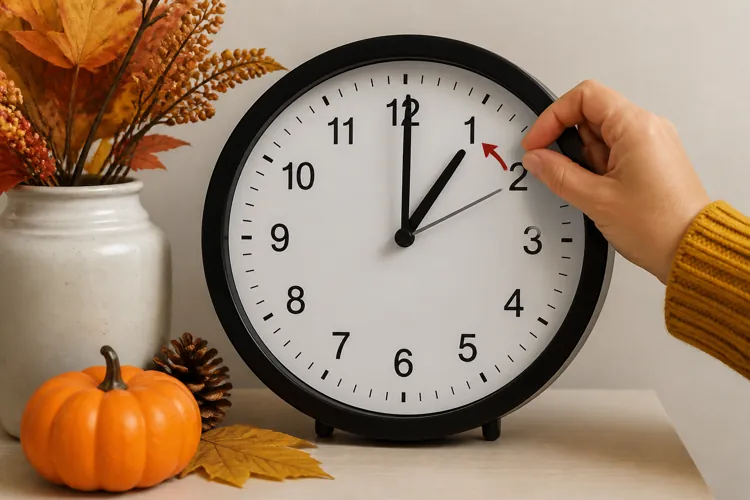

Americans will turn their clocks back one hour on Nov. 1 for the annual “fall back” time change.
Sleep experts are pushing Congress to make standard time permanent instead of continuing seasonal clock changes.
For now, consumers can make the transition easier by prioritizing sleep, morning sunlight, and a consistent schedule.
The annual “fall back” time change is almost here. On Sunday, Nov. 1, Americans will turn their clocks back one hour, beginning another stretch of standard time.
But sleep experts say they would like this to be the last time Americans have to make the switch.
The American Academy of Sleep Medicine and the Coalition for Permanent Standard Time are urging lawmakers to eliminate seasonal clock changes and keep the country on standard time year-round. Their position is that permanent standard time better matches the body's natural sleep-wake cycle and could support sleep, safety, and overall well-being.
“Changing the clocks can have consequences for sleep, health, and safety, yet we require millions of Americans to do it twice a year,” said Dr. Karin Johnson, sleep medicine physician and co-chair of the coalition’s steering committee. “This should be the last time we ever have to change our clocks. Lawmakers have an opportunity to end this cycle for good by choosing permanent standard time for brighter mornings, better sleep, and safer streets.”
Why sleep experts favor standard time
There are currently two different approaches being considered in Congress. The Sunshine Protection Act, H.R. 139, would make daylight saving time permanent. The Sunshine for Our Kids Act, H.R. 9638, would establish permanent standard time nationwide.
The sleep experts support the latter option because sunlight plays an important role in regulating the body's internal clock. Brighter mornings can help people wake up, stay alert, and maintain healthier sleep patterns.
Permanent daylight saving time, on the other hand, would mean darker winter mornings. According to the experts, losing that morning light could interfere with sleep, mood, and daytime functioning. The group also points to the country's previous experience with year-round daylight saving time, which was reversed after concerns about dark mornings and public safety.
What consumers can do this fall
Whatever lawmakers ultimately decide, consumers still have to deal with the Nov. 1 time change.
The American Academy of Sleep Medicine recommends getting at least seven hours of sleep in the days before and after the change. It also suggests gradually shifting bedtime later in the days leading up to the transition, along with other routines such as meals and exercise.
Once the clocks change, sticking to a consistent wake-up time can help. Getting outside for morning sunlight may also help reset the body's internal clock. Consumers should also be mindful of afternoon caffeine while adjusting, particularly if it could interfere with nighttime sleep.
Parents may want to give children and teenagers some extra time to adjust, while keeping their bedtime routines consistent.
"Americans are tired of changing their clocks,” Dr. Johnson added. “As policymakers consider ways to end this practice, we encourage them to follow the science. Permanent standard time offers the best alignment with the body’s internal clock, making it the healthiest choice for sleep, safety, and well-being. The benefits are especially important for our adolescents and teens, who are particularly sensitive to the loss of morning light, helping to reduce depression and improve school performance."