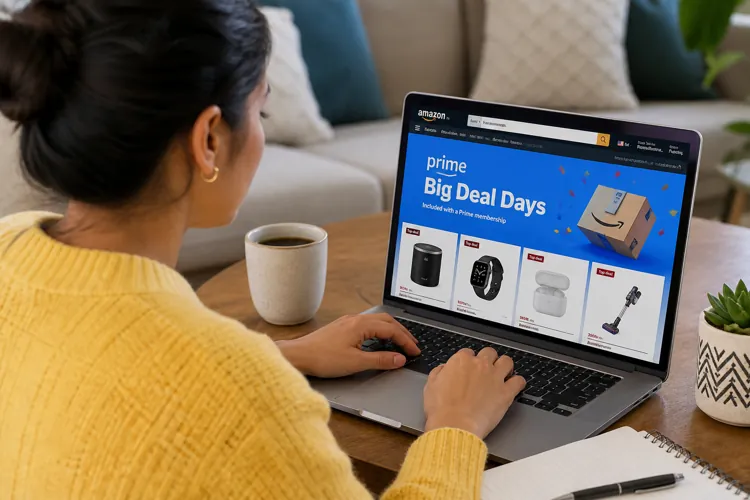

Scammers may target shoppers after Prime Day with fake delivery alerts, order updates and account notices.
Unexpected requests to update payment information, confirm an address or pay a fee are major red flags.
If you click a suspicious link, act quickly by contacting your bank or changing compromised passwords.
Prime Day may be all about finding a good deal, but the shopping event doesn’t necessarily end when you click “place order.” In fact, some of the biggest scams can come afterward, when shoppers are expecting updates about their purchases.
Amazon says phishing texts tend to spike after Prime Day, as scammers take advantage of shoppers waiting for deliveries, tracking orders, or dealing with refunds. And with artificial intelligence making fake messages and websites more convincing, it can be harder to tell a legitimate notification from a scam.
ConsumerAffairs spoke with Tom Clayton, President and COO of family online safety company Aura, who explained shoppers should be especially cautious about unexpected delivery alerts, order confirmations, and account notices that look like the real thing.
Red flags to look out for
Clayton shared some of the biggest risks that consumers should keep their eyes peeled for during Prime Day – and after the sale ends.
“One thing I always tell people to look at is what the message actually wants you to do,” he said. “A normal delivery update is usually just that: an update. A scam is much more likely to suddenly give you a problem you need to fix, whether that’s updating your address, confirming a payment or paying a small fee to get a package released.
Another clue: the sender.
“It’s easy to see a familiar company name and not think twice, especially when you’re busy or waiting on a few different orders, but take an extra second to look at the actual email address or domain,” Clayton recommended.
He explained that scammers are very good at making something look legitimate at a glance, and AI helps them mimic the polished language and familiar tone you’d expect from a trusted brand.
His final red flag that should raise alarm bells for consumers: getting a message about an order you don’t remember placing.
“Don’t click the link to figure out what’s going on,” Clayton said. “Go directly to the retailer or shipping company instead. It takes a few extra seconds and keeps you from potentially handing information over to a scammer.”
Security hygiene
While it may seem like there are risks around every corner, Clayton has some good news for shoppers: you don’t need to completely change the way you shop online. However, a few basic habits can go a long way.
Here are some of his best security hygiene tips:
Use different passwords across your accounts.
Turn on two-factor authentication.
Pay particular attention to your email – If someone gets into your email, they may also have a way into password resets and other sensitive information.
Turn on notifications in the retailer’s app, so you know where legitimate order and delivery updates should be coming from and can more easily spot a suspicious text or email.
Use a credit card instead of a debit card, as that can give you added fraud protection.
“If you’re using an AI assistant to shop, the same basic rules apply,” Clayton said. “Pay attention to what you’re giving it access to, require your approval before a purchase goes through, and limit how much personal or financial information it can access.”
What to if you click a suspicious link
With AI and other advanced tools, it can be harder than ever to spot a scam in your inbox. So, if you do end up clicking a link that’s not legitimate, don’t beat yourself up!
However, there are some steps to take to mitigate the fallout.
“It’s easy to think, ’I only clicked the link, maybe nothing will happen,’ or even feel a little embarrassed that you fell for something, but that’s exactly when you want to act quickly,” Clayton said.
“As soon as you realize something is wrong, stop engaging with the message or whoever sent it. If you shared payment information, contact your bank or card issuer directly, and if you entered a password, change it right away, especially if it was your email password.”
When you contact your bank or the company, Clayton recommends searching for the number or website yourself, or use the number on the back of your card, rather than anything included in the original message. The same goes for anyone who reaches out afterward claiming to be from a fraud department or offering to help, too.
Scams don’t end when sales do
One of the biggest things that Clayton wants to get across to shoppers is that scammers don’t call it quits just because a sale ends. It’s especially important for consumers to stay vigilant when the big sale is over.
“One thing people sometimes forget is that holiday scams don’t stop when the big sales do,” Clayton said. “They can follow the entire shopping cycle, from October sales and holiday deliveries to returns, refunds, and gift cards later in the season.
“The biggest thing is to slow down when something suddenly feels urgent. If a message has you worried that a package won’t arrive or that someone just spent hundreds of dollars on your account, that’s often exactly what the scammer wants. Take a minute and figure out what's actually happening before you act.”